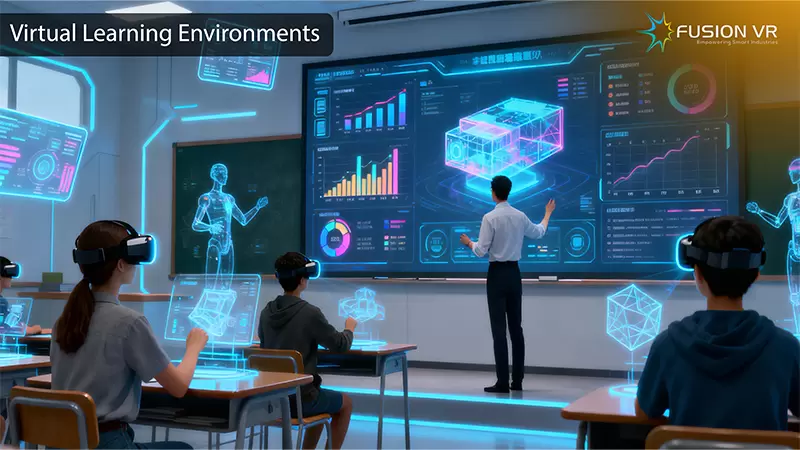
The digital transformation of education has caused one of the biggest changes in academia: virtual learning environments have been adopted and student assessments have been reinvented. When schools, universities, and corporate learning ecosystems fuse digital tools into their teaching methods, the traditional play of assessing learners written tests, fixed-time exams, and in-person practical assessments is being replaced with more dynamic, data-driven, and immersive evaluation methods. Thus, not only does this transition represent a technological change but it also maps out an educational revolution, namely, reshaping how understanding is demonstrated by students, how progress is measured by teachers, and how learning outcomes are defined in the virtual era.
Evaluation in virtual learning environments is now a continuous process rather than being confined to a final test or quizzes. The interactive platforms, virtual reality simulations, artificial intelligence analytics, and cloud monitoring tools have made continuous assessment the norm across the board. These high-tech systems are offering teachers more comprehensive views of the areas in which the students are engaged, the skills they are applying, and the concepts they are mastering. Moreover, the students get to experience the whole process in a more profound and significant way. They are allowed to demonstrate their understanding through engaging activities and realistic situations instead of just mechanical learning.
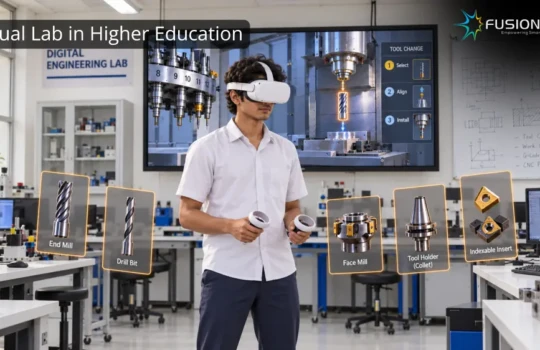
Digital assessments were initially used mainly during the pandemic when the schools and universities were closed, and the students were learning remotely, but when the physical spaces were available again, the benefits of the virtual assessments proved to be so great that they could not be overlooked. The students of today are living in a technology-driven world where critical thinking, problem-solving, collaboration, and creativity are the skills that count more than rote memory. The virtual learning environments meet these contemporary requirements by supporting the assessments that simulate realistic, high-pressure, or complex situations through simulations and digital interactions. Whether a medical student is taking an anatomy test using a 3D interactive model or an engineering student is solving a mechanical challenge inside a virtual lab, virtual assessments facilitate the contextual application of the acquired knowledge by the learners something that traditional classrooms cannot fully accomplish.
Data analytics is one of the key features that make virtual assessments so powerful. The entire process of clicking, response times, decision paths, action sequences, and test attempts becomes a measurable part that gives valuable insights. Virtual systems show not only the final score but also the way a student got the answer in contrast to traditional exams. This behavioral data creates a complete learning profile that helps teachers to know the strengths, weaknesses, learning patterns, and even the motivating factors of the students. A student who spends more time analyzing a problem may need conceptual clarity, whereas another who is hasty through the tasks may require guidance on accuracy. These in-depth insights allow the teachers to give very personalized feedback that really helps the students to grow.
The introduction of artificial intelligence goes a step further. The latest assessment systems, powered by AI, are able to make use of real-time student performance data to create tests that are revised in difficulty accordingly. The system will add difficult questions if a learner excels in his/her studies; if he/she encounters difficulties, it will give helpful hints or assign an easier task. In that way, the challenge is kept at an optimal level, thus, preventing the learners from feeling frustrated and at the same time allowing them to grow continuously. On the other hand, the insights of AI made teachers’ work easier as it significantly cut down on manual correction, repetition of grading, and making subjective evaluations. The assessment process will be, at the same time, consistent and unbiased, and analytics will be the supporting tool, thus, the fairness and transparency in educational institutions being improved.
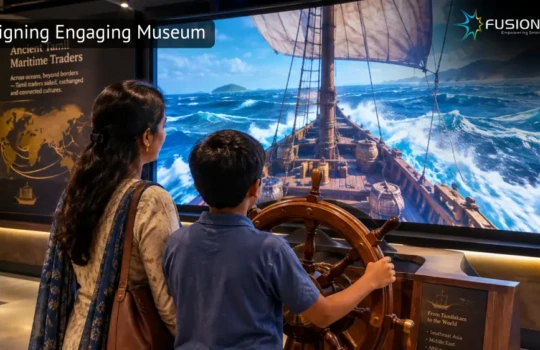
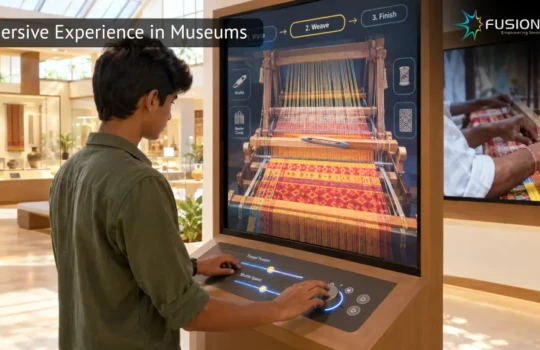
Virtual reality is the delivery of a completely new and advanced level to student assessment, where it was possible to experience and evaluate the students. They were no longer limited to writing down the steps of a procedure to be assessed but could actually perform it within a virtual environment. It is now possible for the medical students to practice surgeries, for the architecture students to construct and take a tour of the buildings, for the history students to go to the virtual archaeological sites, and for the language students to have chats with the virtual characters all via the VR technology. Such assessments can reveal the students’ real-world skills and thus help them to get ready for the next phase of education, which is the job market where confidence, critical thinking, and practical skills are the most sought-after qualities. The VR assessments also completely remove the hazards that would have been connected with real-world training of the students, particularly in the case of aviation, healthcare and engineering where safety is important. The students can go through the whole process of making mistakes, coming up with alternative solutions, and practicing over and over again all this without being afraid of real-world consequences.
Inclusivity is another advantage of virtual learning assessment. Traditional testing methods often give priority to students who are good at memorization or can handle time pressure well. On the other hand, virtual environments enable various modes of expression. A student might show comprehension with interactive tasks, visual storytelling, simulation-based challenges, or collaborative digital projects. This kind of flexibility supports different learning styles i.e. kinesthetic, visual, auditory, and verbal learners. Moreover, physically challenged students gain a lot from personalized interfaces, accessibility features, text-to-speech options, and different formats that render virtual assessments much more just than paper-based ones.
The transition to evaluations conducted online also makes students ready for the digital working environment. At present, numerous sectors depend on computerized methods, data analysis, online teamwork tools, and virtual design platforms. By evaluating learners in the digital environment, the educators of this time are actually incorporating the skill of dealing with the digital ecosystems of the world into the students. To be more specific, students are trained, e.g., for a virtual machine operation, 3D dataset analysis, cloud-based project collaboration, and interactive dashboards usage, which is ultimately the kind of digital literacy that will be the key in one’s future profession.
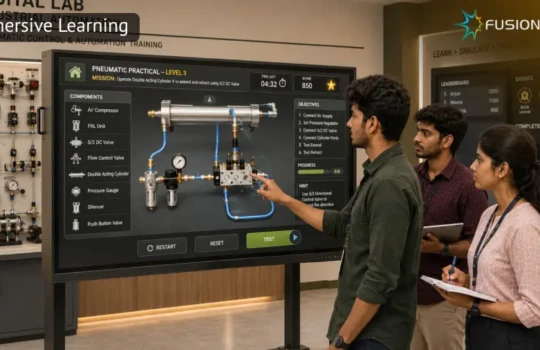
Virtual learning environments have the capability of supporting continuous assessment systems as well. Continuous assessment takes away the stress of a single high-stakes exam and allows educators to monitor the progress of students through various means like weekly tasks, simulation scores, project milestones, participation metrics, and online collaboration activities. These means combined create a detailed and precise record of a student’s actual skills and knowledge. Continuous assessment requires the students to be part of the learning process throughout the academic term instead of just getting ready for the exams with some heavy cramming at the last moment. It also brings down the anxiousness associated with exams, helps in building good learning habits which are consistent, and the teachers are then able to intervene early when a student starts experiencing difficulties.

Gamification has become a strong assessment method in virtual learning systems as well. Rewards, badges, progress trackers, and leaderboards are some of the elements that educators can use to motivate students to give their best. Gamified assessments turn learning into a fun activity and at the same time, they do not lose the evaluation of competency. This is even more pronounced with younger learners where the combination of enjoyment and learning leads to a significant increase in retention and participation.
Nonetheless, the transformation in the assessment process in the virtual learning environments has come across some difficulties. A primary worry is the issue of integrity in academic standards. If there are no proper monitoring tools at hand, online examinations and assessments can create doubts regarding their legitimacy. To counter this, present-day virtual assessment platforms use strong proctoring technologies which encompass the use of AI monitoring, browser lockdown, tracking behavior, and identity checking tools. Such systems identify any suspicious activity and maintain the credibility and fairness of the assessments.
The digital divide is another challenge. Not every student can get high-speed internet or advanced devices that are necessary for immersive assessments. The institutions are obliged to make accessible to all by means of different formats, offline accessibility features, and assistance for low-end hardware. In addition, government and institutional funding can be a factor in the wider availability of digital learning tools, particularly in rural or underdeveloped areas.
The full potential of virtual assessment tools cannot be realized without the training of the educators. Transitioning from conventional marking to digital evaluation entails changing the mind, acquiring technical skills, and getting acquainted with new platforms. Teacher educators must take advantage of continuity in the form of professional development programs, workshops, and digital AR VR training modules, which will make them more comfortable and ready to incorporate the use of virtual assessment methods in their teaching practice. Understanding the process of task design, data interpretation, and the use of analytics for student support will make the assessment revolution much more effective.
Although the disadvantages of virtual learning assessments are noticeable, the advantages are still the main reason of their use. The flexibility, scalability, personalization, and real-world relevance that virtual assessments offer are the features that traditional evaluation systems lack. The continuous emergence of technologies like VR, AR, AI, and cloud computing will not only enhance but also make the assessment landscape much more dynamic and intelligent. Future educational settings might use the technologies such as complete immersion feature VR exams, AI-assisted tutors that give continual assessment feedback, biometric monitoring of performance, and adaptive virtual assistant examiners that are able to assess complicated skills instantly.
The future of evaluation will not be based on the testing of students’ memorization skills, but on their thinking, problem-solving, creativity and making knowledge meaningful. The ideal platform for such a shift is virtual learning environments. They support a comprehensive assessment of students’ performance that values creativity, practical skills and the spirit of learning for life.
In this changing educational environment, the assessment revolution is not just a matter of switching old methods for digital ones. It is a movement to deeper learning, more just evaluations, and greater educational experiences. The more virtual learning environments develop, the more they will change the way student performance is assessed from a one-time event to a continuous, immersive, and transformative journey that prepares the learners for a world where innovation, adaptability, and, above all, digital fluency are the essential skills for success.