The concept of a school field trip has always been associated with excitement. It’s a complete change of scenery for the students, and they will undergo a very deep and great transformation through the experience of seeing history, art, science and culture in person. However, there are many schools that do not have the budget to take their students to museums, heritage sites or scientific centres that are not close by. Travel, cost, permissions, time and safety issues often limit these opportunities. In this digital era, Virtual museums are proving to be the educational places that school field trips could still be if they were no longer allowed. AR and VR museum experiences can take students to different centuries, civilisations, and continents without the need for them to leave the classroom or the house.
The use of digital technology has made it possible for educators and learners to step into museum environments that are completely interactive in 3D, going for VR tours, and using AR along with storytelling as a method of learning. The virtual museum visits encompass the core of inquiry and at the same time offer it with layers of digital interactivity that cannot always be provided by the actual visits. Just like that, a student puts on the VR headset or visits the digital museum through the interface, and they are instantaneously in a very detailed and interactive world that is very much aimed at activating their curiosity. The exhibits are animated, some of the historical characters are talking, the ancient environments are showing up right in front of the viewers, and the science experiments are taking place clearly and safely.
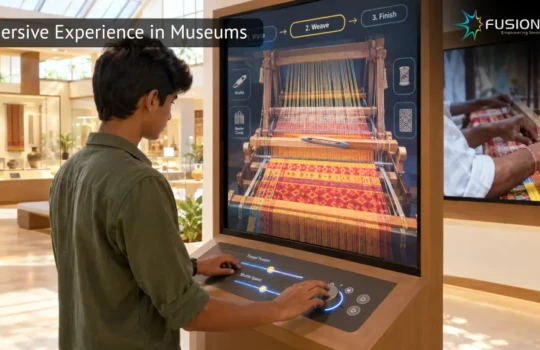
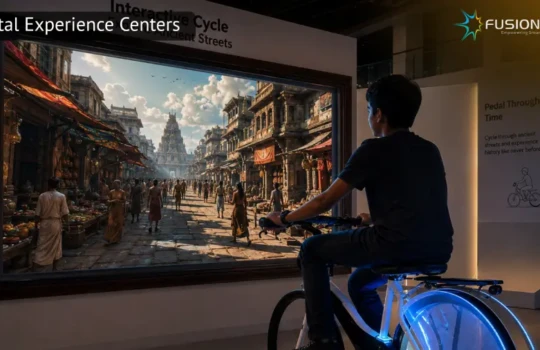
The virtual museums have not only gained popularity due to their accessibility but also due to the quality of learning they provide. Students are not just spectators but have direct interaction with the content. This transition changes the learning process from the passive watching of views to the active discovering of the site. Instead of barriers separating them, they can have all the objects right in front of them, see them in 3D, zoom in to look closely at the textures, materials and writings, and know the areas well that have been reconstructed. The kids can, for instance, play with the virtual pyramids of Egypt, see dinosaurs in their natural habitats, visit the temples of ancient India or enjoy a 7DX virtual museum experience where history will be brought to life using visuals that are nothing short of spectacular. The list is truly endless.
When the use of AR and VR museum experiences in classes is part of the curriculum, memory will be stronger, and engagement will be deeper. Visual and experiential learning has a very great influence on young people, which means they can easily grasp the concepts that are abstract or far away. If a pupil, augmented reality is used to demonstrate how a medieval castle was being built layer by layer, and the student is taken on a virtual museum tour that displays the development of different art movements over the years, then learning is made personal. The student will not think anymore that he/she is reading about history; rather, he/she will feel as if he/she has already been there.
Virtual museums are a great example of how the education system can become more inclusive. High-quality museum experiences that are usually available only to urban students will now be shared with students from rural or remote areas who cannot visit physical museums. Even the international institutions can now be accessible with just a click. A child in India can travel virtually to the Smithsonian, the Louvre, or a digital science museum in Tokyo without being restricted by cost or travel. This worldwide access guarantees that learning can never be confined to a certain location. Every student from any background has the same chance to see the best exhibitions and scientific demonstrations.
The integration of immersive technologies in museums has completely transformed the whole concept of virtual school trips from home to the museum. In several instances, museums apply up-to-date technologies such as 360° 3D photo mapping, digital replicas, interactive screens, storytelling with holograms, VR centers for experiences, and AR overlays that not only make exhibits more lifelike but also more engaging. The creation and curation of these museum experiences are done with cutting-edge tools like Unreal Engine, high-quality 3D scanning, and movie-level animation that get concepts across in very attractive ways. Youngsters are able to travel into the heart of an active volcano, go on a dive through ancient underwater ships, see space exploration unfold on virtual tours, or visit the remains of historic cities like Rome or the Indus Valley Civilization through virtual tours.
Another strong point of virtual museum experiences is their contribution to facilitating personalised learning. Educators can direct the learners according to their speed, conduct multiple sessions, take breaks for clarifications, or start collaborative activities with the help of the digital displays. The option of going back to the material again provides assurance of proper comprehension, and it also takes care of every student’s learning pace and style. Students can take their time to experience an AR VR museum featuring Indian culture or a digital art gallery showcasing the masterpieces of the world, and they will never feel the pressure of a time limit
Virtual museums are not only a great tool for collaboration and discussion. They make it possible for students to communicate, explore and perform group educational tasks all under the same virtual roof. Virtual museums actually allow group activities even for students who are doing online classes or coming from different schools and are miles apart. The feeling of being together in virtual digital spaces shifts the idea of remote learning and makes it more social, immersive and connected.
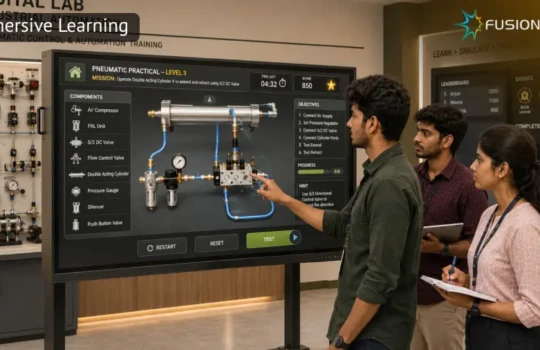
The ability to provide very safe and controlled environments is one of the main benefits of remote school field trips to virtual museums. Students will have the opportunity to examine very complex, dangerous or sensitive issues to them completely risk-free. They can watch and learn about the eruption of a volcano, a chemical reaction, and the behaviour of wildlife or the movement of planets without being concerned about safety. Such safe learning environments make education thrilling and hence come up with memorable learning moments that instil curiosity for a lifetime.
It is being observed that schools are constantly bringing digital museum experiences to their long-term teaching plans. Interactive museums are on the way to being recognised as modern education’s integral components as they are compatible with the future-oriented learning methods. They do not confine themselves to the textbooks’ limitations; rather they provide the learners with vibrant visual storylines that make the learning process easy. The educators can use the methods of immersive scenes, historical reenactments, VR tours and interactive experiments to add to the teachings done in the classroom.
The technology supporting these virtual experiences is still in the process of rapid evolution. The museums and corporate experience centres are currently making an effort to incorporate haptic feedback, mixed reality interfaces, multi-sensory 7DX effects, spatial audio, and gesture-based interaction systems that make the students feel physically present in the digital world. All these developments coming up will create a more realistic and three-dimensional experience for the virtual field trips, where the students will be able to touch, feel, and manipulate digital objects just like they do with the real ones.
Virtual museums are a budget-friendly alternative for schools that are changing to digital-first learning environments. All costs related to physical travel, tickets, logistics, and coordination are no longer assets. Teachers can plan field trips to different subjects for students throughout the year, giving them exposure to a variety of topics from archaeology and astronomy to robotics and marine biology. In place of a yearly field trip, now students can have the experience of dozens, with each one shedding light on the topic and stimulating creative thinking.
The effects of virtual museums are not limited to academic learning only. Immersive experiences provide a platform for students to exercise imagination, develop empathy and acquire cultural understanding. By virtually walking through ancient civilisations, observing cultural festivals, exploring tribal arts or watching historical events being accurately re-enacted, they start to recognise the variety of human history. Virtual museums cultivate cultural understanding by opening up world heritage to all students regardless of their location.
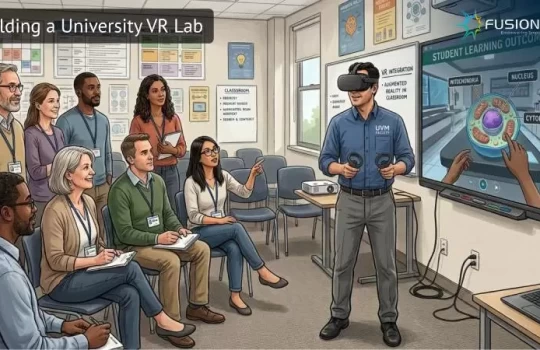
Virtual galleries provide teachers with help by providing organised teaching materials that correspond to school curricula. Numerous units come with quizzes for assessment, learning activities, games, creative tasks and application to the world outside. Educators can monitor students’ performance, evaluate their involvement and modify the learning route based on the results. The mix of immersive experiences and well-organised teaching resources fortifies the entire educational ecosystem.
When it comes to the development of virtual reality and augmented reality technologies, it is remote field trips that will benefit most in terms of quality and realism. The incorporation of AI-powered narrators, changing content according to the individual, and real-time, lively interactions will be the makers of the coming era of virtual museum visits. One of the options that the AR VR museums of the future would give to the students is being able to engage constantly with prominent persons of the past, take part in fake scientific operations, and even study the nature around them in a manner that depends on the students’ behaviour.
Virtual museums provide an amazing portal for students to visit the world without limits. They create a lot of possibilities for schools to give uninterrupted, significant field trip experiences that support curiosity, spark creativity and make the grasp of concepts stronger. No matter whether the virtual museums are visited from classroom labs, home PCs, tablets or VR centres, these learning places are changing the way students perceive culture, history, science and the world around them.
Imaginative remote school field trips are turned into a powerful reality by virtual museums. These places prove that digital innovation can change education in a great way and, at the same time, improve visitor experience, encourage interactive learning, and make it possible for school kids to visit places that were beyond their reach. The use of these immersive tools by schools makes young learners take trips that not only inspire them to dream bigger but also to think deeper and find out more about the world with the same enthusiasm.