
Cultural tourism has always succeeded as a method to protect heritage while it provides educational experiences to visitors. Modern travelers seek more than static displays and traditional guided tours because they want to connect with others through interactive storytelling and create emotional bonds with their experiences. The current situation requires businesses to develop new methods which will enable them to transform historical sites into complete experiential tourist attractions. Experience centers function as revolutionary elements which shape cultural tourism development by providing interactive digital museums that teach visitors about historical events and artistic expressions and scientific knowledge and cultural heritage.
The experience centers use storytelling and design elements together with architectural designs and virtual reality and augmented reality and projection mapping and interactive displays and multisensory installations to create interactive spaces for users. The centers enable visitors to experience cultural heritage through active participation instead of passive observation. The definition of cultural tourism has expanded beyond artifact display because visitors now can experience historical events through time travel and digital environment interaction and heritage narrative discovery.
Governments, museums, and tourism departments across the world are investing in experience centers to increase visitor footfall, enhance tourism revenue, and create long-term cultural engagement. The centers function as connectors which enable institutions to preserve their traditional heritage while adopting modern digital technologies.
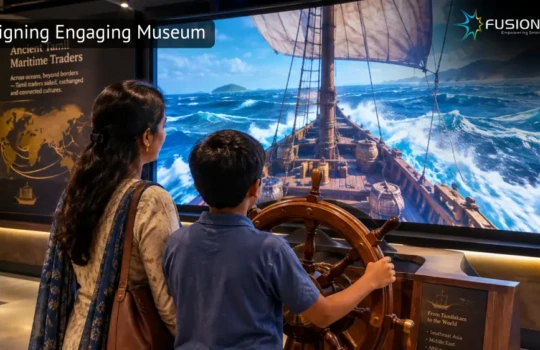
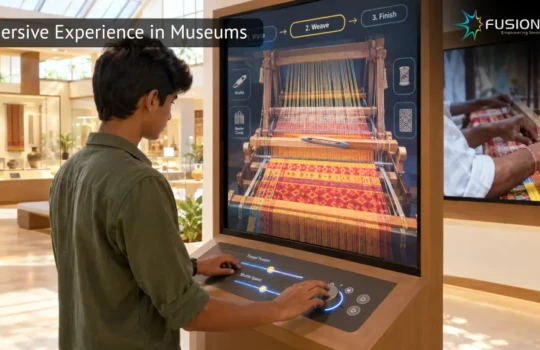
Experience centers function as essential elements that enhance both the accessibility and attractiveness of cultural destinations. The traditional museum display system uses text panels together with static objects to create exhibits which younger people find difficult to engage with. The experience centers of museums use augmented reality and virtual reality museum installations together with interactive projections and immersive domes and holographic storytelling and educational games to create spaces that promote curiosity and exploration.
The primary way experience centers benefit cultural tourism because they create engaging formats which enable visitors to understand complicated narratives. Cultural narratives often involve layers of history, mythology, art, architecture, and socio-political context. Experience centers simplify these narratives through visual storytelling which allows visitors to quickly grasp the subject matter while still experiencing emotional connections. The exhibit allows visitors to explore reconstructed ancient cities and experience historical events through 3D simulations and interact with digital exhibits that respond to their gestures and movement.
Digital museum environments provide opportunities to recreate lost heritage together with damaged monuments and inaccessible historical sites. Through VR museum experience technology tourists can explore locations that may be geographically distant or physically restricted. This system enables heritage institutions to share their stories worldwide while expanding cultural tourism accessibility beyond its physical boundaries. Interactive museums use digital technology to build ancient civilizations and rare artifacts and heritage environments which help visitors learn about cultural significance.
Experience centers also enhance visitor engagement through their ability to create unforgettable visitor experiences. Modern travelers value experiences more than passive observation. When visitors engage with immersive storytelling they establish emotional bonds with the content. Visitors who form emotional connections with a performance will tell others about it through word-of-mouth and social media while returning to the performance, which helps cultural tourism to develop.
The experience centers offer another significant benefit because they can bring in different types of visitors to their facilities. The typical visitors who enter museums include researchers and historians together with academic groups. The immersive experience centers draw in families and students who travel with their friends and international visitors. The experience centers create educational content which attracts more visitors to cultural sites while increasing their potential to attract tourists. The younger generation who understands digital interfaces and gaming environments finds augmented reality and virtual reality technologies to be appealing.
Experience centers support cultural heritage preservation through their process of digitizing important heritage materials. Environmental damage and natural disasters and human negligence all present threats to historical artifacts and cultural traditions. Cultural assets can be preserved for future generations through digitization which uses 3D scanning and photogrammetry and interactive visualization technology. Digital archives store complete artifact and monument and artwork representations which allow people to access cultural heritage even when physical objects decay.
Interactive museum spaces allow curators and content designers to create exhibitions which they can update through their interactive display systems. Digital installations provide fast content updates and multilingual capabilities and flexibility in storytelling which traditional displays need complete physical reconstruction to implement. Cultural tourism destinations can refresh their exhibits periodically to maintain visitor interest and introduce new themes, ensuring long-term sustainability.
Experience centers also contribute significantly to economic development in tourism regions. Cultural tourism attracts both domestic and international travelers, which produces revenue for local businesses that include hotels and restaurants and transportation services and handicraft markets. The implementation of experience centers at heritage sites results in extended visitor stay times which lead to increased exploration of surrounding attractions. The tourism expansion creates economic opportunities which enable local communities to receive financial benefits.
Governments are now understanding that digital experience centers serve as essential tools for preserving regional identity and heritage protection. Experience centers can showcase the local traditions, crafts, folklore, architecture, and historical achievements of the area. The centers present regional culture through interactive displays which create community pride and help visitors learn about different cultural traditions.
Corporate experience centers are developing cultural tourism through their activities. The organizations which specialize in infrastructure and science and technology and social development create interactive displays which demonstrate local innovations and regional achievements. The corporate experience centers use digital displays to present their storytelling which helps visitors understand complex concepts through interactive experiences. Visitors learn about technological progress and cultural development and the growth of their region.
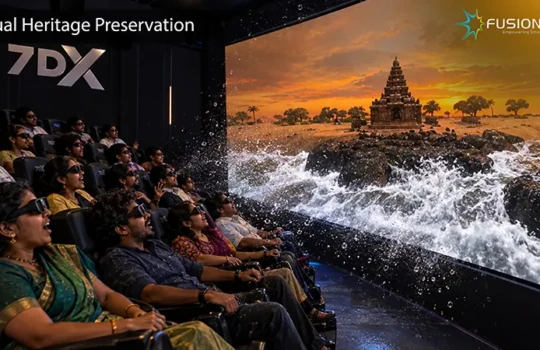
Modern experience centers use multisensory storytelling as their primary storytelling method. The ability to experience story elements through sight and sound and touch creates a better cultural tourism experience for visitors. The combination of motion-based seating and surround sound systems and aroma diffusion and environmental effects delivers immersive experiences which reproduce actual real-world scenarios. Advanced immersive theatres and simulation environments use such installations to create environments where visitors experience interactive storytelling.
Experience centers also provide educational value by supporting interactive learning environments. Educational institutions including schools and colleges and research institutions organize educational tours to digital museums and immersive heritage centers. Students benefit from experiential learning methods which help them retain information and understand material better. Interactive displays encourage curiosity while they let learners investigate subjects at their own pace.
Experience centers provide major benefits through their work in accessibility. Digital technologies enable content creators to develop accessible materials which they can use to reach various audience groups, including disabled individuals. The combination of audio descriptions, subtitles, multilingual narration, and interactive touch interfaces creates a more inclusive experience for cultural activities. The experience centers provide facilities which enable all visitors to access cultural tourism activities.
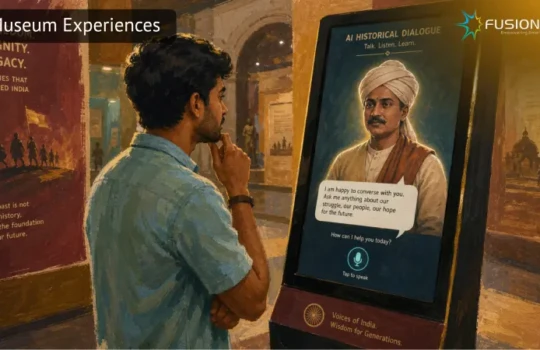
The centers for experiential learning now benefit from advanced artificial intelligence systems. AI-driven personalization allows visitors to receive customized content recommendations based on their interests. Interactive systems can adapt storytelling based on visitor interaction patterns, creating unique experiences for each individual. AI chat interfaces and virtual guides offer thorough exhibit details which help visitors stay engaged with the displays.
The experience centers work to support the promotion of less popular cultural heritage sites. Many heritage sites remain under-visited due to lack of awareness or limited interpretation facilities. Digital experience centers allow tourism authorities to showcase site importance while bringing in fresh visitors. Immersive storytelling can bring attention to regional heritage that might otherwise remain unexplored.
Sustainability has emerged as a critical requirement for tourism development projects. Digital experience centers eliminate the requirement for physical handling of delicate artifacts which helps to maintain the integrity of original objects. Virtual exhibitions can decrease their environmental footprint because they provide users with remote access to cultural materials. Digital museum environments allow visitors to explore without creating additional visitors at delicate heritage locations.
People now depend on technology experience centers as their primary resource for developing smart tourism strategies. Smart cities and cultural districts use immersive technologies to improve visitor navigation systems and interpretation methods and visitor interaction processes. Tourists can discover cultural sites better through mobile applications which offer AR navigation and location-based storytelling features.
The development of effective experience centers requires collaborations among historians, technologists, designers, and storytellers. Successful cultural tourism initiatives combine accurate research with creative presentation techniques. Digital experiences maintain their authentic value through storytelling which serves as a fundamental component.
Exhibition design at experience centers receives continuous innovation through their presence. Immersive storytelling now has new opportunities because emerging technologies include holography and volumetric capture and spatial computing and real-time rendering. The technologies enable creators to develop realistic simulations which create a seamless experience between actual and virtual spaces.
The future of cultural tourism will rely on immersive technologies which increase visitor engagement as its primary upcoming requirement. Experience centers will develop into hybrid environments which enable people to experience both physical and virtual spaces together. Tourists can experience heritage sites through physical visits while they use AR devices and mobile interfaces to access extra digital information about the sites.
Cultural tourism development needs to create visitor experiences which leave lasting impressions and meaningful experiences for tourists. Experience centers establish this requirement through their combination of technological resources which enable storytelling and design elements. The organization transforms standard museum operations into interactive displays which attract contemporary visitors while enabling sustained tourism growth.
As global tourism becomes increasingly experience-driven, destinations that invest in immersive technologies will gain competitive advantages. Experience centers enable cultural identity preservation through their innovative methods, which guarantee that heritage remains accessible to upcoming generations.
Experience centers function as essential components which determine how cultural tourism will develop in the future. The centers develop interactive experiences which attract multiple types of visitors through their combination of AR VR museum technologies and interactive storytelling and digital museum environments. Cultural tourism benefits from increased visitor engagement, improved accessibility, enhanced preservation, and economic growth. Experience centers function as more than technological systems because they function as powerful storytelling systems which enable users to experience cultural content while deepening their understanding of historical heritage.