Designing a Natural History Museum with Interactive Ecosystems and Scientific Reconstructions
A modern natural history museum should combine information about nature with displays of fossils, specimens, and minerals, but should be even more. This space should let patrons explore the natural world as they explore the history of life, learn the nature of complex ecosystems and discover the nature of the processes that shaped our planet over time. New technologies have the potential to turn any Natural History Museums / Geo Science Museums into an engaging, educational and interactive experience where visitors can explore and understand the natural world in ways that was once impossible. An ideal museum for patrons would be to integrate the reconstruction of science, with an interactive representation of ecosystems and combine this with information that will explain and teach natural history to patrons in ways that interest patrons of all ages and provide a new understanding of the natural world.
Scientific information is traditionally conveyed via museums using real objects, photos, drawings, and placards. However, although they add a great deal to the integrity and historical record of the information, they fail to demonstrate movement and relationships within a system at the same level of resolution. How can one illustrate how an extinct animal lived, how a tropical system is structured, or how an animal interacts with a marine system with only a drawing? How about via an interactive system that allows the user to explore and learn? Interactive digital displays have transformed scientific concepts into an immersive, experiential medium. Users can virtually visit different parts of the system, examine how the system changes, and appreciate how species in the system interact with each other.
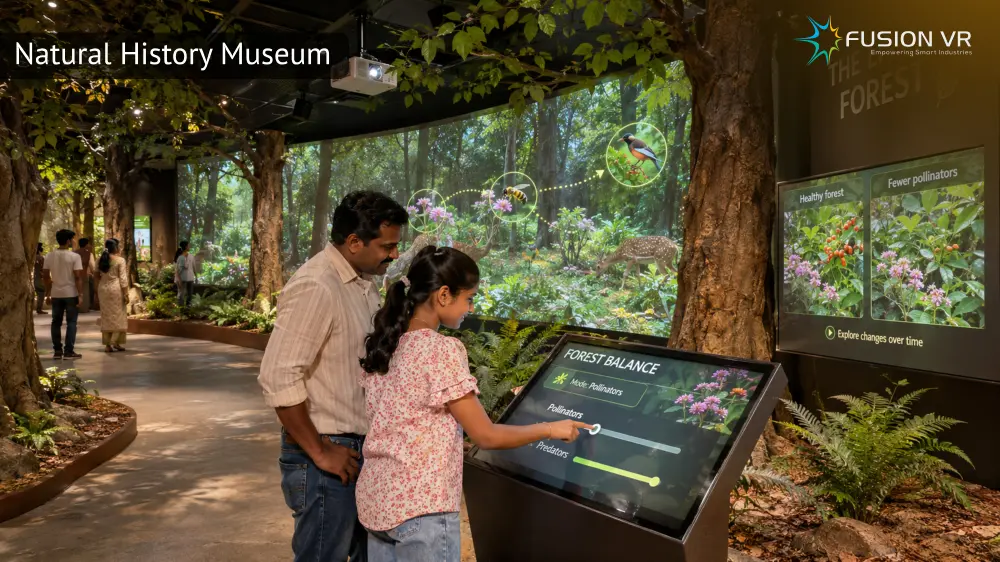
The main aspect of contemporary designs for museums of natural history is building ecosystems that are interactive. Museum goers are able to visit various natural environments that are as diverse as polar, deep ocean, tropical, grasslands, deserts, wetlands and even coral reefs. The creation of natural environment replicas is now much easier than it used to be. The galleries are equipped with the newest digital displays of a large format. There are immersive projection technologies as well as digital applications that users can interact with. Through these means, natural environments, including different habitat ecosystems can be displayed for visitors to view. They will understand food chain interactions and ecosystem structure in relation to the vegetation, climate and hydrology. Users are also able to explore and learn how biodiversity and the various habitats support the survival of different species. Overall, museum visitors appreciate the value of maintaining an ecological balance and sustainability.
Another important feature of a great natural history museum is the inclusion of scientific reconstructions. Many important discoveries have been made through the study of fossils and the excavation of archaeological sites. However, these finds are often difficult for museum patrons to conceptualize. Through advanced 3D modelling and computer-generated imagery, museum patrons can see and interact with these amazing and extinct creatures in a very detailed and accurate way. Researchers can also develop and showcase models of what ancient landscapes and ecosystems might have looked like based on available research and fossil data. With the addition of such technologies, museum patrons will finally be able to appreciate the work done by paleontologists to develop models of these magnificent beasts. Most importantly, it’s vital for patrons to distinguish fact from artistic license.
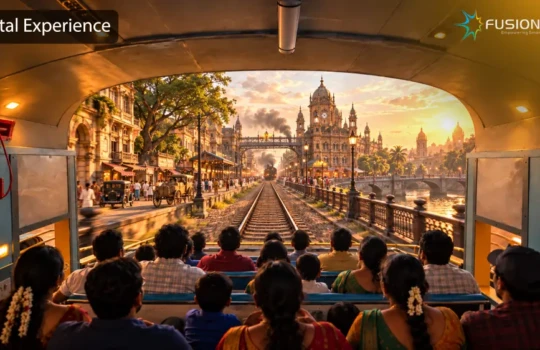
Virtual Reality (VR) allows visitors to step into the world they were not able to before. Using a VR headset, people are able to experience ancient ocean environments, explore ancient forests, traverse geological structures, and experience simulated wildlife natural habitats. This technology allows museums to present their collections in new and unique ways, providing visitors the chance to step into extinct animals’ environments and observe how the animals used the spaces in a new perspective. Museum curators can design VR tours for varying ages, giving all audience members the opportunity to understand scientific topics through different perspectives. Additionally, museums can utilize VR to convey the immense nature of geological structures, show the ancient ice, and simulate how ecosystems used to look at various points in time.
Augmented Reality (AR) allows museum collections to bridge the gap between digital content and the physical artifacts. Exhibits that used to require a great deal of information to be presented on the printed labels are now able to be presented more elegantly with AR. When a visitor is viewing a fossil exhibit, they can view an interactive animation that shows how the animal’s bones looked and worked, and the fossil itself will look as if the animal was in front of the visitor. With the digital information overlay, visitors can now understand a specimen’s feeding habits, migration patterns, conservation status, and its natural environment.
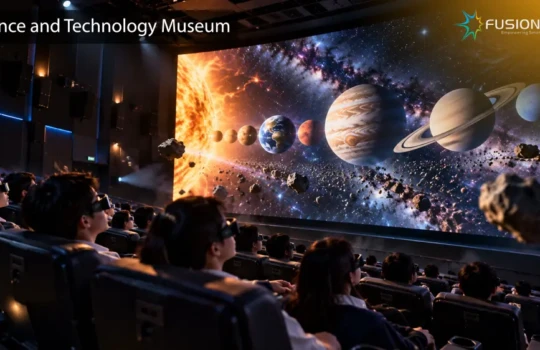
Large-scale theatres in museums can offer an authentic way for patrons to see different environments. One theatre could have the visitor experience the formation of the Earth, move to the early ocean, and then see the development of the land and end with the diverse environment of today. Another theatre can have the visitor experience different natural phenomena like the formation of mountains or even go to the prehistoric landscape through reconstructed scenes. The theatre of this size has a larger impact on teaching the patron because it can present the information at a larger scale.
Interactive touch screens, motion controlled displays, and exhibits that rely on proximity all increase active participation in museum displays. A fun way to do this is to allow users to build a model ecosystem to simulate the effects of various environmental and ecosystem decisions. In another example, users could manipulate an on-screen model to demonstrate what happens to the ecosystem when a particular species is removed. There are many more examples of exhibits where visitors can explore the adaptation of species to different environments and conditions. Other engaging educational opportunities can be added, including games, puzzles and other activities designed for kids and families to learn and reinforce scientific concepts.
Projection mapping can change the way spaces and structures tell a story. An example could be the transformation of a model representing the earth, which would show the processes that occur when the earth’s surface changes over time and the placement of continents. A forest model can be brought to life with projections of rain and changing seasons, which would accompany an ecosystem that evolves in front of your eyes. Projection mapping offers new storytelling possibilities in a museum environment, while keeping the classic museum feel.
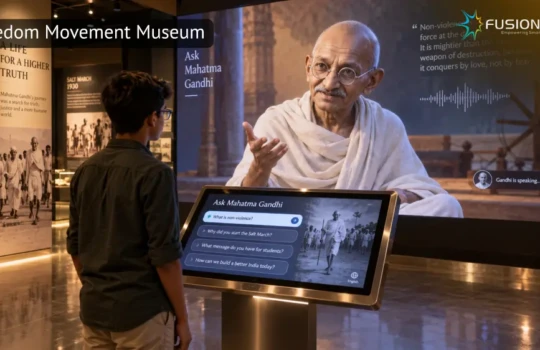
AI and digital conversational assistants have the ability to further aid in the presentation of scientific concepts. For instance, a naturalists/scientists based AI program could act as a virtual assistant and explain to museum goers about how various animal and plant species have adapted, about evolution, endangered species and even explain climate change and global warming. These virtual scientists could be based on real historical explorers, researchers and naturalists who can tell of the wonderful discoveries and methodologies. AI interfaces offer a greater amount of interaction and engagement to a museums offerings. AI has the ability to answer visitor’s questions about any scientific concept. Curiosity will be stimulated, as people are given control of their own scientific discovery journey.
To be an effective educational facility, a natural history museum needs to address the issues of wildlife and environmental protection. For example, visitors can explore the negative effects of the loss of habitat and the impact on species as a result of deforestation and pollution. An museum can show how climate change can disrupt the food web as it negatively affects the food sources of species. Further, the museum could provide a simulation game that would allow visitors to make forest, water, or wildlife conservation choices. As a result, the visitors would see the long-term impact of their decisions. Using interactive models helps to develop more awareness regarding environmental issues as well as creating memorable and learning experiences.
With any exhibit involving a digital reconstruction, creators should keep scientific accuracy as their number one goal. Museum curators and designers should rely on input from professionals and academics of many different backgrounds to ensure the digital information is relevant, educational and accurate. Scientific findings in digital content become outdated quickly, so it should be updated regularly as new research and information becomes available. A well designed content management system gives museums the opportunity to easily add information to all exhibits simultaneously without having to do a complete rebuild.
Museums dedicated to the history of the natural world welcome visitors who are of varying ages, and may have different educational or physical limitations. Because natural history museum visitors speak multiple languages and possess differing educational backgrounds, museums should design exhibits to be easily interpreted through multiple modalities including, for example, interactive narration. The more complexity incorporated into exhibits at different levels of visitor engagement, the more museums can satisfy the interests of children as well as more mature and academic audiences. Successful museum experiences include creating environments conducive to comfortable movement of visitors and lighting to maximize visitor interest through effective exhibition. Exhibits should provide multiple methods of interaction with sufficient engagement for visitors.
At Fusion VR, the term Museum 2.0 describes a shift from static museums to the development of engaging, active museum environments, and the goal of this movement is to help museumgoers participate in the stories on display. To accomplish this, Fusion VR blends a range of innovative technologies to create immersive digital experiences. Their technology offerings span the spectrum from simple 2D display to full 3D projection, and everything in between including interactive virtual reality and even multisensory installations. With an end-to-end service offering, Fusion VR works to design the vision of a digital museum, research and create content for it, develop the necessary software and 3D animations, design and install all the required hardware, and even offer long-term support for their work.
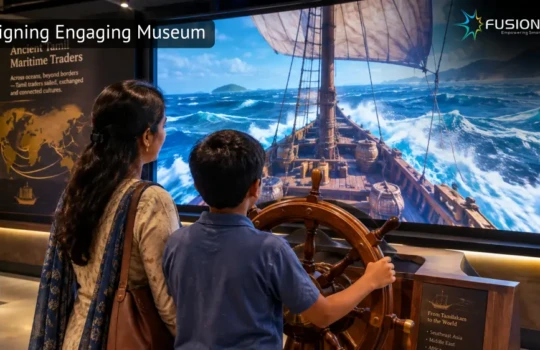
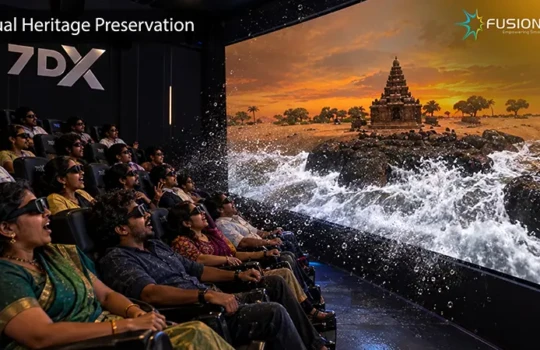
Using VR museums and heritage projects around the world are becoming more immersive and engaging, and less intimidating for the general public. Projects have included work for archaeology, heritage, educational, and cultural projects. A recently completed project was for the Porunai Museum in Tirunelveli. As a result of this collaboration, this museum uses interactive VR technology for the visitor, along with an indigenous 7DX VR boat simulator to explain the river’s heritage. The VR technology has also been utilized to reconstruct environments for viewing the historically important site of the Ajanta Caves. These technologies and methodologies for natural history museums can offer visitors scientific, ecological, and educational experiences, which allow the natural world to be better understood. Natural History Museums / Geo Science Museums could incorporate this into their specific visitor profile, institutional goal, and a bespoke research requirement.
Museums that collect natural history objects have to become digital interfaces of information and experiences. In other words, museums have to make links between digital information and physical collection objects. With the technology of digital interactive environments, museums can make the viewer understand relationships between organisms. As for physical reconstruction of extinct animals, they have to illustrate the biodiversity and variety of the animal kingdom during the geological time. Advanced technologies like VR and AR, 3D technology, projection, and AI can provide an interactive and multisensory digital exhibition. In this new digital age, exhibitions have the possibility of making an exploratory experience more scientifically inspiring than before.
Designing a natural history museum means creating an unforgettable learning experience about the world of nature. Museums can achieve this goal by applying the highest standards of scientific research to create experiences which also feature technologies of the digital age to support research in environmental conservation and encourage appreciation for the multitude of species living in our world. As an expert in immersive and digital technologies to create museum experiences, Fusion VR provides tools to institutions for realizing their goal of creating the museums of the future in which science, nature and technology come together.