Heritage sites are not only monuments, old structures, and ruins. They also carry what people knew, how they built, what they believed, and the tales they passed on. These places reflect the skills and tools of communities that helped shape human history. Still, many heritage sites are under strain. Hotter weather and heavier storms can wear them down. Parts break over time on their own. Crowds can press on fragile areas. City growth can push in from the edges. Other risks also add up. Because of this, saving heritage is more than keeping walls standing. It also means protecting the learning linked to each site and the lived experience visitors can have there.
Virtual heritage preservation is starting to matter more for this issue. Tools like VR, AR, 3D scanning, and photogrammetry can build clear digital versions of heritage places. With immersive projection, digital twins, and interactive stories, people can explore these sites from a distance. That way, we do not add extra wear to fragile locations.
UNESCO is looking at what digital tools can do for heritage. The “Dive into Heritage” program uses 3D models. It also adds geolocated stories, photos, and videos. Other types of digital media are included too. The goal is to make an immersive experience linked to World Heritage sites. It also covers related intangible heritage. UNESCO says this platform can help protect World Heritage. It can also help share it. The aim is for future generations to receive it.
This shows a change in how we think about protecting heritage. Tech is not just for recording what is already there. It can also help people learn, feel, and relate to heritage in ways that older methods do not always manage.
Keeping cultural places alive with digital work starts with careful records. You can make a copy of a heritage site with high quality photos. Another option is photogrammetry. Laser scanning also works. You can then turn the results into 3D models. With these methods, you end up with clear digital files. They can show buildings, statues, carved text, open areas, and other parts of the site.
Good documentation does more than make a site look nice. A well-built digital model can stay useful for a long time. Researchers, conservators, teachers, and heritage groups can all use it. When a building or object shifts after storms, water damage, or other events, the earlier digital version can help. It gives a clear point of comparison.
When a place is hard to reach or cannot be entered at all, the impact shows up fast. Some heritage sites have worn or brittle ground. Other areas have rooms that are closed to the public. There may also be rough paths that make travel unsafe, or rules that limit how many visitors can go in. With a digital model, people can look around and study the site without stepping inside.
The method also gives chances to save heritage that has already been harmed or only partly survived. If there is enough old record to work from, scholars and digital artists can rebuild parts of a place and show them in visuals that match the history as best they can. It is also worth drawing a clear line between what is proven by sources and what is an informed guess. Digital heritage should make it plain to viewers what was actually found or documented, and what was put together through digital reconstruction.
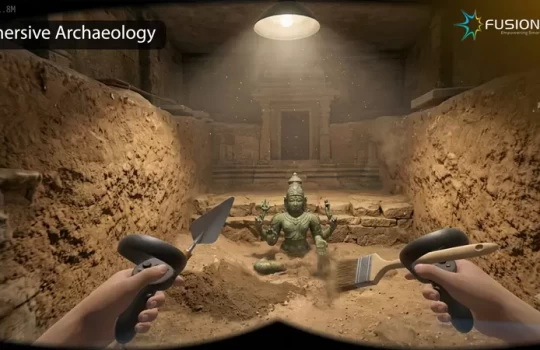
Virtual reality makes the preservation method feel more real. Rather than viewing a picture or a standard documentary, visitors step into a 3D digital space. From there, they can look around a heritage site in different ways.
A VR experience can let someone step inside an old building. They can look at carved details up close. They can also view a rebuilt scene from long ago. Or they can see how a monument might have looked in a certain time. This does not take the place of a real heritage site. It is a different layer that helps people learn more about that past.
This difference matters when we talk about heritage in a careful way. The real monument still gives the first and main link to the past. New digital tools can support the work, like helping people learn, record what is there, and make it easier to reach.
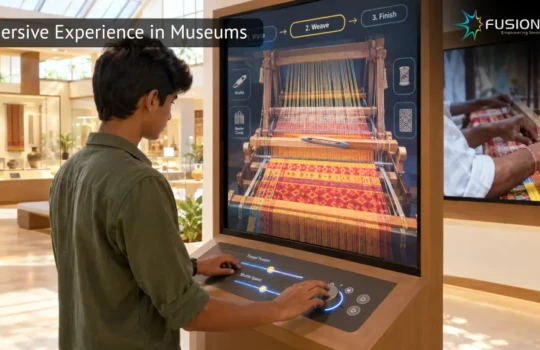
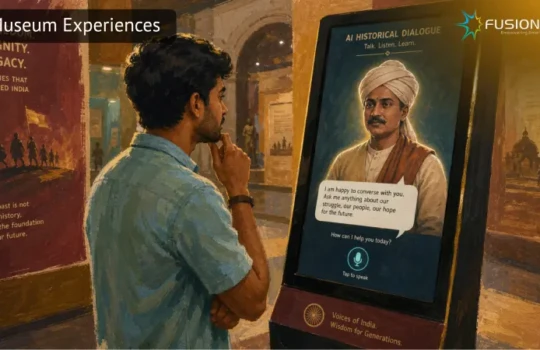
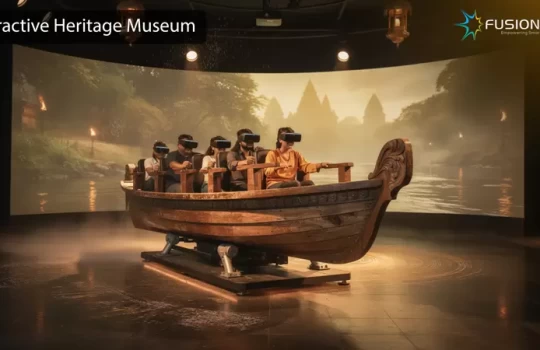
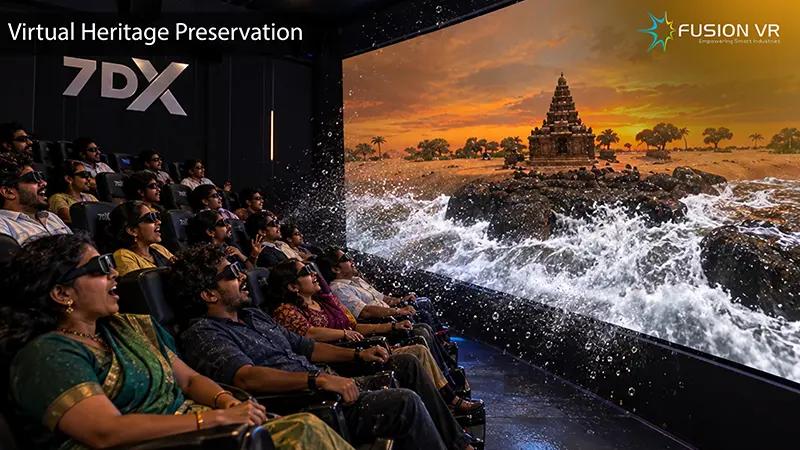
Fusion VR applies this idea to digital museums. Its immersive museum setup uses several tools at once. These include 3D stereoscopic shows, AR and VR, holograms, projection mapping, and hands-on exhibits. The goal is to tell the stories in ways that go past standard display cases and flat printed signs.
This model may work well for heritage groups and cultural tourism efforts. Rather than sharing heritage only through written material, a museum or visitor center can let people engage with the past. Visitors can explore the surroundings, follow the story over time, and see how events and places connect.
A heritage experience might help people see how an old city was laid out. It can also show how makers carried out their everyday craft. Sometimes it explains how a key monument changed as years passed. Other times it focuses on an archaeological area and who lived there before. The point is not to chase tech just because it exists. Any tools or devices should let visitors grasp the heritage message.
A big benefit of keeping sites in digital form is that more people can reach them. Many cannot go to a UNESCO World Heritage location. Travel can be too far. Money can be tight. Some places are hard to access in person. Age and health can also get in the way. In some cases, local rules at the site limit entry.
A virtual heritage platform can help with some limits. It shares digital copies from anywhere. That means a student can look at a heritage setting while sitting in a classroom. Researchers can also study digital files without being in the same place. For people far away, they can see important sites without taking a trip right away. If someone has trouble moving around, they may still enter and view places that are hard to reach in person.
Fusion VR has talked before about how virtual museums can let people visit from home. These sites can run in VR and show objects, art, and exhibits in a digital form.
Learning can open many doors. Teaching that focuses on heritage can end up tied to dates, family names, and long passages. New immersive tools can turn those details into hands on moments.
A student studies an old building site. Rather than only staring at a book picture, the student can move through a 3D model. They can point out parts of the structure. They can hear a guided talk. They can also check small details from different angles. A teacher can lead the class through separate areas of the virtual space. While doing that, the teacher can link what they see to lessons in history. The discussion can also touch archaeology. It can connect to architecture too. The class can further relate the site to geography and to cultural topics.
Hands-on learning like this can help younger people feel a closer link to their past. Fusion VR’s Museum 2.0 takes a similar path by putting participation first. Instead of only looking at something behind glass, visitors can join in and work with the experience.
Virtual heritage work can also help with sustainable cultural trips. Well known heritage places often get a lot of visitors. Digital tools can give people another way to learn about places that are fragile. They can also show parts of a site where large crowds are not a good fit.
A visitor centre close to a heritage site could set up immersive VR so people can see fragile caves, places they cannot reach on foot, or older historical settings before they step onto the real grounds. Done this way, visitors get background and the site may not need to let everyone go into the most delicate spots.
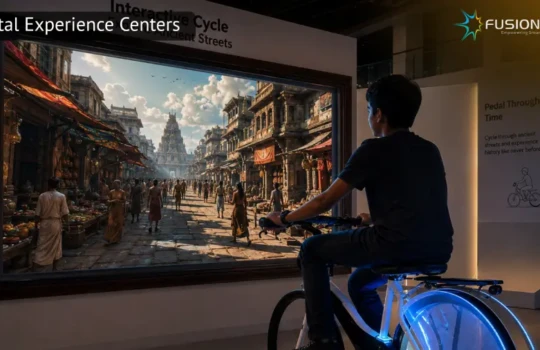
Experience centres can matter a lot in this space. Instead of showing digital tech as a single setup, they can mix several things into one clear visit. For example, you get stories, hands on exhibits, interactive screens, projection, AR, and VR. All of it can be arranged so visitors move from one stop to the next.
Fusion VR describes experience centres rooms that mix tech like virtual reality and augmented reality. They may also use projection mapping. Some centres add interactive screens. Others include multisensory set ups. The goal is to let people take part in cultural experiences.
For UNESCO places, these centres can work like doors into heritage. A Visitors might start with a short talk about the site and its past. Next, they could step into a rebuilt scene that feels real. After that, they can check hands on details about the digging and the findings. Then they would walk to the real spot with a clearer sense of what they will see.
Digital preservation can also guard non-physical heritage. Heritage is not only old sites and stone monuments. It includes skills and crafts passed by hand. It also covers ceremonies and shared rituals. Performing arts matter too, as do family and local food traditions. Oral histories hold memories that people keep. Everyday community practices are part of heritage as well.
Digital storytelling can link these parts to the real site. You can pair a 3D model of a historic place with interviews, old photos, audio, films, maps, and stories shared by local people. UNESCO also supports digital heritage work that points to a tie between World Heritage sites and the skills, memories, and traditions tied to them.
The outcome can show heritage in a fuller way. Visitors do not only look at a monument. They start to get how real people, daily customs, and the past shaped what it stands for.
Virtual preservation needs care. A model that looks great on screen does not always match what really happened. Digital heritage work should involve many kinds of people. Historians and archaeologists bring context. Conservators help protect details. Architects can read the space. Museum staff know what visitors expect. Community voices matter too. Designers and tech experts handle the tools and files.
Keep authenticity, provenance, and records at the center. Digital work should clearly separate original evidence from interpretation and from any reconstructed parts. The goal is to improve how people understand heritage. It should not turn the past into a made up story.
This is where museum and experience centre specialists matter most. Fusion VR says its museum work is done with curators, cultural experts, artists, designers, software engineers, and other tech specialists. Teams like this are needed when technology is used to explain places with cultural value.
Long-term digital preservation has to be thought about. Making a 3D model now does not mean it will still be easy to access in decades. Digital files must be kept in the right way. They need storage, clear documentation, backups, and metadata. They also need file formats that can be supported as tools and systems evolve.
A heritage authority has to look past the first day of a VR rollout. The digital item should be seen as part of the wider preservation setup. You can keep the original material on its own, like good scans, photos, 3D models, notes from research, and the supporting records. This can be stored without depending on what visitors see through the public app.
Virtual heritage preservation will probably feel more hands on in the years ahead. New tools could help people move through old places in a more personal way. Software that mimics human thinking, along with mixed reality and spatial computing, may also make advanced 3D spaces run better. In the future, visitors might be able to speak their questions while they are inside the site. They may switch between different time periods and look at how things changed. They could also choose which info layers to view based on what they care about.
Fusion VR has looked at a mix of museum spaces. In these ideas, you get real objects on site. You also get AR and VR layers that sit on top of the room. There can be touch screens and other digital tools as well. These plans hint that the next chapter of how we share history might not be a choice between old style museums and digital ones. It could be both, used side by side.
The best online heritage efforts do not aim to swap out real heritage places. Instead, they focus on recording what is there, explaining it for others, teaching people, helping it last, and making it easier to reach.
UNESCO is showing what this could look like across countries, through its Dive into Heritage work. It started in 2025. The launch brought new tools, like interactive 3D views and digital storytelling. At first, the project mainly covered places in the Arab States region. This was done as part of the early pilot.
For heritage groups, museums, tourism offices, and cultural bodies, this can be seen as a chance to treat digitising as more than something that draws visitors in. A virtual heritage plan, if done well, can sit inside a wider effort. That wider effort can include keeping records for conservation, supporting learning, aiding study, improving access for more people, strengthening tourism links, and helping share cultural stories.
India has a wide mix of archaeological sites, old buildings, and living customs. It also includes cultural landscapes that still matter today. Because of that, there is real room to use this approach. Digital museum and experience centre projects can link places people visit with new ways to tell stories. They let visitors meet history through more than one way. People can use different senses, and they can choose how they interact.
The point is not hard keep heritage clear, easy to reach, and still important even when the area around it shifts.
Virtual heritage work helps organizations keep a digital record of locations, items, daily practices, and shared accounts. If the project is built with care for the facts, respect for the people involved, and proper conservation rules, virtual reality and similar tools can help heritage reach more viewers while still honoring the real sources.
UNESCO World Heritage sites can benefit from this in a clear way. It links keeping things safe with letting more people take part. Even if a monument stays behind protection, people can still reach its meaning. A sensitive landscape can be mapped and viewed through digital tools. If one building part is missing, a rebuilt section can show it, but it should be labeled. If a traditional custom is at risk, recordings and photos can help people see and listen through videos and other media.
Heritage preservation is not only about keeping objects safe, and it is not only about making digital copies. Going forward, it will mix the two. Care will still focus on the real items. At the same time, new tools will help more people reach the records. Better stories that pull you in will also help younger audiences see what the heritage means and why it matters.
Fusion VR has built immersive digital museums and experience centres. One example shows how different tech can fit into a space for visitors. Their digital museum uses AR and VR, plus stereoscopic 3D. It also uses holograms, projection mapping, and hands-on displays. The goal is for people to take part in the stories. Visitors are not just reading text on a wall.
UNESCO, national governments, museums, and heritage groups are still looking at new digital tools. Because of that, virtual heritage work may take up more space in the way the world thinks about culture and preservation. The main issue is not just making the past look great inside virtual reality. The goal is to handle these tools with care. Teams need to record what is there now, keep safe items that could be lost later, and give clear context for things people cannot see in person. They also have to help people reach the cultural narratives that shape what many of us share.
If you are planning an immersive museum, a heritage interpretation effort, or a digital experience space, start with the heritage story first. Then pick the technology that fits that story. Options include VR, AR, 3D modelling, holography, and projection mapping. These tools matter, but the lasting worth comes from what they help you share. That includes real knowledge, authentic detail, and the cultural meaning behind it.