Digital Museums › Services › Feasibility Study
Feasibility Studies for Digital Museums
Before an institution commits capital, Fusion VR establishes whether a proposed digital museum will actually work. Whether the story is strong enough to carry a visit. Whether the site can hold what is planned. Whether the technology suits the content rather than the brochure. And whether the running costs are still affordable ten years on. Some studies conclude that a digital museum should not proceed, and we have given that genuine advice to many past enquiries.
Why a Feasibility Study Comes First
A digital museum is a large, public and permanent commitment, and the most expensive mistakes in one are made before any drawing exists. Fusion VR’s feasibility study is a structured test of the idea itself, conducted for a small fraction of the project cost, so that an institution commits capital to something that will work rather than discovering the flaw after the money is sanctioned.
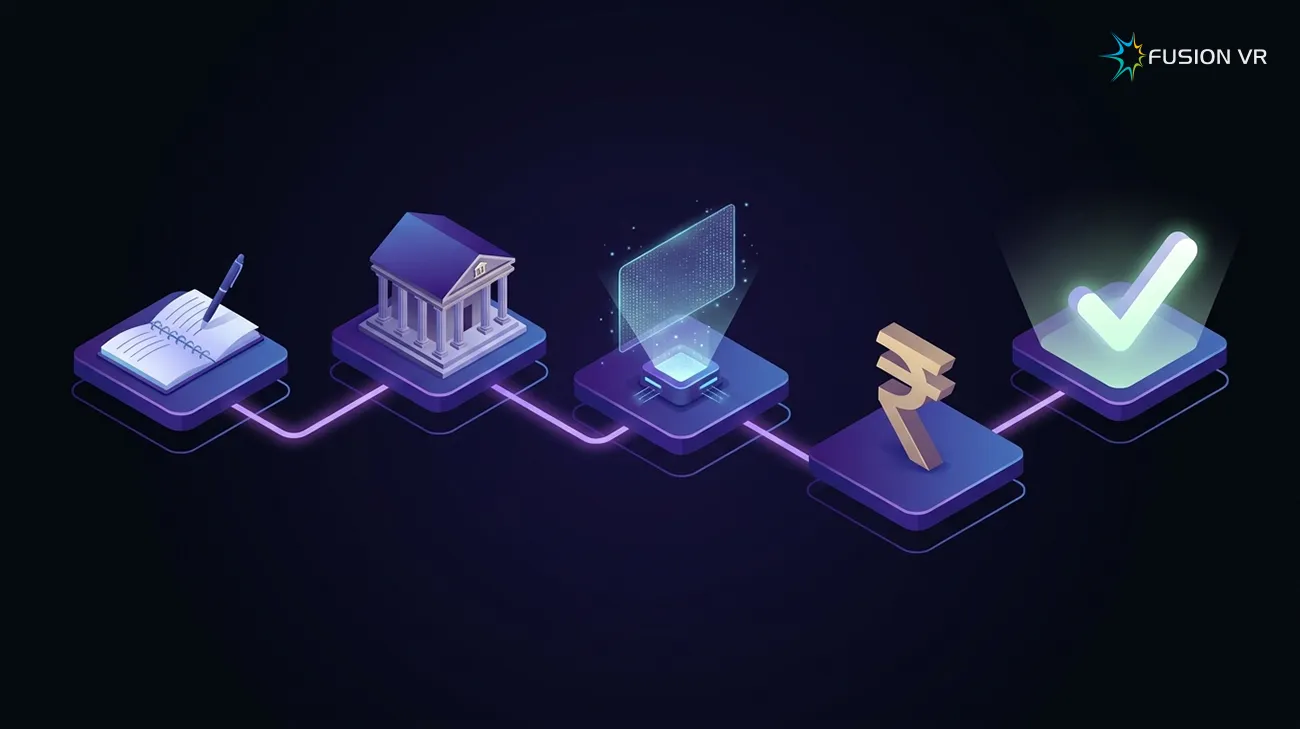
What a feasibility study is. It is a written, evidence based assessment of whether a proposed digital museum can succeed: whether the story exists and the material survives to tell it, whether the site can physically and technically hold the experience, whether the technology proposed suits the content and the audience, and whether the institution can afford not only to build it but to run it. It ends in a report with findings, risks, options at different levels of ambition and cost, and a clear recommendation.
The failure it exists to prevent. Digital museum projects rarely fail loudly. They fail quietly, in predictable ways. A building is committed before anyone checks whether its ceiling heights can take large format projection. A technology is chosen from a brochure before anyone asks what story it is meant to carry. A capital budget is sanctioned with no operating budget behind it, and within three years galleries are switched off to save power. Every one of these is visible in advance, at the cost of a study, and invisible afterwards until it is expensive.
The four questions, in the order they matter. Our assessment works through four questions in sequence: is there a story worth telling and is the material there to tell it; will the site support it; is the technology appropriate to the content; and do the numbers hold. The order is deliberate. A digital museum with a weak story fails no matter how good its technology, which is why the story is tested first and the technology third. The next sections of this page take each question in turn.
What it is not. A feasibility study is not a sales document, and it is not the first chapter of a proposal we hope to win. It tests the idea against evidence, comparable projects and professional judgement, and where the evidence says the project should not proceed, the report says so. We have given that advice to many past enquiries. It is never the answer an institution hopes for, but it is worth far more than a yes that leads to a failed project. It is also not a guarantee. It cannot promise visitor numbers, and any consultant who offers a guaranteed footfall figure is selling confidence rather than analysis. Our projections are ranges with stated assumptions, and we tell you which assumptions the outcome is most sensitive to.
Where it leads. Where the assessment supports proceeding, the study becomes the foundation for everything after it: the master plan draws on its site findings, the Initial and Detailed Project Reports draw on its scope and cost work, and the institution enters the approval process with evidence rather than enthusiasm. Where it does not support proceeding, the institution has spent a small sum to avoid a large mistake, and we consider that a successful engagement.
Is There a Story, and Is the Material There to Tell It
This is the question most often skipped, and the one that sinks the most projects. An institution may hold a magnificent collection with no narrative thread, or a compelling narrative with almost no surviving material to illustrate it. Fusion VR tests both before anything else, because a digital museum with a weak story fails no matter how good its technology is.
What we assess. We examine what actually exists to build the digital museum from: archives, oral histories, photographs, film, documents, artefacts, site remains and academic scholarship. We map that material against the story the institution wants to tell, and we identify the gaps: the periods with no images, the events described only in text, the people of whom no likeness survives, the objects that were lost. Every digital museum has gaps. The question is whether they are known at the start or discovered during production, when each one becomes a delay and an unplanned cost.
Where material is missing, a digital museum can recreate it. A destroyed temple can be rebuilt in 3D from archaeological drawings. A historical figure with no surviving film can be brought to the screen through animation. A battle described only in text can be visualised. This is one of the genuine strengths of the digital museum form, and it is often the reason an institution chooses it. But every one of those recreations has to be researched, designed, modelled, animated and rendered from nothing, and that work carries a real cost and adds months to the schedule. Knowing at the start how much of the digital museum must be created rather than digitised is the difference between an accurate budget and a painful revision later.
Recreation carries responsibility. When we rebuild a lost structure or depict a historical figure, the recreation will be treated by visitors as true. That places a duty of accuracy on the research behind it. Our recreations are built from archaeological documentation, scholarly sources and, where the subject is religious or cultural, consultation with the institutions and communities who hold the tradition. Where the sources disagree or the evidence is thin, we say so in the experience itself rather than presenting a guess as a fact. An institution’s credibility stands behind every image on its walls, and we treat that as a constraint on our work, not an obstacle to it.
The narrative test. Material alone is not a story. We also test whether the proposed narrative can actually carry a visit: whether it has a beginning that orients a visitor who arrives knowing nothing, a sequence that builds rather than repeats, moments of genuine emotional weight, and an ending that sends the visitor out with something to hold. A collection arranged by category is an exhibition. A story with an arc is an experience. The difference determines how long visitors stay, what they remember, and whether they tell anyone else to go.
What the institution receives. This part of the study delivers a content inventory of what exists and where it is held, a gap analysis stating what must be created and at what indicative effort, an assessment of the narrative’s strength with specific recommendations, and a view on research still required. If the story is not yet strong enough, we say what would make it so. Sometimes that is further research. Sometimes it is a different framing of the same material. Occasionally it is the honest finding that the story cannot yet carry a digital museum, and the institution should wait until it can.
Will the Site Support It
Every immersive experience makes physical demands on the building around it, and a site that cannot meet them forces compromises that no amount of content can repair. Fusion VR surveys the site or the proposed building against what the experience will actually need, and where the building does not yet exist, this is the cheapest moment there will ever be to influence it.
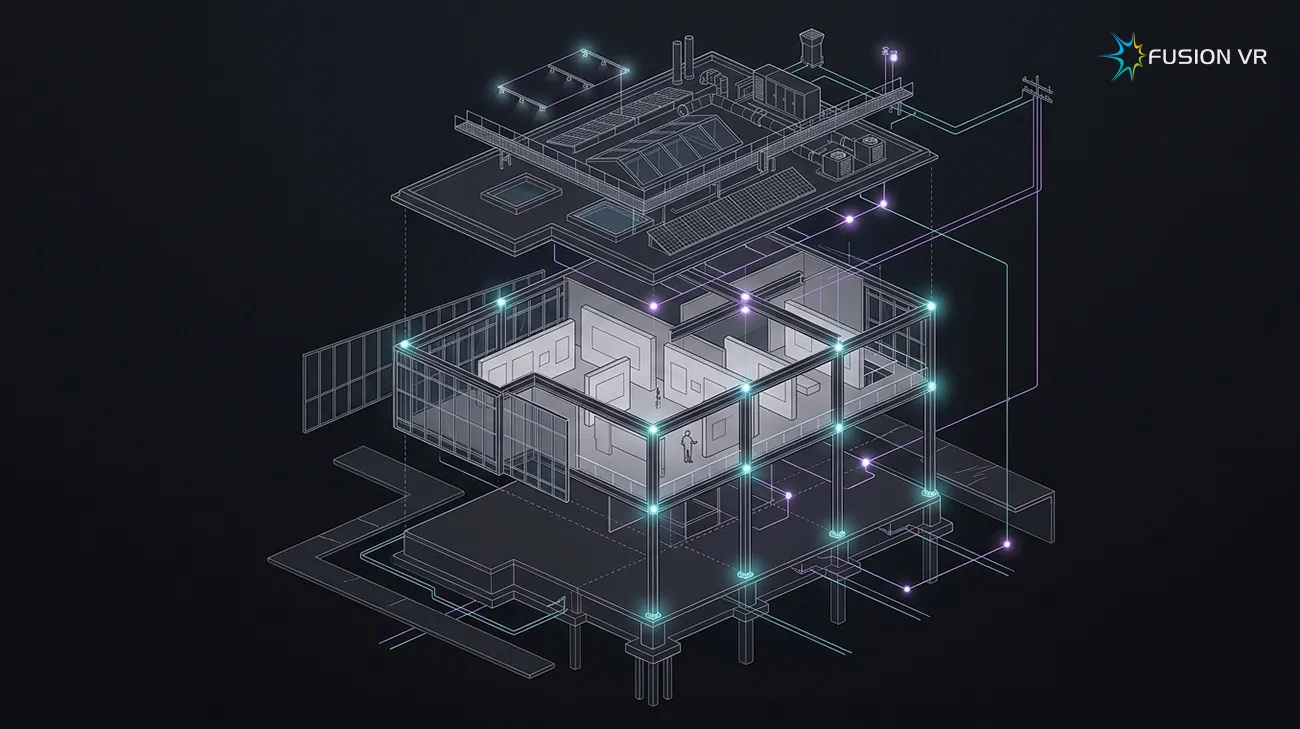
What we survey. Fusion VR assesses the space across every dimension the experience will draw on: dimensions, proportions, ceiling heights for large format projection and column free spans; floor loading for motion platforms and heavy rigging; available power supply and the headroom for the electrical load immersive systems demand; cooling, air conditioning and ventilation for equipment and visitors; acoustic conditions, sound isolation between galleries, and natural and ambient light that would wash out projection; blackout capability; cable routing paths; fire detection and hydrant routing; service and maintenance access; accessibility for visitors with disabilities; and circulation width for the crowd the digital museum is designed to draw, on its busiest day rather than its average one. We capture 360 degree video of the site during the survey, so the space can be revisited offsite and evaluated remotely with other stakeholders without waiting for a second visit.
Three starting points, three different studies. Where no building exists yet, the study is at its most valuable, because the architecture and the experience can be designed together. We advise on the space each experience needs before the drawings are frozen, so the building is shaped around ceiling heights, sightlines, power, acoustics and visitor flow rather than the experience being squeezed into a shape chosen without it. Where a building exists but stands empty, we establish what it can hold and what would need modification. And where a working museum is being digitally upgraded, we assess what should be preserved, enhanced or replaced, and whether the upgrade can be phased so the institution stays open, gallery by gallery, rather than shutting its doors for the duration.
What happens when the building comes first. Most institutions approach a digital museum consultant only after the building is constructed, and the same avoidable problems appear again and again: ceiling heights that restrict large format projection, HVAC ducts and fire suppression pipes running exactly where a screen or projector needs to be, power supply rated well below what immersive systems draw, finished civil work broken open for soundproofing and cable routing, lighting and interiors reworked after installation, and visitor flow forced through walls that were fixed before anyone planned the journey. Every one of these is expensive after construction and nearly free before it. A feasibility study conducted early is how an institution avoids paying for the same building twice.
Heritage buildings need a different discipline. A protected or heritage structure cannot simply be drilled, partitioned and cabled. For these sites we bring in our long associated conservation architects, specialists with decades of experience, to guide the assessment and flag conservation constraints early. The study then establishes what is genuinely achievable within those constraints rather than what would require interventions the structure cannot accept. Some of the most loved digital experiences in the country run inside heritage buildings, and they run there because the technology was designed around the building rather than forced into it.
What the institution receives. This part of the study delivers a site assessment against every requirement above, a statement of what the site can support as it stands, what would need modification and at what indicative effort, the constraints that should shape the master plan, and, for heritage sites, the conservation position. Where the finding is that the site cannot reasonably hold the ambition, we say so and set out the alternatives: a reduced scope that fits, a different technology mix, or a different site.
Is the Technology Right, and Do the Numbers Hold
The last two questions decide whether the digital museum is buildable and sustainable. Fusion VR tests whether the technology proposed actually suits the content, the audience and the operating reality, and then whether the numbers hold: what it will cost to build, what it will cost to run every year, and what return the institution should honestly expect from it.
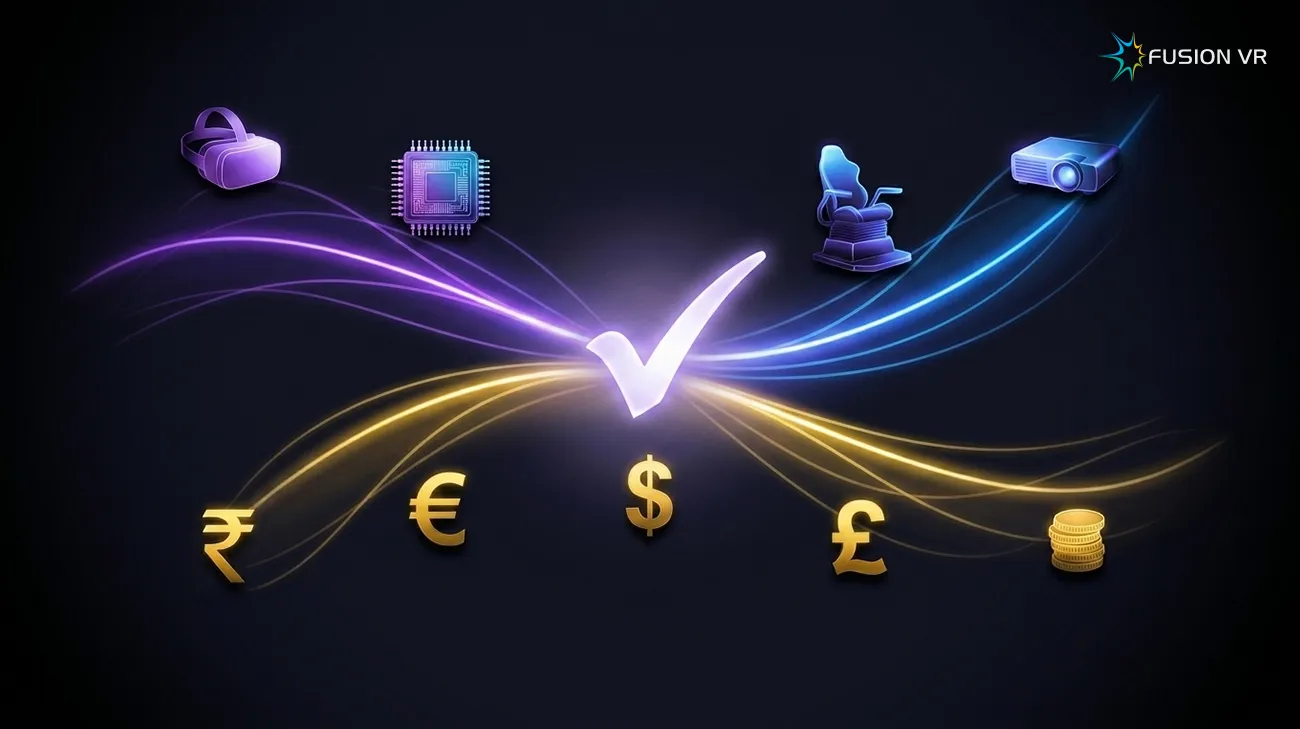
Technology tested against the content, not the brochure. Immersive technology is frequently selected before anyone has decided what the digital museum is trying to say. We work the other way round. Each proposed experience is tested against the narrative it must carry, the audience it must reach, the throughput it must sustain, and the operating burden it will impose. A gallery that draws school groups in busy waves has different requirements from a contemplative space. An experience that needs one or more operators present every day costs considerably more across fifteen years than one that runs unattended. Fusion VR will recommend a simpler solution where a simpler solution is better, and we say so in writing.
What shapes the capital cost. A digital museum’s budget is shaped by scale, content, technology and site rather than any single number: the built up area and gallery count, the type and quantity of immersive experiences, the volume of original content that must be produced, the class of hardware specified, and how much civil and interior work sits inside the scope. The study presents indicative capital cost bands built from digital museums we have delivered and designed, structured into clear cost heads, so the institution can see what each part of the budget buys and can adjust scope intelligently rather than cutting blindly.
The operating cost, stated before sanction. The annual cost of running a digital museum is a real and recurring commitment, and it is the number most often missing from a proposal. The study sets out a realistic annual operating estimate covering staffing, power, consumables, cloud and software subscription charges, content refresh and maintenance, so the institution sanctions the project knowing both figures, not one. A capital budget without an operating budget behind it produces galleries switched off to save power within three years.
Fitting the budget cycle. For government and institutional clients working within annual allocations, the study can set out phasing options: galleries sequenced across financial years, each phase delivering a complete visitor experience on its own, so approvals and fund releases align with the budget cycle rather than fighting it.
Footfall, honestly projected. We project footfall from comparable institutions and local visitor patterns, as ranges with stated assumptions. We tell you which assumptions the outcome is most sensitive to, and we do not offer guarantees, because a guaranteed footfall figure is confidence dressed as analysis.
What return actually means for most digital museums. On return, we would say something that is not always said in this industry. For most of the digital museums we work on, financial return is not the objective and should not be the measure. A memorial museum, a spiritual or heritage experience, a cultural institution or a science centre exists to carry knowledge, memory and values to people who will not encounter them any other way. Its return is a school child who understands something they will hold for life, a visitor who leaves with a sense of where they come from, a generation for whom a piece of history became real rather than remaining a paragraph in a textbook. That is a genuine and serious return, and it is the reason most governments, trusts and institutions build these places at all. It is simply not a return that appears on a balance sheet.
Where revenue does matter, it is modelled honestly. This distinguishes a digital museum from a theme park, and the distinction matters when the budget is being defended. A theme park is a commercial investment built to recover capital and generate profit, and every design decision within it can properly be judged on that basis. A digital museum built by a public department or a charitable trust is usually an investment in public understanding, and judging it by ticket revenue alone misreads what it was commissioned to do. Where an institution does need the project to be financially self sustaining, we model the ticketing, retail and event assumptions plainly and tell you whether they are realistic. And the tangible effects are real: immersive experiences demonstrably increase footfall, dwell time, repeat visits and revenue where revenue is the aim. We simply refuse to dress a cultural proposal in commercial language it does not need.
Questions Institutions Ask About Feasibility Studies
Most institutions considering a feasibility study have never commissioned one before, and the questions they bring are practical: how long, how much, whether it is really necessary, and what happens afterwards. Here are the answers we give across the table. If your question is not here, we would rather you asked us directly than left without an answer.
If your concept is settled, your site is known to suit it, and your budget is realistic for the ambition, you can go straight to documentation, and we will say so rather than sell you a study you do not need. A feasibility study earns its cost where any of those three is uncertain: the story is not yet tested, the building is not yet assessed, or the numbers are hopes rather than estimates. Committing a DPR to an unfeasible idea produces a beautifully documented mistake.
Typically four to eight weeks, depending on the scale of the proposal, the state of the material, and how quickly the site can be surveyed and stakeholders convened. A single gallery assessment sits at the short end. A multi gallery institution with scattered archives and a heritage building sits at the long end.
A small fraction of the project cost, priced to the scope of the assessment rather than as a percentage of the eventual budget. We quote after understanding the proposal’s scale, the site situation and the state of the content. It is deliberately priced so that the decision to test an idea is never harder than the decision to build it.
No. Many institutions come to us with an idea and a question rather than a budget, and the study is often what produces the realistic figure they then take into their approval process. An initial discussion costs nothing, and we will tell you honestly at that stage whether a study is worth commissioning at all.
A written report with our findings across story and material, site and building, technology fit, capital and operating cost bands, footfall projections with stated assumptions, risks, options at different levels of ambition, and a clear recommendation. The report belongs to the institution. It is yours to act on, to revise, or to take to whoever you choose.
We say so plainly, along with why, and what would need to change for the answer to become yes. Sometimes that is more research, sometimes a different site, sometimes a smaller first phase that proves the concept. A negative finding with a path forward is not a dead end. It is the institution’s protection against a much more expensive way of learning the same thing.
Judgement Built on Delivered Work
Fusion VR’s feasibility findings carry weight because they are grounded in delivery, not theory. Across two decades we have designed and delivered digital museums for government departments, cultural bodies, religious trusts and corporates, and we have advised many past enquiries not to proceed. An assessment is only as honest as the experience behind it, and ours has been earned on real sites.
Related Services
Where a feasibility study supports proceeding, master planning and detailed project documentation are the two steps that usually follow it.
Test the Idea Before You Commit to It
Tell us what you are considering, where it would stand, and what stage your thinking has reached. We will tell you honestly whether a feasibility study is worth commissioning, and what it would examine. The first conversation costs nothing.