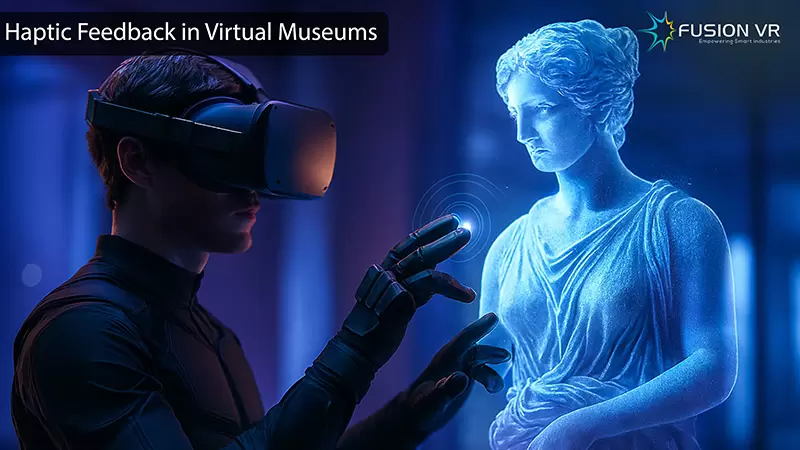
The manner in which individuals experience culture, heritage, and history is going through a drastic transformation. Virtual museums, which were previously recognised mainly for visual and audio immersion, are now taking a new step forward where touch becomes an important aspect of interaction. Haptic feedback, the technology that brings back the feel of touch in the digital world, is changing the museum experience by giving visitors different sensations, such as physical sensations, textures, vibrations, and force responses that make the virtual meetings feel very real. Haptic-based experiences are seen as the strongest tool for immersive learning, as one of the ways museums and cultural institutions are trying to attract visitors of all ages. The future of cultural storytelling has been opened up beyond just seeing and hearing; it also includes touch, feel, and interacting with virtual objects in totally new ways.
The merging of haptic feedback with virtual museums brings in new experiences that are as nice and rich as the real world. Just think of the feeling of the carvings on ancient stone, the roughness of the handwoven fabrics, or the metallic coolness of the centuries-old ancient object. Also, this is now possible through the utilisation of sophisticated haptic systems. The use of haptic gloves, haptic suits, and other devices combined with VR systems lets the visitors handle and feel the digital replicas of the historical objects without risking damage to the originals. Such a set-up not only facilitates the interaction of visitors with the collection but also causes a shift in the ethical obligations of museums concerning the preservation and accessibility of culture.
Among the main challenges museums have to tackle is the constant struggle between conservation and the visitor’s interest. Usually, the historical treasures are stored behind glass, which reduces the public’s direct contact. The combination of haptic feedback with virtual museums, however, is a great solution for this issue. With the help of their haptic devices, the visitors are able to “touch” the delicate ancient object while the actual ones remain unobserved. This way, especially for the students and the young visitors who usually learn the easiest this way, learning becomes safe, interactive, and unforgettable. Starting with 3D virtual sculptures or experiencing the resistance of an ancient tool, they get to know the skills of the craftsmen who made these historical items much better than just reading a description or watching a video.
Storytelling is another area where the future of haptics in virtual museums will definitely be. The attraction of cultural stories becomes much greater if the visitors can actually feel the sensations that go along with the narratives. The virtual tour of the past will end with the user actually feeling the blacksmith hammer’s vibration, the roughness of the stone walls, and listening to the buzzing of the old machines. In the same way, the historical museum visitors who are watching the past through their senses can also benefit from the haptic cues used to guide them, build their emotional connection, and increase their comprehension. Thus, the sense of touch is the layer of reality that makes the emotional connection stronger and the memory of the museum visit longer.
The evolution of technology has brought about virtual museums that employ various touch-interaction techniques, with the more advanced ones. The basic vibration patterns have been replaced by modern touch feedback systems that are capable of simulating textures, pressure, temperature, and even the differences between materials. The use of touch in cultural experiences is now able to transfer the feeling of contact with warm surfaces, cold metals, coarse wood, smooth ceramics, and even the resistance encountered in carving or painting. Moreover, when people visit a virtual exhibition of crafts, they are able to experience not only the tension that comes with the weaving of threads but also the pressure that is needed in shaping clay. This kind of accuracy allows the transfer of cultural knowledge in very sensory, engaging ways.
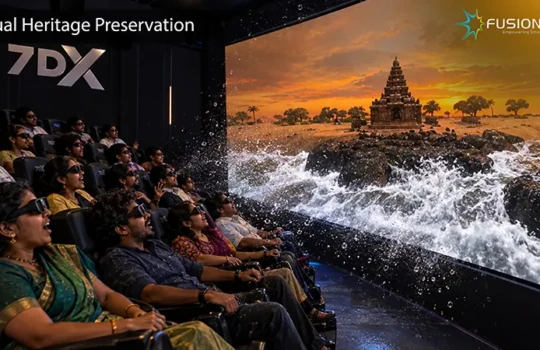
Museums are indeed employing virtual reality and touch technology to bring back to life the environments that have been destroyed. Virtual worlds with touch sensations can be built for the lost heritage places, ruined buildings, and ancient cities, where people can fully explore the virtual space. The touch sensations simulate the physical world, and the users can be able to go through the temples that have been destroyed, touch the produced ancient objects or the environmental factors like hotness, winds, and vibrations. The audience of the cultural heritage through the multi-sensory simulation is given a chance to experience it to the fullest, thus getting more involved than just showing them the traditional exhibits. Many museums consider this to be one of the most significant impacts of touch-based technology, since it allows the recreation of lost or inaccessible homes with utmost realism through the sense of touch. The inclusivity aspect is yet another significant benefit that comes with touch-based virtual museums. Just as visually challenged people can navigate touch-based interfaces, they will also be able to experience the objects and exhibits via touch-based signals. By employing tactile contouring, force responses, and texture simulations, virtual museums provide a completely accessible cultural experience. This inclusive design strategy brings cultural learning to wider audiences and perfectly matches the worldwide initiatives to make education and heritage access available to all.
In several institutions, the use of virtual museums fitted with haptic feedback has opened up new avenues for remote access. People from different parts of the world can engage with the museum’s collections using VR devices instead of making a physical trip. This is very useful for educational institutions, universities, corporate experience centres, and international cultural projects that want to give students and learners significant hands-on experiences without considering distance as a barrier. Virtual learning supported by touch not only caters to cultural education globally but also aids collaboration in research between universities.
Moreover, touch-based feedback is one of the factors that change the design of interactive museum installations. The immersive digital experiences start to include the aspects of multi-sensory storytelling, virtual historical object manipulation, gesture-based interactions, and simulated environments that change physically in response to user actions. Numerous interactive museums are implementing AR VR museum technologies to merge real-world elements with haptic VR layers, thus forming hybrid experiences where users interact with both physically and virtually existing parts. This perfect merging permits museums to create fascinating narrative journeys that lead the audience through different periods of cultural evolution, such as the past, present, or future.
The increasing use of VR experience centres and haptic devices is another reason why these new innovations in cultural preservation have come about. Digital museum environments are a large part of this and make it possible for the institutions to document, scan, and preserve heritage objects in extremely high resolutions. When these 3D models are combined with touched-based features, for instance, texture mapping and pressure profiles, the digital copy is treated as a living part of the original historical object. Thus, fragile objects are not paged, and at the same time, the cultural knowledge is kept alive by the immersive experiences. For the future, such touch-based virtual replicas are seen as no less than the main educational and research tools.
Haptic-enabled virtual museums not only provide new ways for conservation and education, but also new opportunities for creative exhibitions. In real-time, artists, historians, and cultural organizers can create interactive installations that react to user input. The visitors can conduct virtual objects, mix up historical items, or even touch the creation of an artwork as it moves through time. Touch makes the public a part of the cultural expression – no longer a spectator but a Creator. The use of touch in storytelling makes museums more attractive and relatable to young and technology-oriented audiences thus helping museums to stay in the loop.
Haptic feedback virtual museums are coming forward as major attractions for destination experiences. Besides, the boards of tourism, the cultural centers, and the big public exhibits are all incorporating haptic VR into their visitors’ programs. The installations are delivering unforgettable and powerful interactions that stimulate people to dig into the culture more or go to the real heritage sites. These experiences are especially powerful in promoting the civilisations of the past, archaeological findings, and craftsmen who practice traditional methods, which are otherwise hard to show physically.
Haptics combined with cutting-edge VR hardware significantly impact the corporate experience centers. The touchable VR environments can be used for training, employee education, and cultural environment simulation for innovation projects by the companies that are into heritage conservation, media, engineering, and design. Virtual touch experiences are perfect for developing training modules that are interactive and narrative-based, hence making them effective for knowledge transfer and brand engagement.
Considering the foreseeable future, it will be the progress of haptic technology that constantly redefines the operation of virtual museums. The new instruments like ultrasonic haptics, microfluidic feedback systems, soft robotics, and full-body haptic suits will interact with touch in a way that is far more extensive than what is possible today. The user will be able to feel different things such as weight, tension, temperature changes, and complicated force patterns thus making the virtual experience almost as good as the real one. Museums will use photo-realistic VR visuals, spatial audio, and AI-driven storytelling to provide visitors with such immersive cultural journeys that they would hardly notice the traditional limitations.
Another turning-point factor is the utilization of AI and machine learning. The haptic sensations in virtual museums can be modified according to the user’s behaviour, age, comfort level, or learning preferences due to AI-created haptic profiles. The simplified tactile cues might be given to kids, while the more complicated ones could be used by advanced students or researchers who want to feel minute textures and pressure variations. AI may even generate the haptic profile of the lost artifacts by studying the documents, material data, and the methods used by the ancient craftsmen. This enables museums to keep objects which do not exist now physically, hence, the cultural heritage gets preserved in an immersive digital form.
The emersion of 5G alongside edge computing will, in addition, permit instant haptic streaming. Such a scenario will allow the public to be a part of virtual museums with high-quality touching and not require heavy hardware in their homes. Haptic gloves for VR, portable devices, and light controllers can give the sensation of touch quickly and easily. Virtual museums are already seen as part of the culture next to real-life institutions when the technology becomes cheaper and more common.
Haptic feedback in virtual museums opens up a new frontier of touch-driven cultural experiences. It is not just a future of heritage that is seen but also one that is sensed—where ancient objects, artistic expressions, and traditional crafts are brought to life through tactile immersion. This new dimension of sense not only adds to the learning process but also deepens emotional connection and makes the preservation of culture extraordinarily realistic. With the evolution of virtual museums haptic integration, there is no limitation on the global audience; they all have access to the world’s cultural treasures. The future of museums is in the hands of multi-sensory experiences that can make the past real and haptic feedback is one of the most revolutionary technologies steering this change.