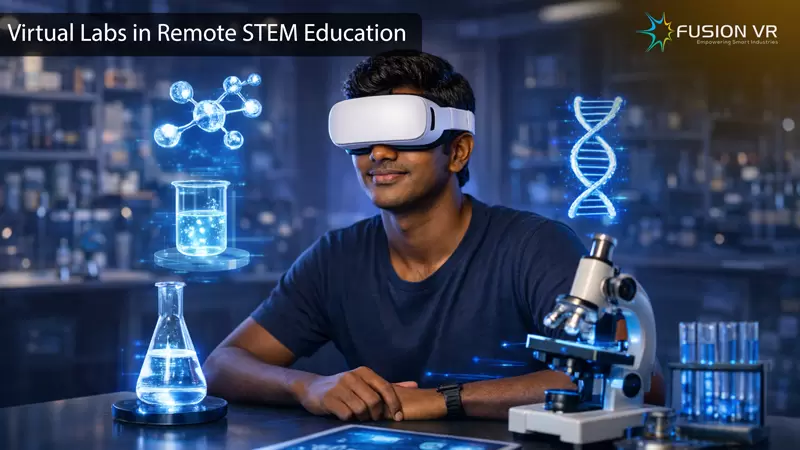
Digital technologies have evolved quickly to transform many educational areas while virtual laboratories have emerged as the most significant educational innovation of recent times. The increase in remote learning among schools, colleges and professional training facilities has created a need for virtual labs which provide effective STEM education solutions that operate outside traditional classroom settings. Hands-on experimentation and real-world problem-solving activities represent the core basis of Science, Technology, Engineering, and Mathematics disciplines. Physical labs become inaccessible because geographic restrictions, high expenses and inadequate infrastructure and safety requirements prevent entry. Students can conduct experiments and study complex systems through virtual labs, which use immersive technologies to create real-world learning environments that they can access from any part of the globe.
Remote STEM education has gained momentum, particularly after global shifts toward online learning. The remote learning environment enables students to access online lectures and digital materials that deliver theoretical content, but it creates difficulties for them to perform hands-on experiments. Virtual labs address this challenge by recreating laboratory environments through interactive simulations, 3D models, and immersive experiences. Students can conduct experiments and manipulate equipment and observe chemical reactions, and test engineering models within a digitally simulated environment. The laboratories use real-time feedback together with interactive visuals and guided instructions to create a learning experience that resembles actual laboratory work.
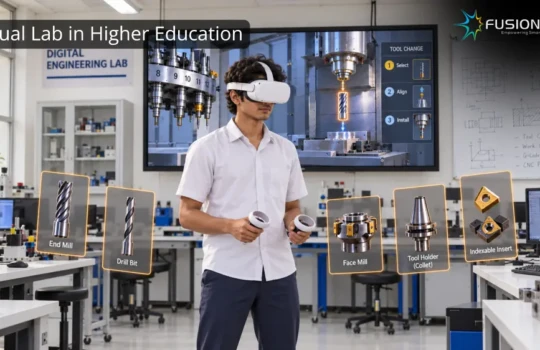
Virtual reality stands as the main technological element which enables virtual laboratories to achieve operational success. Through VR-enabled platforms, users can experience complete virtual environments which allow them to operate scientific equipment and laboratory machinery and conduct experiments as if they were in an actual lab space. Students develop better understanding of scientific concepts through structured virtual reality training programs. The students learn better through interactive process which allows them to see and touch the material. Students studying biology can use microscopy to view cellular structures while engineering students can create virtual mechanical systems and chemistry students can perform dangerous experiments in a secure environment.
Virtual laboratories support equal access to high-quality educational opportunities. The operation of traditional laboratories needs both specialized equipment and permanent facilities and continuous upkeep. Educational institutions especially those located in developing areas face challenges when trying to give all students access to these resources. Virtual labs remove most obstacles because they enable students to use advanced experimental facilities from their computers and VR headsets and mobile devices. With the introduction of VR courses educational institutions can now develop hands-on training programs that were once too challenging to deliver in remote or low-resource environments.
Virtual labs provide scientists with a second important benefit because they create a safer research environment. STEM experiments require scientists to handle dangerous materials and electrical equipment and heavy machinery which creates safety hazards because of their potential for mishandling. Students in virtual environments can conduct advanced experiments because there are no physical safety risks. Students can conduct multiple practice sessions where they make errors and correct them without damaging equipment or putting themselves at risk. The ability to conduct experiments helps students learn better because it allows them to test various situations which helps them understand how different factors interact with one another.
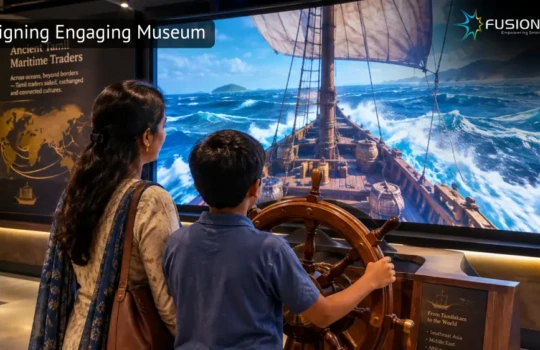
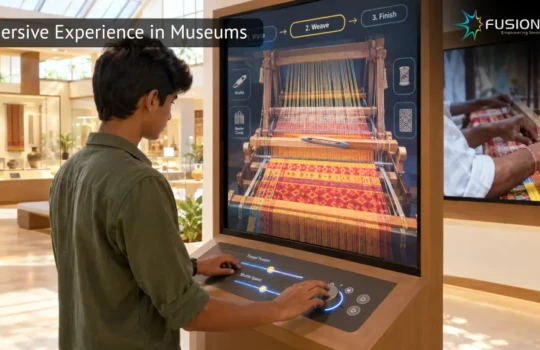
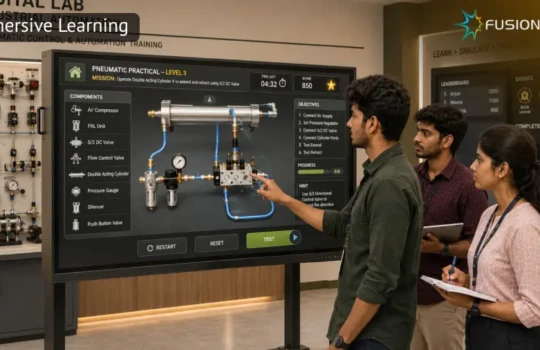
Virtual labs provide their most effective benefits to remote STEM education through their interactive features. Students in traditional online learning environments become disengaged because they spend their time watching recorded lectures and reading digital materials. Virtual labs enable students to learn through interactive experiences. Students can control scientific instruments while running simulations and watching current results. Students achieve a better understanding of concepts through interactive learning, which enables them to remember information better. Modern educational platforms include gamification systems with progress tracking features and collaborative learning tools, which enable students to conduct experiments together from different locations around the world.
The use of AR and VR training systems increases the operational capabilities of virtual laboratories. Virtual reality enables complete immersive experiences while augmented reality enables students to interact with virtual objects that appear in their actual environment. A student using AR-enabled tools can see a 3D molecular structure display on their desk and examine machine parts through interactive digital overlays. The combination of AR and VR technologies creates a hybrid learning system which combines physical and digital elements to help students learn STEM concepts more effectively and in a more engaging way.
Virtual labs serve as essential tools for teaching engineering students. Engineering disciplines require extensive experimentation, design testing, and iterative problem solving. Students use immersive simulations to create prototypes and test mechanical systems and conduct structural performance analysis in virtual environments. Students can change system parameters, which include load and temperature and pressure, to watch how these changes affect system performance. Students need to learn analytical thinking and practical problem-solving skills which are needed for their future engineering work, through this ability to create real-world simulations.
Students use virtual labs to study advanced scientific concepts that traditional classroom settings cannot demonstrate. Interactive simulations demonstrate different theories of electromagnetism, quantum mechanics and astrophysics through visualizations. Students can study particle movements and create gravitational simulations and test electrical circuits to gain deeper insights into physical laws. The interactive experiences provide students with better learning outcomes because they create real-life environments that students find easier to remember than traditional textbook material.
Virtual laboratories provide substantial advantages to both biology studies and medical training programs. Students use virtual reality environments to study human body structure and observe biological functions and practice medical operations. Students can use a virtual human body system to study organs and tissues and cells at a detailed level. The students will learn surgical methods and diagnostic techniques inside a safe educational space before they proceed to actual medical training. Medical schools now use organized virtual reality training programs to improve the competencies who will become future medical professionals.
Virtual laboratories provide their second major benefit through their ability to expand operations. The development of a virtual laboratory platform allows multiple students to access the system simultaneously because it operates independently of physical laboratory space requirements. Educational institutions can expand their reach by offering specialised VR courses to learners across different regions and time zones. Virtual laboratories provide an ideal solution to universities, online educational platforms and professional training organizations which need to deliver extensive STEM programs to their students.
Virtual labs enable customised educational experiences for students. Advanced platforms use data analytics and artificial intelligence to track student performance and provide customised feedback. The system provides extra assistance to students who have difficulty with an experiment or concept through its tutorials and practice exercises. The adaptive learning system allows students to learn at their own speed while they receive customized support. Personalised learning pathways create better student engagement, which leads to improved academic results.
Virtual labs demonstrate superior performance in achievement through their collaboration capabilities. Students in traditional laboratory environments perform experiments and analyse results through their teamwork efforts. Virtual platforms create a shared digital space that enables multiple users to work together. Students can collaborate on projects while exchanging their observations and discussing their findings at the same time. The collaborative method of learning improves educational outcomes while simultaneously teaching students essential skills needed for STEM professions.
Educational institutions that implement virtual labs receive cost savings as their primary benefit. The establishment and operation of physical laboratories demand significant financial resources for purchasing equipment and building infrastructure and ensuring safety regulations. The use of virtual labs decreases operational expenses while delivering complete experimental testing capabilities. Institutions can allocate their resources better while they create more opportunities for students to participate in hands-on learning activities. Virtual labs remove the requirement for materials which need to be used once and disposed of such as chemical substances and electronic parts which leads to lower costs for running the facilities.
Virtual laboratories now serve as a new method for developing professional skills and training for various industries. Many organizations now rely on immersive simulations for workforce training in fields such as engineering, manufacturing, healthcare, and technology. Employees can practice complex procedures, troubleshoot systems, and develop technical skills through structured AR VR training programs. The training modules enhance skill retention while minimizing risks which occur during actual training situations.
The future of STEM education depends on developing immersive learning technologies that currently exist. Educational institutions worldwide will adopt virtual laboratories because VR hardware is becoming more affordable and accessible to educational systems. Virtual labs will achieve greater realistic presence through artificial intelligence, cloud computing and real-time simulation development.
Educational institutions are already beginning to integrate virtual labs into hybrid learning models that combine online instruction with immersive practical experiences. Students can attend virtual classes and complete their assignments online while they participate in live VR platform-based simulated experiments. The blended learning model provides students with theoretical instruction and hands-on training to create the skills needed for contemporary STEM careers.
Virtual laboratories have emerged as an educational solution that enables remote students to experience science and technology education through complete virtual learning environments which offer them both physical access and interactive educational content. Students can perform experiments and study intricate systems while acquiring real-world abilities through VR and AR technologies which eliminate the need for actual laboratory spaces. The combination of virtual reality courses and virtual reality training programs and advanced augmented reality virtual reality training systems is transforming the delivery of science and technology education in contemporary digital learning environments. Virtual labs will establish themselves as fundamental educational tools for modern STEM education because educational institutions adopt these technologies which enable students worldwide to obtain practical skills while they build their analytical abilities for upcoming challenges.