The process of innovation now requires collaboration between multiple parties. The current mission of universities extends beyond academic degree programs and scholarly research. The institutions have developed into research centres that support entrepreneurship activities, technology advancements, and workforce development. Industry collaboration stands as the fundamental element that drives this transformation.
The development of artificial intelligence, augmented reality, robotics, sustainability, data science and immersive technologies has created a demand for universities to adapt their educational programs to meet market requirements. Students need more than traditional educational methods to develop the skills needed for their future professional careers. The establishment of solid partnerships between universities and businesses stands as the essential requirement for success in this situation.
The bridge between academic learning and real-world application is established through industry collaboration. The process enables institutions to establish innovation ecosystems that combine the efforts of students, faculty, startups, researchers, and businesses to solve practical problems while creating new technologies and driving economic development. The ecosystems enable organisations to develop innovative solutions while they conduct research and educational programs, which prepare students for their upcoming careers.
Universities throughout the world have developed their campuses into innovation hubs through corporate and technology companies,startups, and research organisations during the last few years. The institutions use these partnerships to develop laboratories and incubation centres, research parks, experiential learning environments and advanced technology programs that meet industry needs.
An innovation ecosystem requires more than technological elements for its operation. The system requires an environment that enables ideas to flow from classrooms through laboratories until they reach industrial and market applications. The process needs collaboration as its fundamental building block.
The main benefit that universities gain from industry partnerships results from their ability to improve academic programs. The current academic system requires universities to develop new academic programs at a pace that matches current industry needs. The rapid development of new technologies forces companies to search for employees who possess both theoretical knowledge and real-world work experience. Industry partners work with universities to develop new curricula that incorporate both emerging technologies and actual business scenarios and hands-on training programs.
Academic programs receive direct industry support through artificial intelligence and virtual reality, robotics, and data analytics because these industries provide guidance on essential skills and future developments. This system guarantees students acquire knowledge that meets present-day industry requirements instead of learning outdated academic theories.
Collaborative curriculum development also helps universities introduce interdisciplinary learning. Today’s innovation challenges need experts who understand engineering and design, healthcare and media, and computer science. Industry partners often encourage project-based learning approaches that combine these disciplines, which create adaptable graduates who drive innovation.
The collaborative work between different industries produces two main benefits, which include their ability to access advanced research facilities and high-level technological resources. The majority of universities lack sufficient financial resources to build expensive research facilities, which include immersive laboratories and simulation spaces, and advanced computing facilities. The partnership with industry organisations enables universities to receive all essential resources, which include technology support, equipment and funding and technical knowledge.
Technology companies establish innovation labs and centres of excellence at university campuses. The facilities enable students to learn about actual professional tools and workflows that exist in professional environments. The universities build their research and innovation capacity while students acquire crucial practical experience, which increases their job prospects.
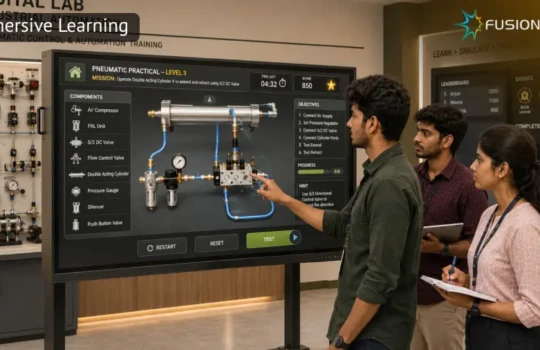
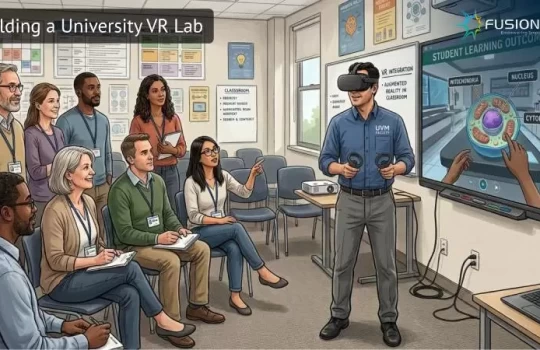
The collaborative labs provide essential support to emerging fields, which include augmented reality, virtual reality, mixed reality, artificial intelligence and digital simulations. The industry-supported immersive learning centres allow universities to provide students with practical training that simulates actual industrial work. The program develops technical skills while it promotes innovative research methods and creative solutions to problems.
Industry partnerships provide research and development support, which improves innovation ecosystems throughout various industries. Universities serve as research and academic discovery centres, while industries dedicate their efforts to developing marketable products. Innovation speeds up when these two forces work together.
Industries provide universities with access to real-world challenges, market demands, and funding opportunities. Universities contribute deep research expertise, intellectual resources, and fresh perspectives. The two organisations work together to develop solutions that are both academically rigorous and commercially viable.
Through their collaborative research projects, students and faculty members develop solutions that meet the needs of industry. The research efforts of universities achieve practical results through their work with businesses which enables companies to access innovative solutions and new skilled workers. Research partnerships enable organisations to develop patents and create products while they transmit technologies and establish new businesses.
Worldwide university-industry partnerships have produced numerous successful innovations. Collaborative ecosystems between industries create transformative breakthroughs, which generate medical technologies, renewable energy solutions, immersive digital experiences and smart manufacturing systems.
Industry collaboration also plays a crucial role in entrepreneurship and startup culture within universities. Innovation ecosystems achieve success when their students and researchers receive support to transform their ideas into business ventures. The combination of industry mentors, investors, and corporate partners delivers essential guidance and support that develops entrepreneurial talent.
Universities with strong industry networks often establish startup incubators, accelerators, and innovation hubs on campus. The platforms provide students with tools to test their concepts, find investors, create product models, and reach potential customers. Industry experts provide mentorship to students by teaching them business strategy, product development, intellectual property marketing and operations scaling.
Students who experience entrepreneurial ecosystems develop skills that help them explore career options beyond regular employment. Students develop entrepreneurial skills through their activities, which include problem-solving, solution development and startup creation, while they work to advance their local economy. The current innovation economy requires people to develop an entrepreneurial mindset.
Internships and experiential learning opportunities serve as essential outcomes that arise from partnerships between industry and educational institutions. Students achieve their highest learning outcomes through the practical application of theoretical knowledge in real-world environments. Universities establish internship programs and live project work and apprenticeship opportunities, and industry immersion activities through their partnerships with industry.
Experiential learning develops four essential skills for effective problem-solving, which include teamwork abilities, communication capabilities and adaptability skills. The students develop confidence and readiness for work because they learn about workplace requirements and industry standards before finishing their degrees.
From the industry perspective, internships establish a talent pipeline that enables companies to identify skilled students for recruitment purposes. The process allows companies to identify high-skilled candidates who possess knowledge about their operational procedures and corporate values. The system decreases training expenses while it enhances the preparedness of employees to work.
The establishment of effective innovation ecosystems requires both faculty development and faculty development as an essential requirement. The partnership between industry and educational institutions enables teachers to acquire knowledge about present-day technologies and teaching methods, and current market developments. Faculty members can enhance their expertise through participation in industrial training programs, collaborative research activities, workshops and consulting projects.
Faculty members who acquire industry experience can use their practical knowledge to create better classroom environments, which enable them to teach students more effectively. The educational setting creates an active teaching space that connects academic instruction with practical, real-world implementations.
Industry collaboration further supports universities in building global relevance and competitiveness. Strong industry ties between institutions help them secure better research opportunities, international partnerships and funding and student interest. Innovation ecosystems improve institutional reputation while establishing universities as experts in research-based educational technology.
Global companies increasingly seek partnerships with universities that demonstrate innovation capacities and their ability to conduct research across different fields. Universities that actively engage with industries are better positioned to participate in international research initiatives and global innovation networks.
Digital transformation in higher education systems undergoes transformation through collaborative efforts. Industries are helping universities adopt smart classrooms, immersive simulations, digital twins, virtual laboratories, and AI-driven learning platforms. The technologies enable better educational experiences through their capacity to deliver interactive learning tools, which can be expanded for industrial use.
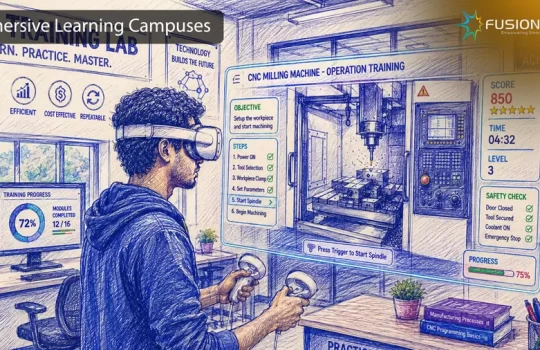
The use of AR VR training as an immersive technology enables universities to establish experiential learning environments, which students can use to practice complex procedures,visualise scientific concepts, and safely simulate industrial operations. The program enables students to run tests, which lead to better learning outcomes because they can engage with their studies.
Industry partnerships serve as crucial components that help society address its economic and societal challenges. The collaborative efforts between universities and industries create solutions for sustainability, healthcare, urban development, education accessibility, climate change, and digital inclusion. The social impact of innovation ecosystems reaches its maximum potential when academic knowledge combines with industry resources and practical implementation capabilities.
Collaborative ecosystems create an environment that enables teams from different fields to solve their problems. Engineers and designers and researchers and entrepreneurs and policymakers can use their skills to develop solutions that will create large-scale positive effects. The existing collaborative model has become essential because modern society faces problems that require multiple disciplines to find solutions.
The development of soft skills and professional competencies through industry collaboration stands as an unrecognised advantage. Innovation ecosystems provide students with exposure to collaborative projects, which include handling deadlines, meeting client needs, delivering presentations and working with different teams. The students develop leadership skills together with communication skills, critical thinking abilities and project management expertise, which employers consider essential for their career development.
Universities that embrace partnership work have better instant access to both professional contacts and alumni networks. Graduates establish permanent ties with industry-connected institutions because they later serve as mentors, investors, recruiters and project partners. The networks create ongoing cycles that result in both knowledge transfer and new opportunities.
Successful innovation ecosystems need both strategic planning and dedicated long-term commitments for their successful implementation. Universities need to establish partnerships that extend beyond their immediate branding and recruitment needs. Successful collaboration requires partners to establish common objectives while developing trust and maintaining ongoing communication to achieve specific results.
Institutions should identify industries that align with their academic strengths and regional opportunities. The collaborative programs need to develop benefits that will assist students and researchers, industrial partners, and society as a whole. The organisations need to maintain partnerships through three essential elements, which include transparent communication and flexible policies and infrastructure that promote innovation.
Governments and policymakers also play an important role in supporting university-industry ecosystems. The funding programs, innovation grants, startup incentives and research policies will create better opportunities for academic and industrial institutions to work together. Public-private partnerships can further accelerate technological development and regional innovation growth.
The future of work requires universities to change their operations because they need to become flexible systems for developing new ideas that can handle fast technological and economic shifts. Educational institutions need to collaborate with industry partners because this practice has become essential for maintaining their relevance and effectiveness.
The universities that succeed in the coming years will be those that create environments where learning, research, entrepreneurship and industry engagement can develop together without interruption. The institutions will produce both qualified graduates and disruptive innovations that will transform multiple industries and benefit society.
Universities can use industry partnerships to develop new educational methods that help them make technological, economic and social contributions to society. The establishment of partnerships should enable universities to create innovation ecosystems that enable students to develop future-ready skills while delivering substantial benefits to multiple industries.
The future of higher education will be primarily affected by academic and industrial partnerships, which create knowledge-based research centres that develop advanced technologies.