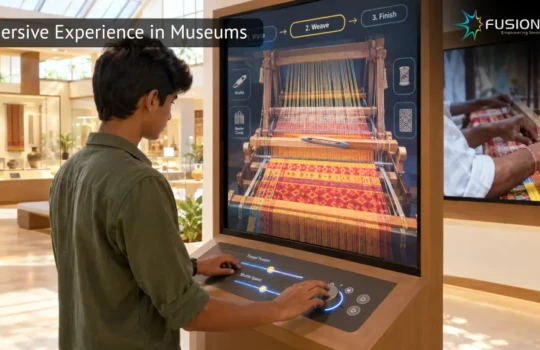

Archaeology has always been kinda about pulling up stories that are buried under layers of time, you know. Ancient temples, forgotten cities, buried objects, and lost civilisations offer a real understanding of human history, but the whole thing feels like it’s missing something. Traditional museum displays often have trouble, not fully, communicating the scale the atmosphere and the emotional weight of archaeological finds. Visitors usually just stand there looking at quiet historical items sitting behind glass cases, with short notes, and a couple of photos. It’s helpful, sure. Still, these setups don’t really recreate the same excitement you’d get on an actual excavation site, where everything feels alive and unfolding, bit by bit.
This is where virtual reality kind of flips the museum experience around. VR tech is letting museums digitally remake archaeological excavations in a way that used to be just not possible. Visitors are now able to stroll through old ruins, watch how excavations actually unfold, touch historical settings, and feel like they’re inside civilisations from thousands of years back. Nowadays, museums are increasingly taking immersive tools on board to help narrow the distance between academic research and public curiosity.
Virtual reality isn’t just about throwing in some extra visual effects in museums. It seems to be shifting how people interpret history, cultural heritage and even archaeological science, kind of at the same time. When VR mixes 3D reconstructions, realistic sound, interactive narratives, and real excavation data, it gives learning experiences that feel genuine. They are also emotionally engaging, like unexpectedly so.
One of the biggest challenges museums face is showing those incomplete archaeological remains, you know, the stuff that still looks kinda broken up. During excavations they often find fragmented structures, damaged sculptures, or artifacts that are only partially preserved. For the average visitor, it can seem confusing, kind of disconnected too, like nothing quite matches. VR then helps a lot, because it digitally rebuilds the ancient setting based on archaeological evidence, plus historical research.
For example, rather than just looking at shattered temple columns, visitors can walk into this fully rebuilt virtual temple space, which is kinda surprising. They can notice architectural particulars, ceremonial areas, ancient art panels, and even day-to-day life simulations based on what the historians found. This immersive re-creation makes it easier for people to grasp how those archaeological fragments were once part of an actual, living society, not only leftover bits.
Modern VR museum experiences often kick off right from the excavation itself, sort of. Visitors get pulled in and meet archaeologists working at a dig site, and they slowly uncover historical objects layer by layer. With this immersive storytelling, museums can get into the finer points, like excavation techniques, dating methods, preservation processes, and historical interpretation, too. Instead of only showing finished historical objects, VR lets museums show the whole archaeological journey, start to end, in a way that feels more immediate.
This process oriented approach kinda creates stronger engagement, because visitors end up as part of the discovery experience, not just watching. They can virtually step into excavation activities, look at digital artifacts up close, and basically get how archaeologists interpret evidence. In the end this interactive learning model turns passive observation into active exploration, so it feels more engaging all around.
Another big benefit of VR in archaeology is accessibility. I mean it kind of opens things up. Lots of major archaeological sites sit in distant regions, politically sensitive zones, or spots that are environmentally fragile. In some cases, these sites are even locked down, closed to the public entirely, just so they aren’t harmed by tourism. With virtual reality, museums can digitally preserve and share these locations without causing physical decline.
People can explore inaccessible burial sites, old caves, underwater ruins, or fragile heritage sites, basically from wherever they are on earth. Museums can then rebuild historical settings that might not be there anymore, because of a natural disaster, city growth, or war. That way, VR does double duty, like learning and also guarding what’s left.
The realism you get from today’s VR experiences depends a lot on advanced 3D scanning plus photogrammetry stuff. Archaeologists, and also digital artists, end up taking thousands of high-resolution images and detailed measurements from the excavation sites. After that, these datasets are reshaped into very detailed 3D models that mirror textures, architectural shapes, and even the surrounding environmental conditions in a pretty faithful way.
With laser scanning and drone mapping, entire archaeological landscapes can be digitally reconstructed, with pretty extraordinary precision. Like every stone, carving and structural feature, can be preserved in a virtual form, not just as an image but as something you can really study. This kind of detail not only helps museum visitors, it also supports long-term documentation and research for archaeologists, in a more reliable way over time.
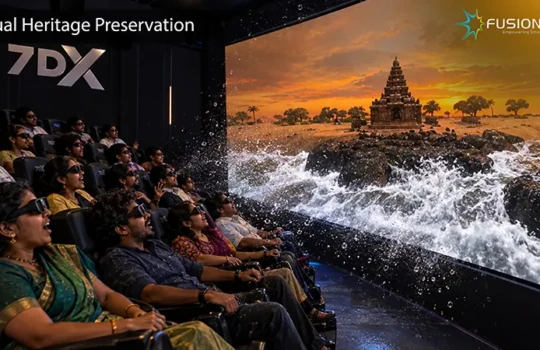
Modern museums are, kinda, integrating multisensory bits into VR archaeological experiences, more and more. Immersive sound design recreates those ambient environmental sounds like marketplace conversations, ceremonial music, footsteps wind and the whole natural surroundings. And some installations use motion platforms too, plus things like environmental effects or haptic feedback, to make it feel more immersive, closer to being there.
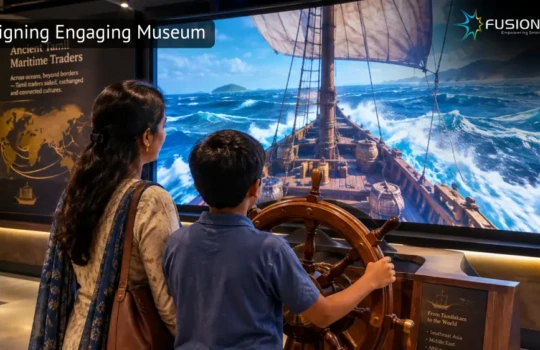
For example, visitors roaming through an ancient seafaring civilisation might feel like the ship is moving, but in a simulated way, while also hearing ocean swells and busy harbor sounds. A desert excavation experience can bring in environmental lighting, plus atmospheric effects that mirror what archaeologists meet during day-to-day fieldwork, not just the static visuals. These sensory layers also help build an emotional link and make memories easier to keep.
Storytelling kind of plays a crucial role in VR archaeology experiences, at least for ones that really work. Instead of throwing visitors a pile of technical stuff, museums are more and more leaning into narrative-driven immersion, you know. People can end up following an archaeologist’s journey, uncovering a “lost” civilisation, step by step, and then they’re sort of pulled in when historical events unfold right around them. Sometimes visitors even interact with reconstructed characters, who stand for ancient communities, and that makes the whole thing feel more alive, less like a lecture.
This narrative approach kind of humanises archaeology, because instead of history feeling so distant and abstract, visitors get to actually feel the lives behind it, and the beliefs, rituals, and those everyday routines of ancient societies. With VR, the archaeological data isn’t just numbers or fragments anymore, it becomes something like emotionally charged stories, and those stories land in a way that resonates with lots of different audiences.
Educational institutions and museums are also putting out VR archaeology experiences to hook younger generations, and it kind of works better than plain displays. Traditional museum formats can have a hard time keeping the attention of digitally native audiences who are used to interactive media and immersive entertainment. With VR there is this gamified learning angle, which tends to spark curiosity and gets people involved more than a standard walkthrough.
Students can kind of virtually dig up historical objects, tackle historical puzzles, reassemble damaged structures, or even wander through ancient cities. These interactive things boost engagement while also letting learners grasp archaeological principles in a more concrete way. With VR-based education, experiential learning is right at the centre of it all, and that approach often results in better knowledge retention than just passive reading or simple looking.
Another important development is collaborative virtual archaeology, with multi-user VR platforms where groups of visitors, students or researchers can roam the archaeological landscapes together inside shared digital spaces. You can have guided tours, led by historians or archaeologists, which happen right within reconstructed ancient cities, and it becomes more like real-time banter and live interaction, rather than just watching.
This collaborative approach kind of expands museum accessibility beyond just physical boundaries, so that International audiences can step in remotely for immersive cultural experiences without having to travel. Museums might host virtual exhibitions, and also educational workshops or archaeological demonstrations, for global visitors.
Cultural preservation is getting more and more urgent as climate change, pollution, city expansion, and conflict start to threaten historical sites all over the world. VR can be a strong way to do digital conservation, in a sort of practical, almost silent manner. And even if physical buildings are damaged or just fully destroyed, those detailed virtual reconstructions keep meaningful historical details alive for future generations, even when the original context is gone.
Several museums and heritage organisations are already building digital archives of endangered archaeological locations, like, you know, they’re doing it for a reason. These virtual preservation efforts help cultural memory keep going, even when the physical heritage is under irreversible risks. VR becomes something more than an educational medium; it’s also a type of cultural safeguarding, in a quiet but steady way.
AI integration is really further enhancing VR archaeology experiences, like in a slow, steady way. AI systems are able to help reconstruct damaged historical objects, predict building layouts, translate ancient inscriptions and even craft historically accurate simulations. And then when you blend it with VR, museums can build educational environments that feel more interactive, not static, like dynamic and intelligent, all in one go.
Visitors might soon be able to interact with AI-driven historical figures, who can answer questions, talk through cultural customs, or even guide people on tours across ancient cities. These kinds of interactive setups can personalise the whole learning vibe depending on what visitors like most and which age group they fall into, so it feels more tailored and less generic.
Museums are also looking into mixed reality and augmented reality addons alongside VR archaeology experiences. On one hand, VR pretty much drops you into fully simulated surroundings, while AR adds digital archaeological reconstructions right over what you’re already seeing in the real museum room. So if someone is standing in front of ruins or historical objects, they can just use AR devices, and then visualize, sort of immediately, how those structures originally looked.
This hybrid method links physical historical objects with digital narration in a very, really effective way. Instead of wiping out the usual museum collections, immersive tech tends to sharpen interpretation and add more contextual understanding, like you can actually feel it.
One of the more exciting parts about VR archaeology is how it can, sort of, recreate those erased moments in history. Museums are able to simulate past scenes, like religious rites, building processes, or even everyday city routines, with a really cinematic realism. Visitors don’t just stand there and look at fixed remnants anymore, not at all. Instead, they can actually see history unfolding around them as it happens and kind of moves in front of their eyes.
For example, a museum experience about an ancient civilisation might let visitors move through crowded streets, see artisans labouring, watch cultural rituals happen, or even witness grand architecture while it’s being built. In other words, those moments give a kind of emotional immersion that standard exhibits don’t really manage.
Still, authenticity keeps mattering a lot, like it does not go away. Responsible VR archaeology needs close, kind of constant collaboration between archaeologists and historians, researchers, digital artists, and developers working on immersive technology. Museums have to make sure the reconstructions are evidence-based, and that the audience can clearly tell what verified historical information is, versus what is more interpretive visualization, in a sense.
Ethical considerations also really matter when it comes to how digital heritage gets represented. Museums need to handle cultural storytelling with care and not treat it like it’s just a visual redo. This becomes especially important if they are recreating sacred spaces, native histories, or human remains. Involving the community should happen early and often, because input from people who know the context keeps the interpretation more respectful. Historical accuracy is not optional either; it has to be there as a kind of steady foundation, otherwise the whole reimagining turns into something less credible.
As tech keeps moving forward, VR archaeology experiences will probably get even more advanced. Like, the real-time visuals will improve, motion tracking will feel less wonky, AI conversations will be smarter, and the immersive gear will be easier to use. So historical simulations could become more realistic and kinda more accessible too. In the museums of the future, it’s possible they’ll basically turn into fully immersive learning spaces, where visitors step through time with interactive technology and guided experiences happening around them all at once.
The impact of VR on modern museums reaches way past just entertainment. It kind of feels like a big change in the way people preserve, interpret and share cultural heritage. By remaking archaeological excavations into immersive digital form, museums are turning historical learning into a far more captivating experience that you can almost step into yourself.
Virtual reality sort of lets visitors go past just watching history and start to actually feel it. Ancient civilisations turn into living surroundings instead of, you know, faraway textbook references. Archaeological findings get this emotional layer, and the narrative meaning becomes clearer, too. Museums then become interactive places where education, storytelling, science, and technology all meet up in a single atmosphere.
In an increasingly digital world, VR archaeology gives museums a chance to safeguard the past while still engaging modern audiences in ways that feel really impactful, almost like you are there. With immersive reconstructions, cultural heritage becomes more accessible, memorable, and actually meaningful for generations that come after us.