The following is an illustrative conversation written by Fusion VR to explain the topic.
An Engaging Conversation between a Student and a Professor
Student (Arun): Professor, everyone keeps talking about startups these days. I mean universities have innovation cells, hackathons, incubators, and entrepreneurship clubs too. But like, what really creates a solid startup culture on campus, you know. Is it mainly motivation from students, or something else?
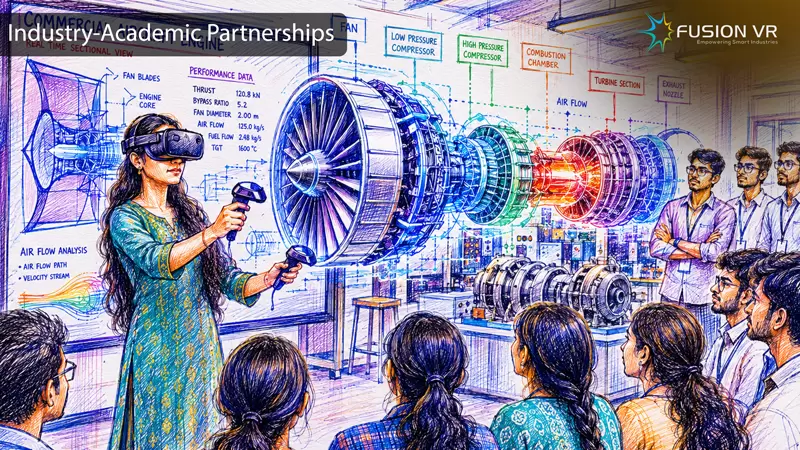
Professor (Dr. Meera): That’s a great question, Arun. Sure student enthusiasm matters, but one of the main engines behind successful startup ecosystems is usually strong industry- academic partnerships.
Arun: Industry academic partnerships? How do they make such a big difference, I mean really?
Dr. Meera:Imaginethis, learning only from textbooks without talking to companies tackling real life issues. Sure you might keep the theory, but you don’t really get the market pulse. When universities and industries collaborate, students get real practice exposure, real mentorship too, and they start seeing new technologies as they emerge, not later.
Arun: So, companies become like part of the learning process, right?
Dr. Meera: Yes, basically. They contribute to curricula, bring in live projects, arrange internships, and sometimes also mentor students during product development. That way, you get a setting where concepts slowly turn into real business opportunities, not just theory.
Arun: That sounds exciting, but like um, how does it encourage startupsspecifically?
Dr. Meera: Well, startups are basically built for solving problems and turning them into something real. Different industries, they bring practical difficulties into the classroom. Then the students work through those same issues, look for the missing pieces, and yes, sometimes they stumble on unique innovations, that can later turn into commercial products or service models.
Arun: So instead of like, hypothetical assignments, students end up working on real industry problems?
Dr. Meera: Exactly. The hands on experience builds confidence so they can think more like entrepreneurs, not only job seekers.
Bridging the Gap between Education and Innovation
Arun: I’ve noticed a lot of graduates get stuck, because the industries want practical know how, and colleges sometimes don’t really cover it, the way they should.
Dr. Meera: Yeah, that’s probably one of the hardest parts in higher education right now. Tech moves so fast, and the usual curriculum takes its own sweet time to match up with it, kind of late. When colleges build industry partnerships it helps a great deal, because students get exposed to new tools, real workflows, and what the market truly expects.
Arun: Does this also include those emerging kinds of tech like Virtual Reality and Augmented Reality, or…?
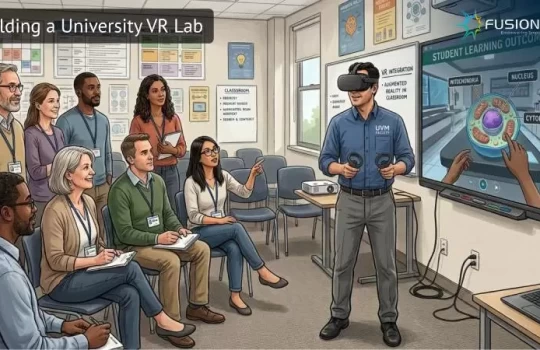
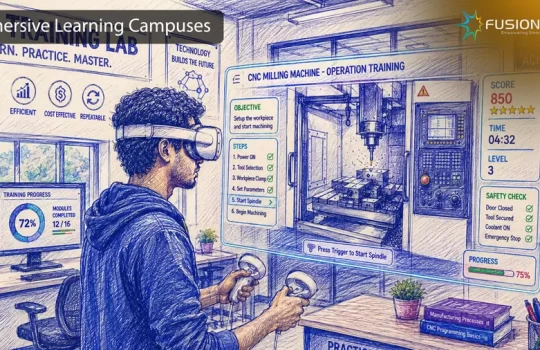
Dr. Meera: Yes, quite definitely. Things like AR, VR, Mixed Reality, Digital Twins, plus immersive simulations are changing industries everywhere. For example, programs such as Fusion VR’s Industry Academic Alliance Program are basically created to push these technologies straight into universities, using specialized training, an industry ready curriculum, faculty development, formal certification, and some dedicated XR lab infrastructure, sort of end to end.
From Classroom Projects to Startup Ideas
Arun: How does being exposed to AR and VR type technologies inspire startups?
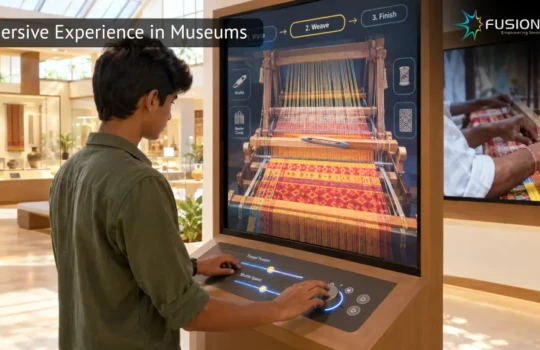
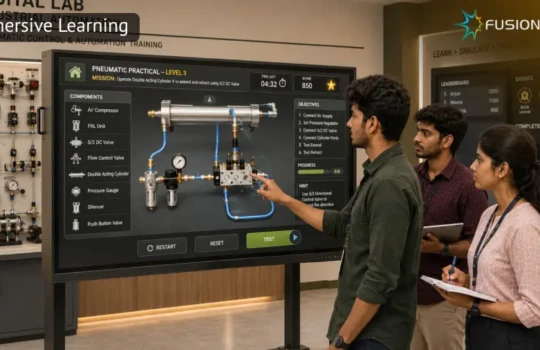
Dr. Meera: Just think about it. A student building a VR training simulator for manufacturing might, somehow realize that similar solutions are needed in health care or for education. Also a different group working on an augmented reality application for museums may stumble upon, commercial chances in tourism, or retail.
In other words, every single project turns into a possible startup cue.
Arun: So uh, innovation begins with experimentation right?
Dr. Meera: Exactly, universities that let people experiment, but still give industry guidance, sort of create fertile ground for entrepreneurship. And yeah it feels like the whole thing kinda grows from there, not just from one big idea.
The Importance of Hands-on Learning
Arun: Ok many students watch tutorials online nowadays, isn’t that enough?
Dr. Meera: Tutorials are useful, yes but entrepreneurship really asks for implementation. Like actually building applications, testing little prototypes, collaborating with teams, and getting feedback from industry professionals, those are experiences that honestly cannot be replaced by videos alone.
Programs that set up more advanced AR/VR laboratories enable students to work with enterprise-grade hardware and software, while they craft practical solutions.
Arun: Well that does sound more valuable than just reading about technology, in the end.
Faculty as Innovation Mentors
Arun: So like, what role do professors play in this whole ecosystem?
Dr. Meera: Faculty members essentially turn into innovation facilitators. Once they get industry training plus some real exposure to newer technologies, they can guide students more effectively, and they also tend to spark research that has actual commercial pull.
And you know, those industry academic collaborations often come with faculty development programs that keep educators in step with the changing technologies and the market needs too.
Creating a Startup Mindset
Arun: So startup culture is only about launching companies, right
Dr. Meera: Actually no, not really. It’s more like startup culture is fundamentally about solving hard problems, being creative, keeping your resilience, and staying in that continuous learning mode
When there are industry partnerships, students get pulled into real professional spaces, where they learn things like project management, working together as a team, understanding customer requirements, doing product validation, and thinking like a business person. Even if they don’t jump into founding a company immediately, they still end up building that entrepreneurial mindset you know
Building Networks That Matter
Arun: Networking feels like this another buzzword lately, you know.
Dr. Meera: Yeah, and honestly for a good reason. Most successful entrepreneurs tend to lean on mentors, investors, technical experts, and collaborators, not just luck or timing.
Industry partnerships kind of naturally link students with working professionals, and that opens doors for internships, research collaborations, incubation chances, and even later business partnerships.
Over time those same ties, they become the real groundwork for successful startups after graduation, sort of a silent boost, even if nobody says it out loud.
Encouraging Research and Commercialization
Arun: Universities do a ton of research, I mean it’s pretty constant. But can those industry partnerships help too, like in the same way?
Dr. Meera: Yes, without doubt. When industry-backed research happens, it tends to aim at practical challenges, not just theory, and the outcome has clear commercial relevance.
Students who are exploring new ideas might file patents, build prototypes, or even start technology spin offs from what they discover. So in a way there’s a straight line, from campus innovation to market-ready products.
Reducing the Skill Gap
Arun: Companies often say graduates aren’t industry ready, like they just can’t jump in.
Dr. Meera: Yeah, that’s the same puzzle a lot of partnership efforts try to fix, and it makes sense.
Take Fusion VR’s Industry Academic Alliance Program, for example. It blends a job-ready curriculum, plus those practical Industry 4.0 projects, then faculty training, certification support, technical help, and AR/VR lab infrastructure. So students are actually geared for real-world roles in immersive tech.
So the outcome becomes pretty clear, graduates can contribute right away to industry projects. And at the same time they have the self-belief to start their own ventures too.
Why Universities Need Industry Partnerships Today
Arun: So universities that kind of embrace these collaborations, have a n advantage?
Dr. Meera: Yeah, absolutely. They end up forming graduates who are innovators, not just passive learners, you know.
Students also get access to modern tech, industry mentors, practical projects, research avenues, startup ecosystems, and professional networks all together and that honestly boosts their entrepreneurial potential a lot.
Final Thoughts
Arun: I think I get it now. Startup culture isn’t made only by those business competitions, it’s kind of built through ongoing collaboration between academia and industry.
Dr. Meera: Yes, exactly. When universities and industries actually work together, learning becomes much more relevant, innovation turns more practical, and entrepreneurship turns into a kind of natural result.
So by merging advanced technologies, learning that’s more hands-on, and real world industry involvement, partnerships like the Industry Academic Alliance Program are helping universities nurture the next wave of innovators technology leaders, and startup founders who are prepared to help shape what comes next.