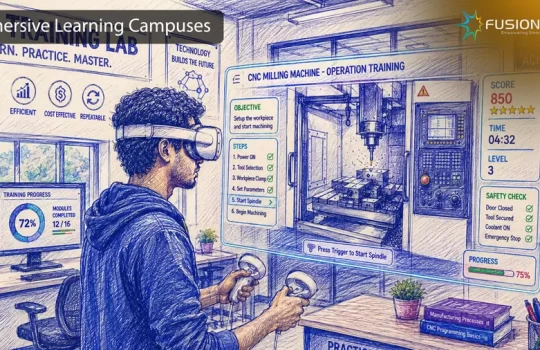
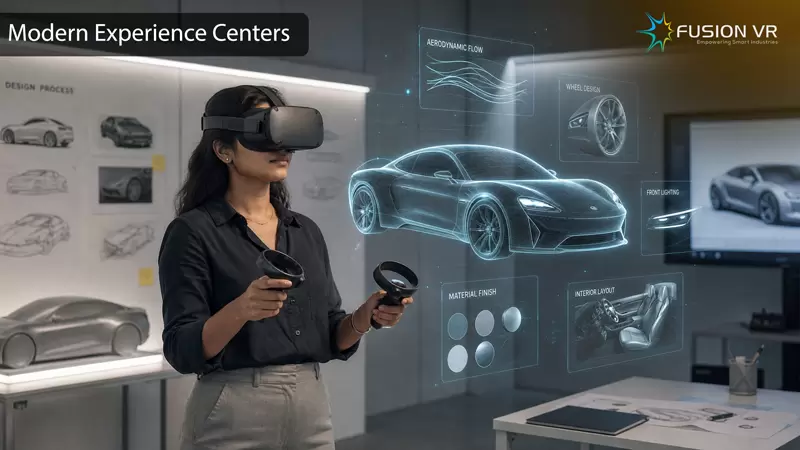
Modern Experience Centers, be it museum galleries, corporate showrooms, or memorial spaces – they’ve gone well past just sitting there with static displays. Fusion VR, as a pioneer in Museum 2.0 solutions, kind of blends a broad set of advanced technologies to create immersive, multi-sensory experiences for visitors. So here’s a more complete view of the main technologies that are shaping these spaces right now.
1.Virtual Reality (VR)
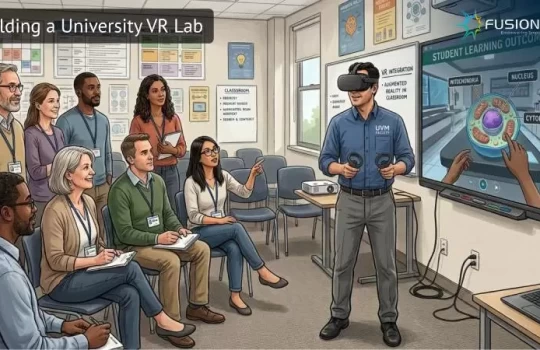
VR is kind of the cornerstone tech of most modern experience centers. It shows up across sectors, from museums and cultural heritage to oil & gas, auto-motive, healthcare, and defence, helping visitors and trainees to be in fully simulated surroundings. In those experience centers, VR headsets move people into historical periods, far away locations, or just entirely imagined worlds, which makes the emotional bond stronger and also helps memory stick longer, even more than a photograph or a panel can manage.
A clear real world example is Fusion VR, they made “Tears of Vivekananda,” which was the first 4D VR short film about Swami Vivekananda, plus a 7DX Train Simulator experience for the Kalaignar Memorial Digital Museum.
2.Augmented Reality (AR)
AR overlays digital content onto the real world via smartphones, tablets, or AR glasses, somehow. In experience centers, it brings exhibits alive — like, a portrait might speak,a old historical map might animate, or a product can be disassembled layer by layer for inspection, almost like a quiet teardown. Fusion VR developed “Ask Vivekananda”, and it was described as the first truly complete AR experience of Swami Vivekananda, letting visitors interact with a digital avatar, of the historical figure.
Also, AR selfie booths and AR-guided trails are getting more and more popular as engagement instruments in museums and corporate centers too.
3.Mixed Reality (MR)
Mixed Reality sort of merges the physical world and the digital one, in real time, so virtual things can respond to real surroundings or rather sit in them naturally. Fusion VR provides MR solutions across different sectors like life sciences, pharma, chemicals, and automotive, and the same ability is then used inside experience centers to form exhibits where visitors can handle virtual artifacts right there, while they are standing in an actual room.
4.3D Holography
Holography makes three dimensional floating projections that feel almost real, like they’re right there, but you don’t need the viewer to wear any special device or gear. It’s one of those signature technologies that Fusion VR puts to work across museum and experience center projects, and honestly it’s a great fit when presenting leaders, historical figures, or actual products in a dramatic, attention commanding way. Like, at the Kalaignar Memorial Museum, there is a dedicated 3D Holography area, just for that.
5.3D Projection Mapping
Projection mapping turns regular architectural surfaces, like walls and ceilings, sculptures and facades, into shifting visual canvases. Fusion VR uses both in and outdoor 3D projection mapping, plus multi-screen setups and curved screen stereo 3D projections, to craft memorable displays that kind of immerse visitors in stories without asking them to wear any device.
6.Stereoscopic 3D & 4D / 7D Simulation
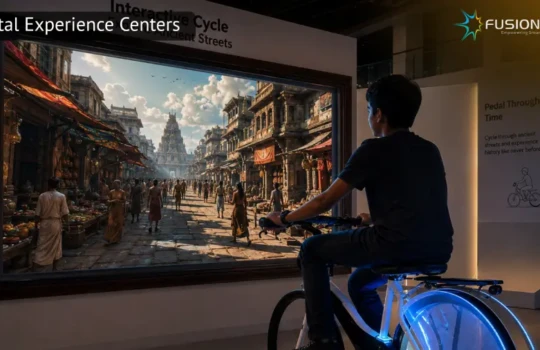
Stereoscopic 3D makes those depth visuals via polarized glasses, and then 4D or 7D experiences stack physical sensory bits on top. Fusion VR’s 7D simulations do this by mixing movie motion chairs, 3D glasses, plus special effects like wind, rain, and aroma. So you get multi-sensory storytelling that tends to make historical, or even conceptual stuff feel viscerally memorable. Their Chronicles India project at Mahabalipuram was kinda like an early 7DX run at a UNESCO World Heritage Site, which is pretty notable.
7.Motion Capture
Motion capture basically records the very exact motions of performers, then it sort of maps those actions onto digital characters, so animated figures can end up moving with pretty lifelike authenticity. With Fusion VR, that same motion capture is used to get accurate character movement inside immersive storytelling, and that means historical as well as mythological characters can sort of come alive in digital exhibits, with natural believable expressions, and gestures that feel almost right.
8.3D Scanning & Photogrammetry
Physical stuff, sculptures, buildings, and even landscapes can be turned into digital models with 3D scanning plus photogrammetry (the kind with multiple photos). With these techs, Fusion VR can craft fairly accurate digital replicas of actual objects and spaces, then show them inside VR environments, or use them in touch interactive kiosks. That way, visitors can take a closer look at fragile, or hard to reach artifacts, without worrying about causing harm, or breaking anything.
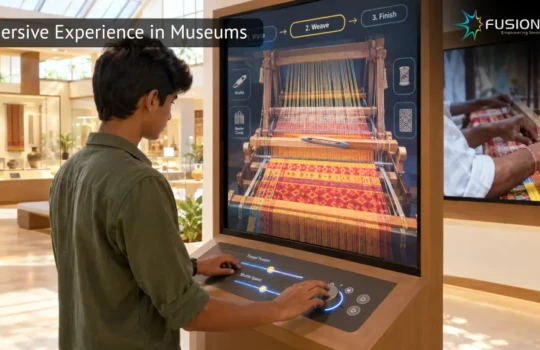
9.Interactive Touch Displays & Kiosks
Touch enabled displays, and smart kiosks are kind of the workhorses of everyday visitor interaction. Fusion VR rolls out touch screens for easy navigation and hands-on exhibits that pull people in using touch, sound, and bright visuals. This gives visitors room to explore on their own, offers multilingual content, small quizzes, and data lookups. So knowledge stays reachable for visitors of all ages, and even for abilities that vary a bit.
10. Sound & Light / SFX Shows
Ambient sound design plus choreographed lighting kinda turns a real space into something more like a stage thing, with atmosphere instead of just walls. Fusion VR then merges sound and light show elements, including fountain shows, as part of its multi-sensory experience design toolkit. One example that stands out is the Sound and Light SFX show on Sri Ramakrishna, developed for the Ramakrishna Mission museums , where the lighting with the audio basically rebuilds the feeling of historic events.
11.Digital Twins
Fusion VR offers Digital Twin solutions, as part of its wider service line up, basically making digital replicas of physical areas or industrial systems, and they keep refreshing in real time. In experience centers, those twins can stand in for a factory, a heritage location, or even a city, so visitors can step in and interact with, and get a better understanding of complex systems in a pretty intuitive way.
12.Metaverse& Gamification
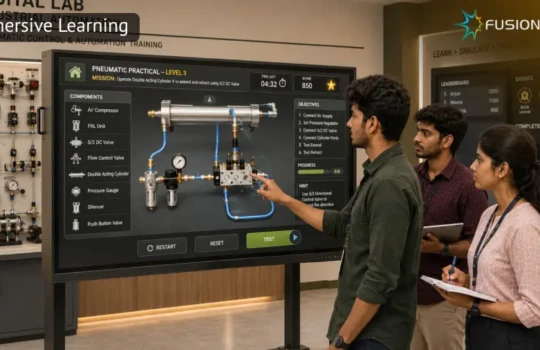
Fusion VR kind of leans into metaverse tech, like gamified VR/AR/MR (XR), so visitors can interact and feel more engaged. With that gamification layer— leader boards, quests, rewards and little interactive challenges it becomes easier for people to stop being only passive, and start really participating, which can boost dwell time a lot, and also the way information sticks. This tends to be especially useful in kids museums and science centres, where attention and curiosity need a bit more nudge.
13.Mobile App Integration & Social Media Connectivity
Fusion VR builds mobile applications that mesh with museum digital experiences, so visitors get extra details, engaging material, and a more personal feel, and at the same time the team uses social media platforms to spotlight exhibits, and also help pull people in. Pre visit virtual tours that visitors can reach via the apps are now pretty strong marketing assets, because they set the stage before someone actually walks in through the door.
14.Data Analytics & Feedback Systems
Museum 2.0 kind of lets you do data driven decisions by using real time feedback plus analytics, so you can better grasp how people move around and what they prefer. You get heat maps that show visitor flow, then there’s exhibit dwell time info, and even interactive feedback kiosks that capture quick reactions. With all of that together the experience center can keep tuning its content and layout, sort of polishing the whole thing for stronger engagement and better impact.
Bringing It All Together
The most impactful experience centers don’t really rely on only one technology, they kinda stack a few together into a coherent narrative journey. Fusion VR’s philosophy is that the key to success is not only in the advanced hardware or software being used, but also in having a clear idea of the immersive and engaging experiences the museum or corporate client wants for their visitors.
From the moment a visitor steps in, to the moment they leave and beyond that, through social sharing then follow-up engagement, every touchpoint becomes a chance to inform, inspire and connect. These technologies, if they are put together with care, is what makes a modern experience center truly unforgettable.