Higher education is entering a transformative era where the usual classrooms by themselves can no longer really handle the expectations of digitally connected students, or the needs that come from industries changing really fast. Around the world, universities are starting to lean into immersive technologies, not just because it sounds modern but because it supports engaging, hands-on learning and a more future-focused environment. In practice, it means students are being readied for real-world hurdles, not only for exams. Rather than depending only on textbooks, standard lectures, and static labs, these institutions are putting money into immersive campuses. There students end up interacting with knowledge through virtual moments, simulations, intelligent systems and group-based digital places, even when they’re not physically right there.
A future-ready immersive learning campus isn’t just a bucket of advanced technologies or whatever else. It’s more like a whole educational ecosystem, where learning feels experiential, it becomes interactive, personalized, and also easily reached by many students, even those who learn in different ways. When universities blend Virtual Reality (VR), Augmented Reality (AR), Mixed Reality (MR) with Artificial Intelligence (AI), plus digital twins, immersive visualization setups and interactive installations, they can reshape how students actually absorb knowledge, build practical know-how, and team up with peers across subjects.
The growing adoption of immersive education is driven by the realization that employers, increasingly value practical problem solving skills, digital literacy, cooperation, and innovation alongside academic qualifications. Students who actively experience concepts tend to retain the info more effectively than those who only read or listen. Immersive learning basically turns what is passive education into active participation, so learners can visualize complex ideas, carry out virtual experiments, and take part in realistic scenarios that would otherwise be difficult, expensive, or impossible to recreate in a conventional classroom.
One of the most significant advantages of immersive campuses is that they can help close that gap where theoretical education sort of meets real life usage. Like, engineering students can put together virtual machines before they even touch the actual equipment, and that matters. Medical students can rehearse surgeries again and again without any danger to patients. Architecture students can walk through their own building designs at a full scale, kind of like a walkthrough, but in VR. Environmental science students are able to simulate climate conditions, while history students can explore ancient civilizations through realistic virtual recreations. In the end, these kinds of experiences deepen understanding, and they also build confidence through repeated practice, even if at first it feels a little too much.
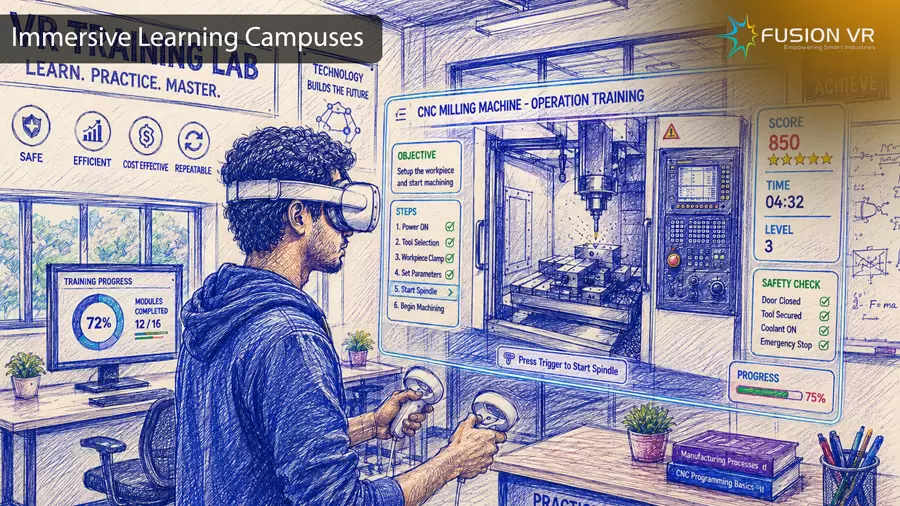
Virtual Reality is becoming one of those cornerstones in immersive education, because it lets students step into fully digital spaces that feel like real life, with a pretty striking precision. Rather than just imagining industrial processes from diagrams and charts, learners can actually walk through factories, laboratories, construction sites, and manufacturing facilities, all within virtual space. For example aviation students can get seat time in flight simulators, emergency responders can work through disaster management scenarios, and healthcare professionals can rehearse intricate procedures in safe virtual environments. And somehow this hands on style really helps outcomes overall, while also lowering the operational costs that usually come with training in the physical world.
Augmented Reality complements classic teaching by putting digital information on top of real objects and spaces, not just showing stuff on a screen. Like, students in anatomy might check out three dimensional organs floating above lab tables, kind of like they are really there. Mechanical engineering learners can look at exploded assemblies of machines simply by pointing a tablet toward the equipment, and it feels more direct. Chemistry students can imagine molecular structures interacting in real time, while geography students can wander through terrain models that also come with clickable geological data layers, you know. Overall, AR motivates discovery without taking over physical learning so it becomes this strong combination of digital nuance and real world experience.
Mixed Reality makes immersive learning even more real, because digital stuff can sort of blend and respond with what’s going on around you in the physical room. When students put on MR headsets, they can steer holographic models, and they can gather together around the same shared digital object, kind of like a quiet workshop, only augmented. They can also work with smart simulations while still staying aware of their actual surroundings, not totally cut off. This approach tends to be especially useful for joint engineering tasks, design check meetings, medical training, and also advanced scientific visualization, where several participants need to inspect and adjust complicated digital models at the same time.
Artificial Intelligence really do play a pretty big role in making campuses future-ready, mostly by personalizing learning experiences, bit by bit. With AI-powered learning platforms, systems can look at how each student is doing, spot the learning gaps faster, suggest tailored study materials, and also deliver an intelligent tutoring kind of help. Instead of giving the exact same lesson to every learner, AI allows education to bend and adjust, almost like it follows each student progress. Teachers and staff can even benefit from AI-driven analytics that show classroom trends, estimate academic risks ahead of time, and help with evidence-based teaching strategies, in a more grounded way.
Digital twins are starting to show up as sort of a revolutionary piece inside modern universities. Basically a digital twin is like a virtual mirror of a physical building, laboratory, campus, or entire system that keeps updating itself so it still matches what is happening in the real world. With that, universities can try to fine tune energy consumption, keep an eye on infrastructure health, run emergency evacuation simulations, map out future facilities, and generally improve how campus operations work day to day. And it is not only admin teams either, because students in architecture, civil engineering, urban planning, and environmental sciences can use digital twins as very useful teaching instruments, to explore complicated systems in realistic virtual spaces.
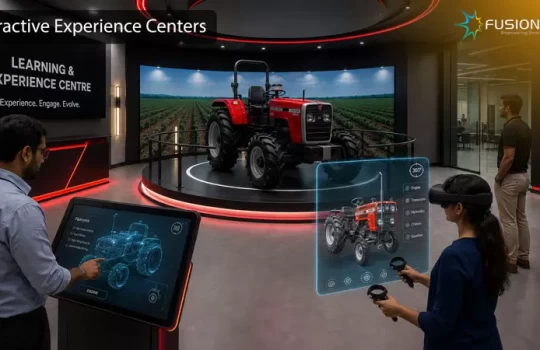
Future-ready campuses should also have immersive visualization centers, equipped with high-resolution projection systems, interactive display walls, and collaborative digital workspace areas. In practice these places help researchers, educators and students to dig into large datasets and see scientific phenomena more clearly, they can also review architectural models and share research results in ways that feel very engaging. With these visualization rooms, interdisciplinary collaboration comes easier, since complex information becomes simpler to grasp, then to explain and communicate, almost like it’s translating itself.
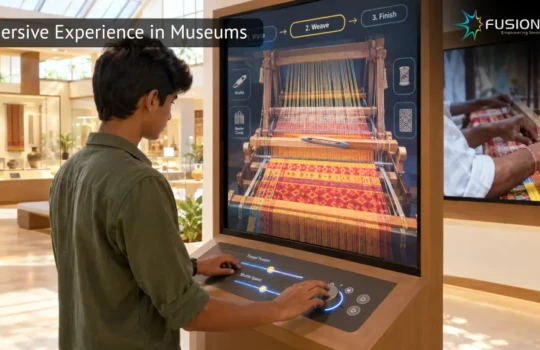
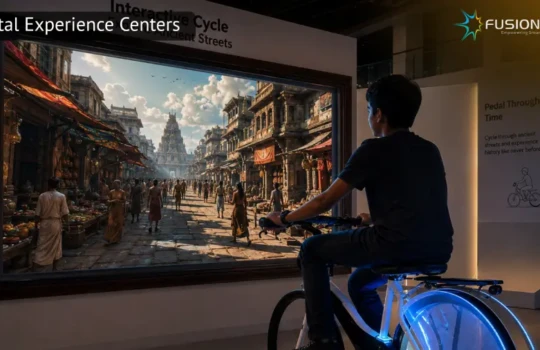
Lately, interactive museums and experiential learning hubs are getting more popular at universities. Instead of only being “places to show stuff,” they kind of mix storytelling with immersive media, touch focused interfaces, holographic displays, projection mapping and even games‑like experiences. So you get these more engaging learning rides, not just a quiet route through exhibits. Students usually understand more because they actually take part, rather than just watching and receiving data. Plus, universities can turn these venues into a stage for research wins, cultural memory, technological improvements, and outreach efforts with the local community.
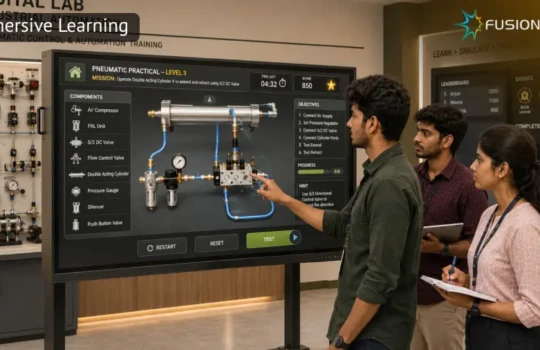
Engineering labs are slowly becoming smarter simulation places, where students can try their ideas first before actually putting them together in the real world. These virtual manufacturing systems help learners make sense of production routes, robotics, automation, quality checks, and industrial safety, all without messing up current real operations. With digital simulations, equipment gets less wear, safety is better supported, material waste is minimized, and there are chances for as much practice as needed before students step into the physical laboratories.
Healthcare education, it kind of really leans into immersive technologies because hands on practice is still essential for real professional competence. In medical universities, they’re using virtual patients more and more, plus surgical simulators, anatomy visualization tools and emergency response scenarios, not just as a “nice extra”. Students get to rehearse diagnosis and clinical choices, also coordination with others and procedural abilities over and over, but inside controlled virtual spaces. As a result they tend to feel more confident, while at the same time, there is less dependence on scarce physical resources and those limited clinical placements.
Business schools are slowly realizing the worth of immersive learning, like you go in and you actually feel involved. Students can jump into realistic negotiation scenario s, virtual board room conversations, global supply chain simulations, financial market practice drills, and entrepreneurship challenges inside interactive digital spaces. In the end these experiences train communication, leadership, strategic thinking and decision making abilities that are hard to nurture using lectures only.
Collaborative learning starts to feel way more engaging when it happens in these immersive campuses, you know, sort of. Virtual classrooms lets students from different countries talk to each other inside shared digital spaces, no matter where they live geographically, even though it might sound simple. International collaboration projects also become more believable when learners jointly manipulate 3D models and solve engineering problems, conduct research, and share their ideas in virtual environments. In the end this kind of global interaction helps graduates get ready for workplaces that are more and more interconnected all the time, really.
Accessibility is also a real advantage of immersive campuses. For students who cannot reach laboratories, field sites, or even international study programs in person, there is still the ability to join through virtual experiences, sort of like being there. Remote learners get a chance to run experiments, attend immersive lectures, and work alongside peers, by way of digital technologies. So universities can push educational opportunities past the usual campus lines, while still backing inclusive learning for all kinds of student populations that are different.
Future-ready campuses have to put money into smart infrastructure that, sort of, enables immersive technologies. We’re talking about high-speed connectivity that actually works, cloud computing, and edge processing working in tandem, plus sturdy cybersecurity measures. On top of that, advanced audio-visual setups and flexible digital platforms are the basic building blocks to deliver smooth immersive learning moments. If the infrastructure isn’t reliable, then even the most capable educational tech just can’t reach its full potential, not really.
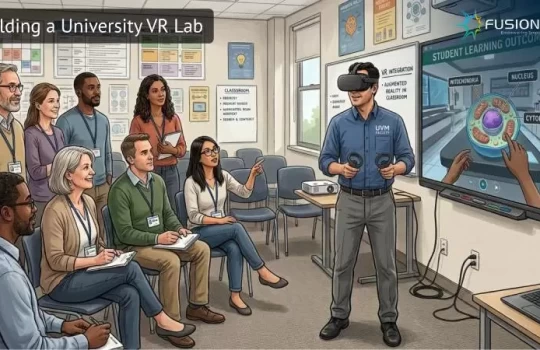
Faculty development is just as critical. Getting it to work in practice hinges not only on buying new technology but also on empowering educators, to craft immersive learning experiences that feel actually meaningful. Universities should run ongoing professional development programs, to help instructors build their skills in immersive pedagogy, in digital content creation, simulation-based teaching, and other emerging educational technologies. Faculty members who grasp both educational theory and the technological capabilities side of things, can assemble learning environments that are really more engaging.
Content development is basically another strategic investment, and universities often treat it like, something you do “because it’s there”. Instead they should make immersive educational content that fits the curriculum aims, not just grab new technology for the novelty factor. Using interactive simulations and virtual laboratories makes sense, as well as 3D educational models, immersive historical reconstructions, scientific visualizations, and even industry focused training scenarios, all of which should connect clearly too learning outcomes you can measure. Also, it helps to collaborate with industry experts so the learning experience mirrors what’s actually done in the workplace right now, rather than staying generic.
Research and innovation kind of bloom inside immersive campuses because high end visualization and simulation instruments really speed up scientific discovery. In those spaces, researchers can model intricate biological systems, simulate engineering prototypes, map climate patterns, investigate astronomical phenomena, and weigh urban development plans with immersive technologies. Students who join research also pick up important know-how from hands on work with advanced digital tools, which are becoming more and more common across many scientific fields.
Industry partnerships tend to get stronger when universities offer immersive training spaces that are more in line with what the workforce actually needs. Lately, companies often look for graduates who are already comfortable with digital engineering, simulation technologies, team based virtual settings, and intelligent manufacturing systems. So, when these technologies get folded into the curriculum, universities help graduates become more employable, and at the same time they deepen the connection with industry partners through joint research, practical internships, and broader workforce development steps.
Sustainability is another interesting benefit of immersive campuses, and in practice it can feel kind of straightforward even if the systems are not. Virtual laboratories cut down material consumption, while digital field trips help lower travel related emissions. When students and teams collaborate online, commuting goes down, and digital twins can fine tune campus energy management. Universities that are actively aiming for sustainability can use immersive technologies to reduce environmental impact, yet still keep a high quality learning experience, in a way that actually works day to day.
Data driven decision making can also happen inside immersive educational ecosystems, kind of like you already expect. Learning analytics enable educators to spot student engagement levels, detect curriculum adjustments, gauge learning effectiveness, and keep tuning teaching strategies over time. Meanwhile institutional leaders obtain useful visibility into how resources are actually used, the pace of technology adoption, academic results, and day to day operational efficiency. All of that supports more grounded planning for future campus development.
The journey toward an immersive campus has to start with a clear strategic vision rather than buying isolated technologies, like random purchases here and there. Universities should figure out what matters most academically, then look at what infrastructure is already there and how good it actually works. After that, faculty and students should be brought in early, not at the end, because it’s their daily reality. Next, teams need an implementation roadmap that’s realistic, and they should set measurable outcomes so nobody is guessing later. Pilot projects can show the actual value before a bigger rollout, which helps the investments stay aligned with institutional goals and with longer term educational transformation, not just short lived novelty.
Going forward, campuses will more and more blend AI-powered virtual assistants, immersive digital libraries, holographic collaboration zones, intelligent classrooms, wearable technologies, and real-time analytics into daily learning. And as the tech keeps moving, universities that take on progress in a measured way will end up stronger, they’ll help graduates step into jobs that require flexibility, imaginative thinking, digital fluency, and ongoing, lifelong curiosity.
Ultimately, building a future-ready immersive learning campus is more about what comes after the new technologies, not only about buying or adopting them. It’s about crafting learning experiences that just make people wonder more, push students to try things, and invite teamwork in a way that feels natural, not forced. In the end you want learners who are prepared to tackle the knotty problems of tomorrow, and do it together. Universities that put money into immersive learning ecosystems now are really not only modernizing their campuses they’re also kind of steering where higher education goes next. When advanced digital technologies get blended with learner-focused pedagogy, institutions can help form graduates who are confident, capable, imaginative, and able to thrive in a world that is getting more digital every year.