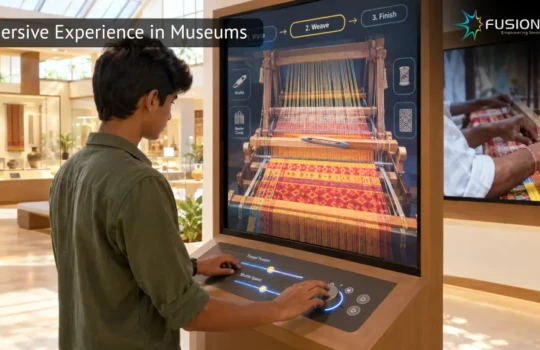
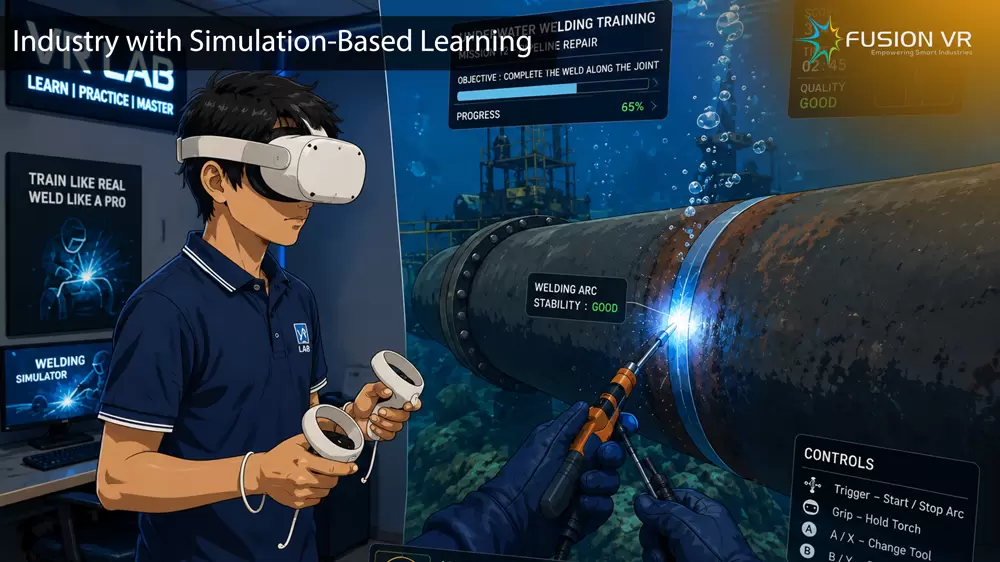
Education is going through a remarkable shift. Even though the usual classroom teaching still gives that basic theoretical base for learning, these days, many industries want more than just academic knowledge. In fact employers are searching for graduates who can work out problems, reason in a critical way , coordinate well with others, and also show confidence when they face real situations, basically from day one, even at the very beginning. Since technology keeps remaking every sector, schools and colleges are starting to use fresher teaching techniques to ready students for these changing expectations. And among the various innovations, learning that relies on simulation has become one of the most effective methods to narrow the distance between what happens in education and what happens in industry.
Simulation based learning lets students step into realistic workplace situations, but still stay in a safe controlled setting. Rather than just reading about complicated ideas, or passively watching a demonstration, learners join in and actually run practical exercises that mirror what happens in day to day professional life. In this way, the whole experiential learning approach helps people grasp not only the “what,” but also the “how” and the “why” that sit behind what they do. So the knowledge feels more relevant and it tends to stick, making it easier to use later in real world careers.
Industries across healthcare, engineering, manufacturing, aviation, defence, automotive, logistics, hospitality, and several other sectors increasingly depend on advanced technologies and specialized equipment. Training student’s straight on pricey machinery, or inside high-risk environments, is often impractical, also costly, and in some cases even risky. Simulation-based learning helps with these issues by building immersive experiences where students can rehearse repeatedly, stumble and correct without severe consequences, and keep improving their performance before they step into real professional workplaces.
One of the biggest advantages of simulation learning is how it can turn passive learners into active participants, you know. In the usual classroom setup, a lot of time people just listen, write notes, and try to memorize. That still has value, especially when you’re learning theories and basic principles. But it doesn’t always prep students well for real decisions made under pressure. With simulations, learners get pulled into the actual scenario, they look at what’s happening, break down the problem, then decide on something and, right away, see what happens after their choice. That hands-on interaction helps build technical strength too, while also sharpening critical thinking.
Modern industries tend to value employees who can react quickly to those sudden, unpredictable problems. Whether it’s figuring out why a machine is acting up, dealing with an urgent event, managing customer interactions, or helping coordinate how a team runs day to day, professionals are basically expected to choose next steps using good judgment, but not having all the time in the world. Through practice simulations, students get placed into these fast-moving scenarios, so they can build confidence and steadiness before encountering similar moments in real workplaces.
Simulation based learning really does help with long term memory, you know, it’s not just “a little better” either. Educational research keeps pointing in the same direction, learners tend to hold onto ideas more effectively when they’re actually involved, rather than just sitting there and receiving information. When people do hands on tasks, interact with environments that feel realistic, and take a moment to reflect on what happened, they form those firmer mental links that stick around in the long run. In other words, instead of merely repeating textbook definitions right before an exam, students start to grasp how the theoretical ideas are used in real professional situations, and that makes the whole thing more durable.
Another important benefit is the chance for repeated practice, you know. In a lot of real world situations, mistakes might be costly, hazardous, or even impossible to undo once they happen. A medical student cannot keep practicing complicated surgical procedures on actual patients, obviously. An engineering student also can’t go on and on running industrial machinery just to see what happens, because there are always risks. Likewise, aviation students can’t deliberately try out emergency situations during real flights, not safely anyway. Simulation technology, removes all those limitations by letting learners do unlimited practice sessions inside environments that are completely safe. Students can repeat the procedure over and over until they reach real proficiency, while instructors watch carefully and then give constructive feedback.
Confidence seems to be a big deal for workplace success. A lot of graduates know plenty from class, yet they still hesitate when it comes to actual responsibilities in their first job, like in the real day to day situation. Simulation based learning helps slowly because it familiarizes students with common workplace processes before they officially step into their professional careers. While learners manage realistic tasks and work through practical problems, they gain a self-assurance. That confidence then carries over into better workplace performance, which feels like the main point.
Teamwork has turned into one more essential ability across almost every sector. Right now, organizations are leaning on people cooperating together, especially professionals coming from different disciplines, like a small ecosystem. In many simulation exercises there are several participants who work in tandem, aiming for shared results. While doing realistic projects, students pick up communication that actually works, and they practice leadership, delegation, coordination, and also conflict resolution, bit by bit. These cooperative moments resemble today’s workplaces, where good outcomes depend just as much on solid interpersonal skills as on technical know-how.
Communication skills are just as important. Whether someone is presenting project updates, talking through technical issues, interacting with clients, or coordinating with colleagues, professionals have to communicate with clarity and confidence. In simulation situations, students naturally end up having to explain their choices, pass along information, ask the right questions, and adjust to changing conditions. These recurring moments help reinforce verbal communication as well as non-verbal cues, so graduates are usually more ready for real workplace environments.
Simulation based learning also supports personalized education. Every student learns at a different pace, and they have unique strengths, plus weaknesses. With advanced simulation platforms the instructors can tune the scenarios around what each learner actually needs. Students who need extra practice can repeat the exercises again and again without feeling pressure, while stronger students can move into more and more intricate challenges. In that way, this adaptive approach helps ensure that every learner gains real competence before moving on to tasks that are harder.
Another big advantage is the chance to let students run into scenarios that don’t really happen that often in real life, but when they do, someone has to be ready right away, like immediate competence. Emergency response routines, equipment breakdowns, disaster management, cybersecurity incidents, industrial accidents, and major failures in critical systems can’t always be shown during the usual classroom sessions. Simulations, almost like a recreation, bring back these uncommon yet important events, so students can train the exact skills they need to respond in a proper way even when everything feels tense or under pressure.
Industries are quickly jumping onto digital transformation, automation, artificial intelligence, robotics, and data-driven decision making, so to speak. Educational institutions have to get students ready for these kinds of technological advances, more or less. Simulation platforms blend these emerging technologies into learning settings, so learners can work with digital systems, automated procedures, virtual equipment, and also decision-support tools that feel more intelligent. With this exposure, graduates can shift more smoothly into workplaces that are powered by technology, where digital literacy has become a basic requirement, really.
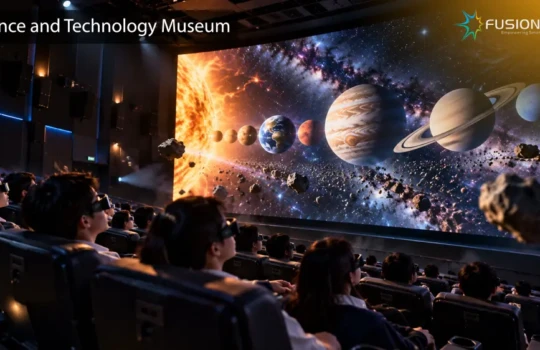
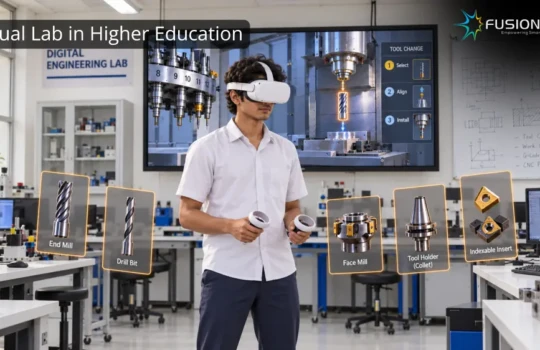
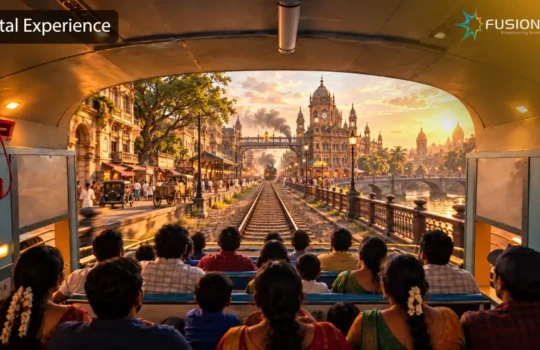
Virtual Reality (VR), Augmented Reality (AR), and Mixed Reality (MR) have, expanded the possibilities for simulation based learning. With immersive technologies, students get placed right in highly realistic digital surroundings, where they can interact in a more natural way with virtual items, machinery, and real like workspaces. Instead of having to imagine industrial processes through diagrams or videos, learners end up experiencing them, directly. That immersion does boost engagement quite a lot, it also improves understanding and supports hands on skill development.
Engineering education really gets a lot from simulation technologies, like it helps students do stuff without always needing the expensive lab gear. In other words they can assemble complicated machinery examine structural behavior, troubleshoot mechanical systems, and even try out maintenance procedures, all in a safer, more practical setting. For civil engineering students there is also the chance to review virtual construction sites, spot safety risks, and steer infrastructure projects, like a rehearsal before the real thing. Electrical engineering students meanwhile can diagnose circuit failures and fine tune system performance inside realistic digital environments, where things can be tested repeatedly without the usual downtime.
Healthcare education has seen big changes, through simulation training and, it helps a lot. Medical students, nursing professionals, emergency responders and other allied healthcare workers use simulations to rehearse patient care, surgical steps, diagnosis, communication skills and emergency actions. In these scenarios they try to get better at handling high-pressure moments, while also strengthening clinical judgment, coordinated teamwork, and patient safety, all of this without putting real patients in harm’s way or exposing them to unnecessary risk.
Manufacturing industries are now requiring employees who are comfortable with automated production systems, robotics, quality checks procedures, and industrial safety standards as well. In other words, simulation based learning lets students work on simulated production lines, keep an eye on manufacturing processes, spot defects, improve workflow rhythms, and learn lean manufacturing principles ahead of stepping into factory environments. This hands on experience seems to cut down on boarding time a lot, and it also improves overall workforce readiness, like in a more practical way than theory alone.
Automotive education really gets a lot of mileage out of realistic simulations, like not only in theory, but also in practice. Students are able to diagnose engine faults, inspect electrical systems, and get a better feel for advanced driver assistance technologies. They can carry out maintenance procedures, and later troubleshoot modern vehicle components using digital training environments. And since electric vehicles and autonomous technologies are becoming more common, simulation-based learning gives learners useful exposure to evolving automotive systems, systems that, honestly may not yet be widely available in schools or training institutions.
The aviation industry has, for a long time, shown how well simulation based training works, in a practical way. Commercial pilots, air traffic controllers, maintenance engineers, and cabin crew all go through big simulator sessions before they step into actual operational environments. In those Sims they get ready for normal procedures but also for unusual emergencies, which are hard to safely recreate during real flights. And the fact that aviation training succeeds has basically pushed similar ideas into many other industries too.
Hospitality and tourism education is increasingly mixing in simulation experiences, to get students ready for customer service, hotel operations, event management, and crisis response, you know, the whole thing. Learners go through scenarios where they handle guest interactions, calm down or resolve complaints, manage reservations, coordinate teams, and deliver that high level service inside lifelike hospitality environments. In the end it helps them build confidence and a certain professionalism, before students actually start dealing with real customers, not just role-play.
Business schools are also going with simulations in management education, more and more. Students get to join virtual business operations, financial planning, marketing drives, supply chain management, and strategic decision making drills like a full workflow in a sandbox. When they go through market competition, customer responses, and those messy organizational difficulties inside simulated settings, future managers build analytical reasoning and leadership skill, in a way that plain lectures cannot just do by themselves.
Simulation based learning is equally valuable for the development of soft skills. Employers often keep stressing, how important adaptability is, resilience too, plus emotional intelligence and ethical decision-making and leadership. When the simulations are well-designed, they drop students into realistic interpersonal moments, where they must negotiate, handle conflict and make ethical calls and also guide others in a coordinated leadership way. Through these kinds of experiences, learners tend to build professional mind-sets along with their technical know-how.
Educational institutions also get help from simulation tech, a structured way of practicing without all the real world mess. Every student gets the same exposure to similar situations, so it stays fair and the learning results are more comparable. Instructors are able to evaluate how someone is doing, in a more objective manner, by using concrete metrics like accuracy, response speed, decision quality, teamwork, and following the established industry procedures. With these performance measures, you can see learner progress more clearly while also pointing out where they need extra guidance or additional support.
From an institutional perspective, simulation based learning is basically a long-term investment in educational quality, you know it’s more than just the moment. Even if building advanced simulation laboratories calls for some upfront funding, the continuing payoff seems pretty clear: less wear and tear on equipment, better safety, reduced operational risk, training programs that can be scaled, plus improved student results. Institutions that go with modern simulation technologies tend to boost their reputation for innovation and also pull in students looking for education that feels industry connected.
Employers also seem to value graduates who have taken part in simulation based training, because they typically need less early supervision and somehow adapt faster to workplace expectations. Organizations put quite a bit of resources into onboarding fresh staff and teaching the real, practical procedures. When graduates step into the workforce with prior experience from simulations, they often show more confidence, better problem solving capacity, stronger sense of safety, and a clearer feel for industry workflows. So it usually ends up with higher productivity and lower training costs for employers.
Governments and education policymakers worldwide are starting to recognize that experiential learning really matters, for workforce development. In fact, national education initiatives are more and more encouraging collaborations between schools, universities, and industries, to help create simulation labs, digital learning spaces, and tech enabled skill training. These partnership efforts basically keep instruction synced with what companies actually need right now, while also backing economic growth, through a more highly skilled workforce.
As industries keep evolving, mostly because of technological innovation, educational systems have to stay at least equally adaptable. Simulation based learning is a future ready way, that mixes theoretical understanding with actual practice. It helps students with more than just their first job, it also nudges them toward lifelong learning, especially in work settings that change quickly. And through continuous improvement, real critical thinking, teamwork, and tech competence, these simulations give learners abilities that stay useful throughout their entire career.
Education is headed toward the future where immersive, hands on, and technology driven learning spaces will matter a lot more, and students will tend to actively work through real world style challenges instead of just sitting and passively consuming information. Simulation based learning, like a big step toward this goal, can make schooling feel more relevant and more compelling, because it helps align what students learn with what industry actually expects.
Getting students ready for a successful career is more than just giving them great classroom teaching. It needs chances to try things out, tinker, coordinate, and work through real, everyday style workplace problems before they graduate. Simulation based learning steps in here, because it builds realistic situations that connect the classroom and professional spaces at the same time, so the transition is less of a shock. And as schools keep putting resources into modern simulation tools, they aren’t only boosting learning results, but they are also sculpting a workforce that feels sure, skilled, flexible, and ready to make a real contribution right from day one of their professional path.