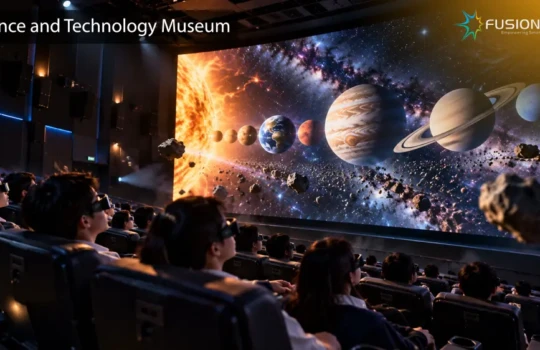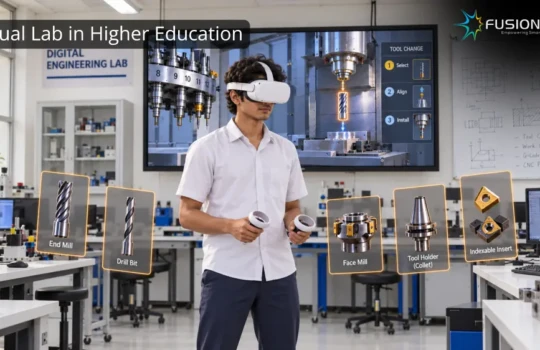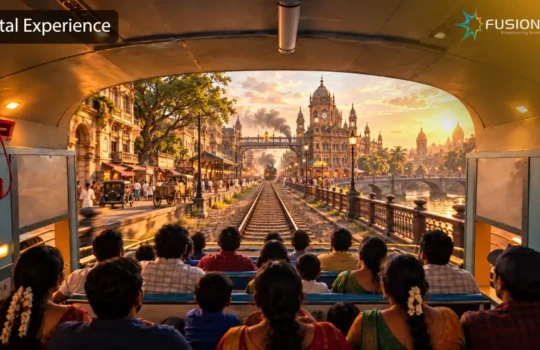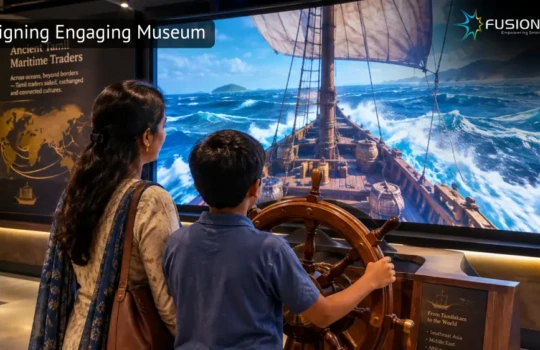
Museums used to feel like quiet rooms with glass cases and wall text. Now visitors want more than standing and looking. They expect to move through the space, try things, and take part in what is happening. In this newer style, a museum does not only show stories. It helps people live through them. When the experience is immersive, history and culture feel nearer. Science and art can seem more real. Heritage can reach you in a more personal way.
The objective of an immersive museum is not simply to add advanced technology to a traditional gallery. The real objective is to make the visitor feel connected to the story. Technologies such as virtual reality (VR), augmented reality (AR), stereoscopic 3D, projection mapping, holography, interactive displays, spatial audio and multisensory experiences can support this transformation when they are carefully integrated into the visitor journey. Fusion VR describes a digital museum as a physical space where technology helps visitors step inside a story, while the museum’s artifacts and curatorial authority remain central to the experience.
You start by figuring out why the museum exists. Before you choose a VR headset or decide on projectors, holograms, or touch screens, planners should ask a simpler question. What do you want people to know, to feel, or to carry with them after they leave? A museum might aim to protect cultural heritage. It could also explain a specific time in history. Some teams want stronger learning and more active participation. Others focus on drawing in younger visitors. There are also museums that want to boost local tourism. And some will push for a deeper look at a major collection. Once that goal is clear, it shapes what comes next in the design.
First, figure out who the visitors are. A museum could see groups from schools, parents with kids, tourists, academics, older adults, nearby residents, and people coming from other countries. Each group looks at exhibits in its own way. Students often like activities they can touch or try. Researchers may want clear details and a calm place to watch and take notes. Families usually want things they can do side by side. When you know these differences, you can plan a route through the museum that welcomes everyone. You do not build the whole experience for just one visitor.
Visitor research should be built into the planning work. Staff and designers need to learn how people come into the museum, where they tend to pause on their own, and which exhibits hold attention for longer periods. They also have to check where lines might start forming during busy times. Hands-on and immersive setups may keep people in the galleries for more time. At the same time, planners must think early about how many visitors can be handled and how crowds will move through the space. Fusion VR points out that Indian public museums often serve many groups, such as school classes, families, older adults, researchers, and other visitors. These groups show up with different needs, so visitor flow should be treated as a core design issue.
After you know who the audience is and what you want them to get from the work, you can shape the narrative. The technology is not the main point. It is there to carry the story, not to take its place. In a museum focused on an old civilisation, there are many options. You might use projection mapping to bring an ancient city back to life on the walls. You could also use VR so visitors can walk around an archaeological site. Hands on displays can show how people made things in the past. And you might use holograms to let visitors meet key figures from history. Each part should fit a job inside the overall storyline. If an element does not support the message, leave it out.
Storytelling also helps determine where technology is actually necessary. Not every museum gallery needs to be immersive, and not every artefact needs an interactive screen. In fact, making every room highly stimulating can make the overall experience exhausting. A successful visitor journey can alternate between high-energy immersive experiences and quieter spaces where visitors can observe objects, reflect and absorb information. Fusion VR specifically highlights the importance of varying the intensity of experiences rather than making every gallery compete for attention.
Plan the space based on how people move through the site. Start at the entrance with a clear arrival and orientation zone. Let that first area explain what will happen next. After that, add story-led galleries to set the theme. Use immersive theatre rooms for the big moments and key tales. Include hands-on galleries where visitors can take part and try things. Place object displays in calmer areas for slower looking. Finish with reflection spaces where people can sit with what they saw.
This approach is different from simply assigning one technology to each room. A gallery should be designed around the experience it needs to deliver, and the appropriate technology should be selected afterwards. For example, an immersive theatre may require large projection surfaces, carefully controlled lighting, spatial audio, acoustic treatment, structural considerations and adequate seating. An interactive exhibit may require sensors, physical controls, software and sufficient space for visitors to participate safely. Fusion VR’s digital museum approach similarly describes galleries as concept-driven spaces rather than rooms where technologies are distributed without a narrative purpose.
Picking an immersive option is a key next step. Virtual reality works well when people need to “go” somewhere they cannot reach in person. With VR museums can rebuild an archaeological dig, a past landmark, an old building, or a setting that is delicate, far away, or gone. Visitors then get access to experiences that would not be possible any other way.
Augmented reality puts extra digital content into the real world. A visitor can hold up a phone or tablet to an artefact. Then extra details appear on top of what they are already seeing. These may include short animations or visual rebuilds. This approach can work well when a museum cannot move or change the real object. The museum can keep the artifact as it is. At the same time, people get a clearer account of what it means.
Projection mapping can change the look of walls, floors, and other building areas. Rather than showing a picture on a normal screen, it can make a whole room feel like it is moving and shifting. Old landmarks can be put back on the surface again, outdoor scenes can slowly grow into new views, and complex science can be shown in a way people can watch together.
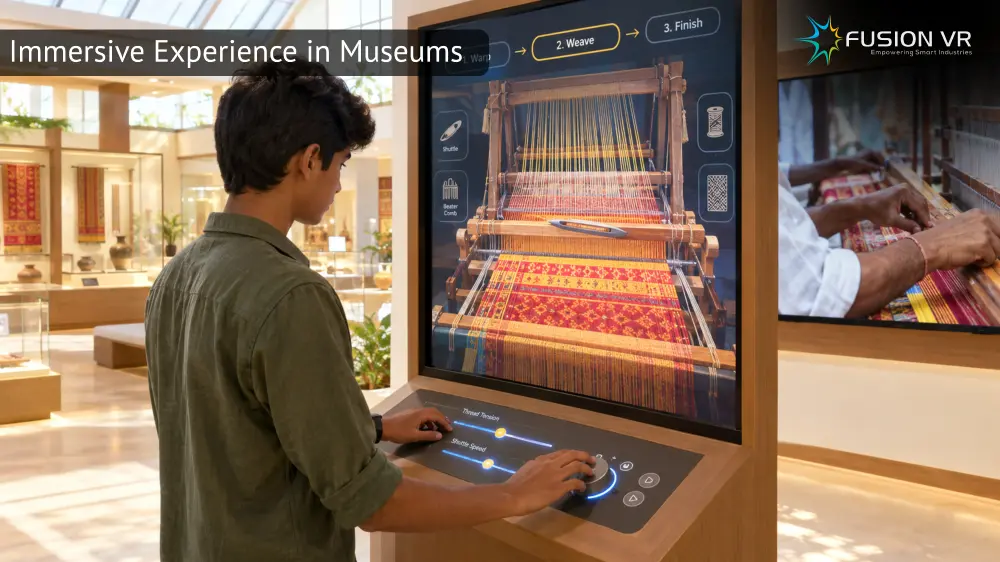
Holographic scenes may make it seem like a person, object, or character is really in the room. This can help when you want to tell stories about the past or share what an organization wants to say. There is more to it with interactive exhibits. In those, visitors can take part by moving, pressing, or otherwise working with parts of the display, whether those parts are physical or digital. Fusion VR has examples that fit this style. They include hands-on iron smelting activities, exhibits that respond to gestures, and avatars that use AI to interact.
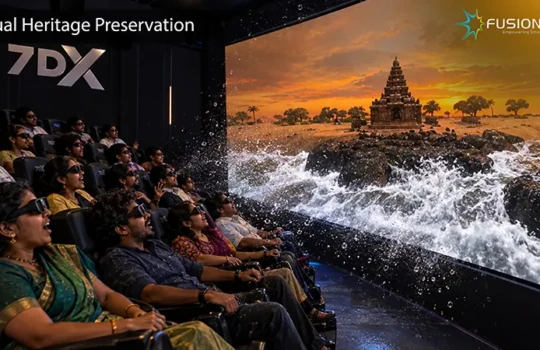
Sound matters as much as the visuals. It should not be treated like a last add-on. When audio is set up in a space around the audience, it can shape the mood. It can also guide where people look and feel more “in the scene.” In immersive theatre, sound can move with what is happening on stage. It can make the setting feel more real. In a heritage experience, background sounds can bring back the feeling of an older time. That said, the sound plan must be precise. Nearby areas should not bleed into each other. Audio has to be made so adjacent experiences stay clear and separate.
A key thing is to give people a real role. Many visitors get involved more when they are asked to try something. They respond differently than when they only watch. You can use a pedal, a wheel, or a lever. A tap screen can help too. Some spaces use gestures or other hands-on controls. These parts can turn a lesson into something you actually feel. When a museum is built this way, visitors can stay engaged while they learn. They get a chance to test ideas through action.
Accessibility should be part of the design work from the start. In an immersive museum, people will come with many needs. That includes different ages, different physical abilities, and different comfort levels with devices. You can help by adding clear directions. Also plan routes that are easy to follow. Places to sit matter too, especially during busy hours. Give more than one way to get the info, since not everyone learns best the same way. Let visitors take breaks and move at a calm pace.
Making content matters just as much as the tools. Great devices will not fix dull or wrong material. Work on many parts at the same time. That includes research, writing, visuals, voice over, animation, sound choices, and how people interact with it. Museums that deal with history and culture must be careful too. They should follow facts and treat their references with respect. Tech can show or rebuild a scene, but it cannot change what the facts say. The details still have to be believable.
A great immersive museum depends on many people working together. You need subject specialists and historians. Curators and storytellers also play a big role. Experience designers help shape what visitors do. Architects bring the space to life. Technology experts handle the hard parts. Software teams build the tools. AV staff make sure the media works well. Project managers keep everything moving. Fusion VR offers a ready to use service. This can include museum consulting and feasibility checks. It can also cover storytelling, plus experience design. They handle immersive tech and the AV setup. They also manage IT systems and network planning. Installation and ongoing maintenance are part of the package too.
You should prototype and test before you do the final install. Something can look great on paper, yet it may feel off once real people use it. During testing, you can spot issues with the directions, what visitors can see on screen, sound levels, how lines are handled, how fast interactions move, and how easy it is for different visitors to use. It also helps to find spots where people do not understand what to do. This matters most for immersive works, so test with the same audience your museum expects to have.
Operational planning matters a lot in an immersive museum setup. These venues are open for years, not weeks, so the tech has to work every day and be easy to fix. Things will wear down, so equipment will need upkeep. Programs may need new versions. Displays and media may also need to be swapped out over time. The museum should set aside time for staff training and ongoing help from the technical team. It also has to cover cleaning and visitor support. Daily routines should be written down, so the site runs smoothly each day.
The physical infrastructure must support the technology as well. Immersive theatres may require considerable power, structural capacity, acoustic isolation, cooling and technical space. Interactive installations may require sensors and specialised hardware. VR experiences need suitable circulation and safety arrangements. These requirements should be incorporated into the architectural and engineering planning rather than added after construction.
After the doors open, assess what people actually do there. Museums can track how many visitors come in, how long they stay, and whether they return. They can also look at how often people try hands on activities and how learning shows up. Staff can gather comments and note any day to day problems that get in the way. The goal is not just to prove that new tools were put in place. The real question is simpler. Are visitors using the technology in a way that helps them feel closer to what the museum is about?
Great immersive museums rarely keep people focused on the tech the whole time. In most cases, the tools fade into the background. The main thing is the narrative. Visitors walk away with the history they went through. They talk about the person they met. They describe the setting they explored. They remember the steps they followed. They usually do not dwell on the screens, the VR gear, or the setup that helped it work.
You can see this idea in Fusion VR’s projects for digital museums and experience centres. The company does many kinds of hands-on work. Some use stereoscopic 3D theatres. Others are built for 7DX. There is also VR, holography, and projection mapping. You may also find interactive displays and AI-led experiences in their setups. Their work in places like the Porunai Museum in Tirunelveli and the Kalaignar Memorial Museum in Chennai shows the range. The Tamil Nadu Planning Commission experience centre is another example. They also run immersive heritage experiences. Across these projects, they bring multiple tools together. They do this with the story goals in mind, not with one fixed method.
I think an immersive museum visit works best when the visitor and the story come first. I would start by figuring out why the museum exists. Next, I would look closely at who will come through the doors. Then I would shape the story from the ground up. After that, I would map out what the visitor does from start to finish. I would also plan the rooms and layouts, not just the exhibits. I would pick tools and tech only if they help the story, not because they are shiny. Then I would set up hands-on moments that actually matter. Afterward, I would try the whole route with real people and note what feels off. I would also make sure access needs are covered. Finally, I would plan how staff can run it day to day over time.
When the parts fit well, the museum does not stay a simple room for viewing items. It turns into a space where visitors can follow stories, touch history in a hands-on way, and feel more invested in what they see. The point is not to swap out the usual museum principles for tech. Instead, tech should help those principles reach more people, hold attention better, and stay with visitors after they leave.
Fusion VR approaches digital museums as complete visitor experiences, combining research, storytelling, experience design, immersive technology, AV and IT systems and long-term operational considerations. For institutions looking to create a digital museum, immersive museum or experience centre, and this integrated approach can help transform an idea into a meaningful visitor journey.