How to Plan a Science and Technology Museum That Demonstrates Complex Concepts through Experiments
A science and technology museum provides opportunities for visitors to learn how the world works. Visitors experiment with ideas and experience the principles of science. For museums, the challenge lies in designing exhibits that turn the most difficult scientific ideas into accessible and stimulating activities. The best museums help people to become more interested, more inquisitive and to further their own education.
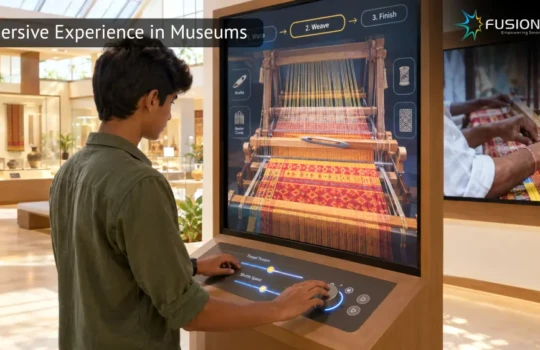
Many museums try to design new science and technology museums from scratch or remodel old museums to create an environment where the museum is not something to watch but to be a participant in. Digital media, interactive displays and other hands-on technology has changed the way museum exhibitions are designed and made complex concepts easy to understand.
Why Science Museums Need to Go Beyond Traditional Exhibits
Exhibits with traditional museum text, models, pictures, and even presentations can leave the audience wanting to better understand real world applications of scientific principles.
Understanding real world applications through the design and construction of an electrical circuit can add more depth than a standard reading.
The experience of controlling the space of a solar system, navigating through orbital paths, and the simulation of travel through space also adds depth to understanding of planetary movement.
For science museums, the goal should be to bridge accuracy of science with active, hands on storytelling, and an engaging experience for visitors. All of an exhibit’s features should explain a specific scientific concept. Visitors should also be able to understand the concept with each exhibit. Finally, all features should culminate to explain the main concept of an exhibit.
1. Identify the Scientific Concepts Your Museum Should Explore
Selecting appropriate themes is crucial for a successful museum of science and technology. Exhibits that are disjointed in nature are not optimal, so major scientific themes, issues of today, and innovations in technology should define a museum’s organization.
Physics and the laws of motion: Visitors learn the laws of physics with exhibits including gravity, force, energy, friction, and momentum, as well as light and sound with experiments they are able to try themselves. Exhibit themes including pulley systems, optical illusions, balance, pendulums, and wave displays explain the relationship between physics and our world.
Space science and astronomy: Planetary motion, black holes, and galaxies, as well as space travel and exploration, can be shown in a new, exciting way. Digitally interactive models, observatories, and space voyages provide a window for guests to explore space and see for themselves.
Chemistry and materials science: Experiments and demonstrations on space travel and exploration are both safe and educational. Using simulations and models on space missions are safe, educational ways to teach chemistry and physics concepts. Safety precautions for chemical experiments may include simulations and demonstrations to supplement and/or support the experiments.
Biology and the human body: Visualizing systems of the human body, circulatory and respiratory systems, genetics, ecosystem dynamics, and even the basic structures of the cell can be explained using advanced interactive displays of anatomy and physiology. It is also possible to explore the mechanics and relationships between body systems through the interactive displays.
Earth science and environmental sustainability: Interactive displays of climate systems, the water cycle, renewable energy, biodiversity, earthquakes, volcanoes and resource management can show visitors the dynamics and impacts of our actions on our planet. Interactive displays can also provide insight on how personal choices can influence the environment as a whole.
Robotics, artificial intelligence and emerging technologies: Using machines like interactive exhibits and automation projects along with things like programming a robot, and computer visions systems, allows for visitors to experience new technology in industry.
Engineering and innovation: Experiments in aerodynamics, building bridges, designing things to withstand different loads, and manufacturing simulations show the application of the sciences to real life challenges.
Concepts for the space should fit the mission of the institution, space availability, age range of visitors, the educational goals, and local interests in science. A variety of approaches will be used to show both how science started and the direction of new technologies.
2. Turn Scientific Principles into Hands-On Experiments
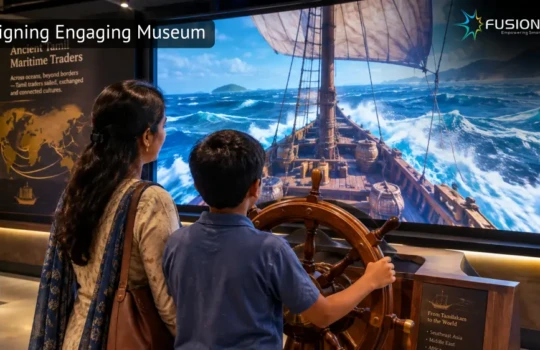
Providing opportunities for museum visitors to perform scientific tests on exhibits is a highly effective way of communicating science. Experiments convert information from abstract to something that can be observed and in the process, create the possibility for the visitor to learn through discovery and inquiry.
In a physics exhibit, visitors would be able to change the angle of a ramp and compare how the motion of different objects differs. A renewable energy exhibit could feature an interactive activity in which a visitor would be able to change the angle of a small-sized solar panel and see the difference it makes in power generation. In a fluid dynamics exhibit, visitors would be able to learn about how water moves under different pressure and flow conditions.
There are a lot of ways interactive exhibits can be built, such as:
- Build-and-test stations: Let users combine components and learn to appreciate the structure, circuits and mechanics they have designed and built.
- Cause-and-effect experiments: Let users understand how changing a single element in a system alters the final output of that system.
- Problem-solving challenges: Allow users to solve a scientific riddle, perform an engineering feat, or develop an original, useful innovation.
- Live demonstrations: Museums educators are able to present demonstrations of phenomena such as chemical, magnetic, light and sound events.
- Collaborative activities: Group work is facilitated where users complete a learning task and discuss their experiences with others.
All experiments should include clearly outlined procedures, required safety precautions, and a brief description of the associated scientific concept. Exhibits should be designed in such a way that visitors can explore the principles and outcomes repeatedly, allowing for comparison and discovery of different outcomes rather than a fixed progression.
3. Use Interactive Digital Technology to Explain the Invisible and the Immeasurable
Some scientific phenomena are beyond our control to see as they occur. For example, some things happen too fast or too slow. Other things are too small, too large or too complicated to see. Digital technologies are being used in museums to help clarify these phenomena for the visitors.
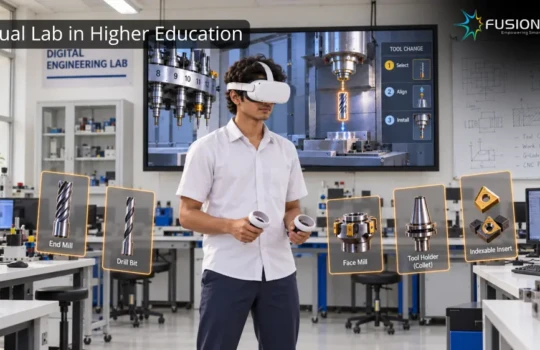
Digital media and interactive systems, like AR, VR, projection simulations, and displays can all work to fill the void of the inability of typical museum exhibits to show certain processes.
For example, a visitor could control an interactive atomic model, and by doing so, learn to understand the assembly of molecules. The user of an augmented reality system could see the internal components of a machine. A visitor could go on a space mission in a virtual reality experience. There is also the possibility of simulating the effects of rainfall, temperature and land usage on an ecosystem with the use of a projection system.
Digital technologies have also enabled personalised exploration. Visitors have the ability to select variables, construct and analyze different scenarios, and review multiple simulations to contrast their results.
For best results, use technology only when it serves the user’s comprehension, and not just for show. A good learning experience combines the use of real objects and educators alongside digital experiences.
4. Create Immersive Experiences That Make Science Memorable
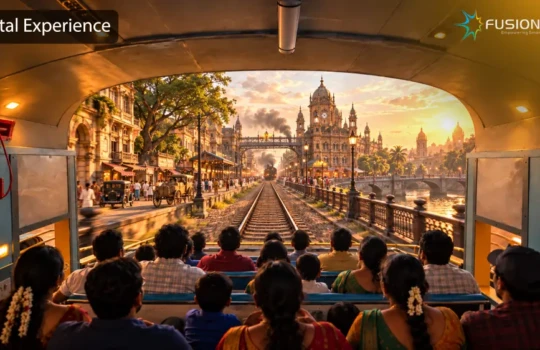
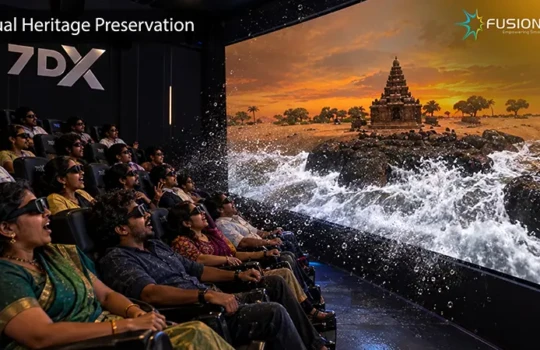
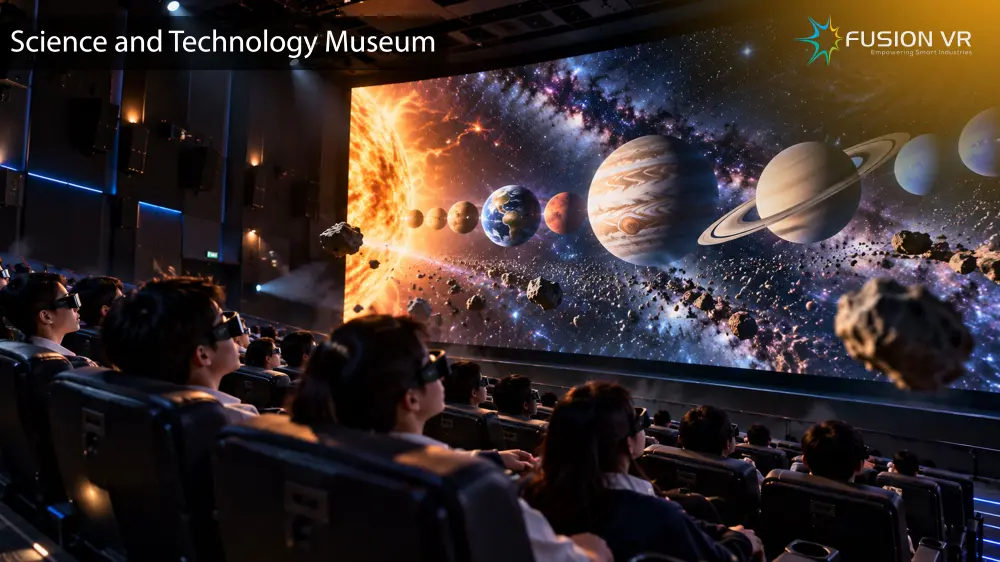
Immersive experiences can take museum visitors into simulated scientific environments, such as a simulation of being in space. Technologies like large-format projection, spatial audio, and even virtual reality can turn complex concepts into memorable experiences that museum goers can explore.
An immersive exhibit about space exploration would show museum goers the process of travelling to the moon. Exhibits could even include explanations of how the technology to travel to space works and the conditions that astronauts experience on a mission. Similar exhibits could show the marine ecosystems, underwater geography, and the negative effects of human activity and pollution. Another option is a human biology exhibit. Visitors could walk through the human circulatory system.
Some other examples could be an exhibit with a digital replica of an industry that explains the relationship between machinery, automated systems, and sensors. Or, another one could be an interactive display of the various effects of a climate change that focuses on ecosystem transformations, or maybe one about how a natural disaster may simulate earthquakes.
Experiences of this kind are effective when explaining phenomena that have more than one interacting component or when scale, movement, or space needs to be addressed.
Educational intent must be at the center of immersive exhibitions. To support learning with entertainment, they need to explain concepts of science in a way that is easily understood by visitors. Also, they must encourage visitors to think and learn.
5. Design Experiences for Different Audiences
A museum with science focus is ideal for schools, kids, family, researchers, educators, and anyone wanting to visit. Different groups have different levels of science, learning, and expectation.
For kids, a focus on cause and effect and exploration of the senses, movement, and color are all good. For school age children, curriculum-based activities can be beneficial. Older children and college students will enjoy more advanced concepts such as engineering, advanced robotics and simulations, coding and new tech.
Families can engage in collaborative science learning and exploration activities. Researchers and technically savvy individuals will like the depth, experimental data, and more sophisticated interactive displays.
Creating inclusive exhibit designs and interfaces, and having multiple language and information depth options for museum patrons makes it easy to increase a museum’s welcome to a wider audience.
Well-conceived museum designs can accommodate varying groups by developing layers of interaction and learning so that different groups can interact and learn with an exhibit at different levels of complexity and depth.
6. Connect Scientific Concepts to Everyday Life
Visitors are more likely to appreciate science if they can relate what they learn to familiar experiences and real-world challenges.
A simple exhibit exploring friction can lead to an explanation of how tyres grip the road. A simple demonstration of how heat is transferred can lead to an explanation of why different materials are selected for cookware and building insulation. An exhibit on electricity can show how electricity is consumed by various devices in the home. A water filtration activity can lead to an explanation of water treatment processes, while a robotics exhibit can lead to an explanation of automation in manufacturing, logistics and healthcare.
Science museums have the ability to investigate broader societal issues including clean energy, cities, public health, food production, climate change, and responsible use of artificial intelligence.
These connections help the visitors see that science is everywhere, not only in the scientific establishment, but in their everyday lives, in technology, in the development of civilization, and in the future prospects of humanity. At the same time, for organizations, such connections allow responding to the needs of the business community, academia, and other local institutions, creating links between exhibits and the regional economy, and attracting more visitors.
7. Plan the Museum around a Complete Visitor Journey
A set of high-quality exhibits will not necessarily form a successful museum. The entire visitor experience should be considered, so that the outcome will create the desired educational outcomes.
The whole process should be guided by the museum’s mission and objectives. This has to take into account the target audience and the learning outcomes to be achieved. All this will dictate the themes, exhibit types, technologies used, and space organization.
A standard planning process is normally composed of several stages including:
- Defining the objectives: This will ensure that the museum achieves its goal of enabling its visitors to know, experience or even articulate specific information on the subject area after going through the tour.
- Creating thematic groupings: The various scientific topics can be grouped into themes that will enable the viewer to easily understand the basic underpinning science as well as how it fits into more specialized fields of science.
- Choosing appropriate formats: This stage requires coming up with a combination of physical, interactive, and virtual displays and demonstrators including experiments, computer simulations, and immersive installations.
- Looking at the logistics: Issues such as access and circulation, dwell time, group size, waiting times, supervision, adjacency, and even the overall relationship between exhibits should be considered.
- Prototyping and testing: This process will require building prototypes of the proposed exhibits and testing them with target visitors and experts before finalizing the project.
- Technical integration: This stage demands that the museum exhibitions’ computer hardware and software, scientific content, interfaces, and maintenance requirements be incorporated into a working exhibit.
- Evaluation and enhancement: After the completion of the project, there is a need to solicit visitor feedback and conduct studies that will help determine the extent to which the objectives of the museum are met.
Institutions upgrading existing museums can also follow the same process, while determining which of the exhibits need to be retained, refurbished, digitally transformed or replaced.
Operations such as equipment’s life cycle, safety, staff training, content updates, accessibility, maintenance, and technical support budget needs to be considered.
8. Measure the Educational and Public Impact
The success of a science and technology museum depends not on attracting large numbers of people to impressive displays but on opportunities for interaction and encouraging a sense of wonder and investigation about the world around them.
Such museums can know they are successful if visitors are engaged, spend time at exhibits, complete challenges, give positive feedback from teachers and parents, return to the museum, and can demonstrate increases in knowledge through simple questions.
School programmes can be assessed against curriculum objectives and public workshops can be judged by level of participation, plus engagement and visitor feedback. Digital exhibits might offer anonymised interaction data to indicate where the interface is causing confusion, or underused functions and areas to improve.
Regular evaluation can also help museums determine which exhibits need additional explanation, activities or updated scientific information.
By seeing the museum as a continuously evolving entity, institutions can ensure its offerings remain current, as science, technology and public interest evolve.
Building a Science Museum That Inspires the Next Generation
A thoughtfully designed science and technology museum can become a valuable source of public learning and a place to explore scientific ideas through observation, experimentation, interaction, and discovery. By using interactive experiments and digital technologies, immersive storytelling and real-world applications, the institutions can make complex concepts accessible for visitors with varying interests and levels of scientific knowledge.
For institutions planning to open a new museum, the opportunity is to design an engaging and future-ready learning environment. For existing museums, it is an opportunity to revamp traditional exhibits, offer interactive experiences, and attract new visitors.
The ultimate aim is not only to showcase scientific knowledge but also to create conditions for the audience to engage in science and develop curiosity about the world around them.
When planning the new science and technology museum or renovation project of an existing facility it is important to first identify the scientific topics that are proving to be the most challenging to one’s audience. Then, one should analyze how these challenges could be overcome through various forms of experimentation, interactive displays and modern-day technologies. A well-designed science museum can serve to bridge the gap between science and the public.