Education has always shifted right alongside technology. Like from chalkboards to smart classrooms, each new thing has kind of changed how knowledge is delivered, and how it’s taken in. Now there’s another wave of tech progress reworking learning spaces across schools, colleges, museums, science centres, and public institutions. Augmented Reality (AR) and Virtual Reality (VR) experience centres are coming up as strong educational instruments; they make learning feel more immersive, more stimulating and frankly more memorable than before.
Public education systems around the world are increasingly jumping into AR and VR, kind of to bridge those learning gaps, boost student engagement, and make it easier to reach experiences that, honestly, would be hard to get inside a traditional classroom setup. AR/VR Experience Centres aren’t really a far-off futurist thing anymore; they are more like essential educational infrastructure now, that lets learners wander through historical civilisations, run pretend virtual science experiments, travel through space, and grasp those complicated ideas via interactive visualisation. And yeah, it’s sort of a different way of learning.
As governments, educational institutions, and public learning spaces start investing in immersive technologies, AR/VR Experience Centres are sort of transforming the way knowledge gets delivered and experienced, not only in a linear way but also in a more hands-on fashion.
The Shift from Passive Learning to Experiential Learning
Traditional educational methods tend to lean on textbooks, lectures, and mostly static visual aids. Even though those things are still sort of key, they can also end up restricting a student from really fully grasping abstract or more complicated notions, in other words. Because when the learning stays fixed, it feels harder to see the full picture, and that can matter, especially for complex concepts.
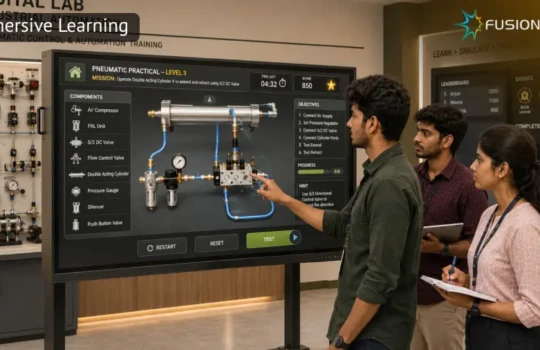
Experiential learning, on the other hand, pushes students to take part in the learning process in a more active kind of way. With AR and VR technologies, it becomes easier, because learners get placed inside immersive, interactive places where they can look around, test things out, and really interact with the educational content directly.
Imagine learning about the solar system not by usual diagrams in a textbook, but by kind of virtually wandering between planets. Students can watch planetary movements up close, compare sizes and distances more naturally, then really grasp astronomical phenomena from a first person perspective. It sort of sticks harder, because these experiences form stronger emotional bonds with the content, and knowledge retention gets noticeably better too. AR/VR Experience Centres offer these opportunities in a bigger way, like on a large scale, so educational institutions can build memorable learning journeys that, honestly, enhance understanding quite a lot.
Making Complex Subjects Easier to Understand
A lot of students have a hard time with classes that lean on abstract theories, complicated systems, or ideas you can’t really touch or see in a physical way. Like physics, chemistry, biology, engineering, and mathematics all tend to need a strong amount of visualisation, more than most people think at first.
AR and VR help with this in a way that feels kinda simpler, because they basically turn theoretical notions into hands-on interactive experiences.
For instance:
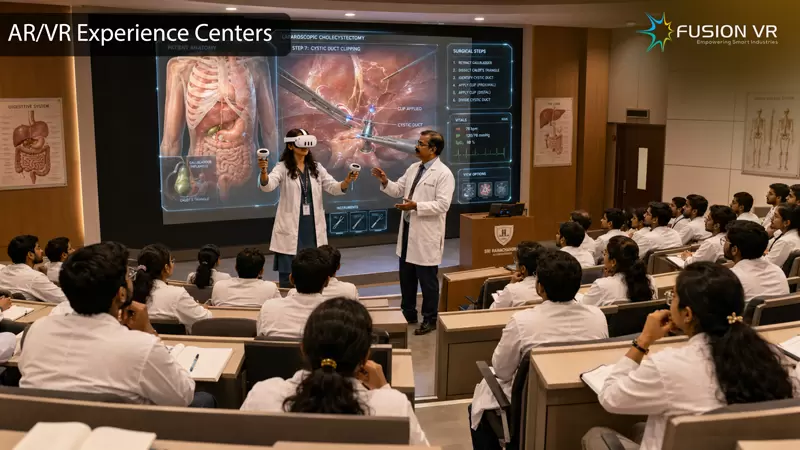
· Students can step through the human body in 3D and watch how organs work in real time.
· Chemistry learners can carry out virtual experiments safely, without lab hazards or all the usual risks.
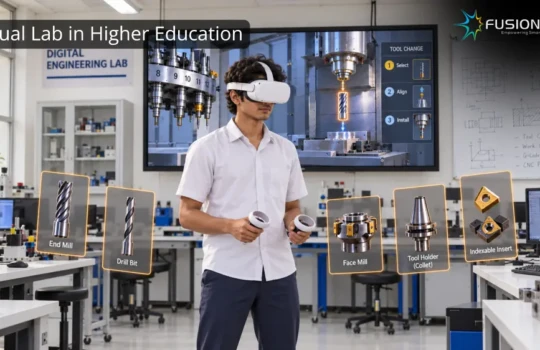
· Engineering students can take apart and put back together machinery inside a virtual setup.
· Physics topics such as gravity, motion, and force can be shown with interactive simulations, so it’s not only “read and imagine”.
Altogether, these immersive experiences help learners grasp tricky concepts sooner, and they also tend to boost long-term memory retention.
Enhancing Public Education through Equal Access
A big plus of AR/VR Experience Centers is that they can kinda level the playing field, and make learning options more democratic, even when things aren’t ideal.
A lot of schools, especially in remote or underserved areas, run into problems with infrastructure, lab facilities, learning materials, and also the kind of specialised spaces that are usually needed for better education. AR and VR can help close those gaps by delivering high-quality learning scenarios straight to students, without the usual obstacles. With immersive learning platforms, learners can actually do things like, in a way, more than just reading about it. They can, for example:
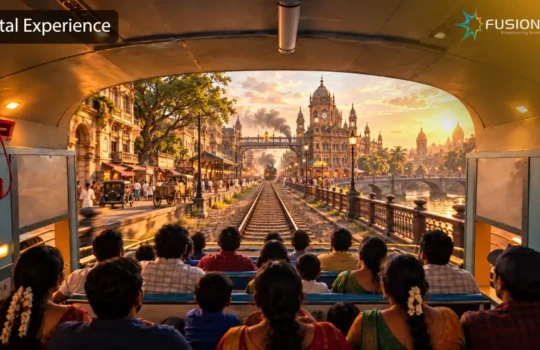
· Walk through historical landmarks virtually.
· Investigate advanced scientific laboratories.
· Feel what industrial manufacturing environments are like.
· Take part in hands-on STEM training programs that respond back.
· Get world-class educational content, no matter where they live.
And because of that access, educational chances become much fairer, while students also get learning experiences that stay engaging, even if geography would normally limit them.
Transforming Museums into Educational Experience Centres
Museums have for a long time been really useful as educational resources. But the usual exhibits, you know, they often lean on static displays and written explanations, which may not quite grab people’s attention the whole time, or fully show the story.
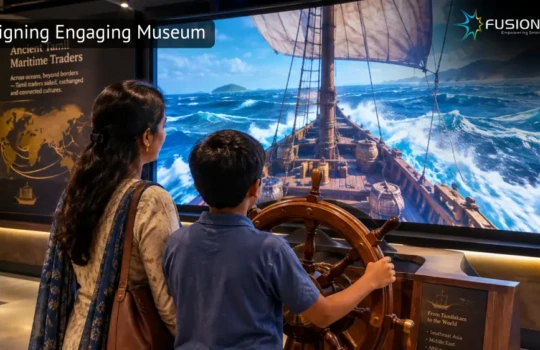
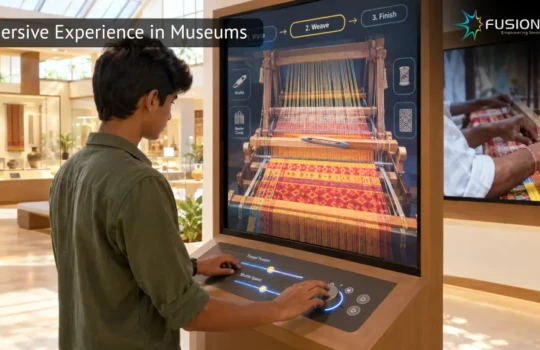
Now, AR/VR Experience Centres are kind of changing things in museums, turning them into more lively learning spaces. With interactive museum experiences, visitors can,
· Walk through ancient civilisations
· Watch historical events play out inside virtual spaces
· Touch and explore historical objects in a digital way
· Dive into immersive storytelling that sort of pulls you in
· Look into scientific discoveries using simulations
These tools really boost visitor engagement, and somehow make studying feel more enjoyable for just about everyone, kids, adults, and older folks too.
Also, lots of modern museums are starting to mix VR museum experiences with AR-based interactive exhibits, so people get an educational trip that blends entertainment alongside knowledge taking in.
Improving Student Engagement and Participation
One of the biggest challenges facing educators today is keeping student attention, and honestly, engagement too like, you know, not just for five minutes. Digital-native generations are used to interactive content, multimedia experiences, and real-time feedback all the time. Because of that, older teaching approaches can feel harder to match, especially when students are surrounded by immersive digital stuff every day.
AR and VR help with this exact problem by turning learners from passive watchers into active participants, not just sit there, nod and take notes. And the research keeps pointing the same way: interactive learning settings tend to improve student engagement, knowledge retention, motivation, and even problem-solving abilities, plus critical thinking skills. Also, collaboration and teamwork often benefit as well.
When students take part in the learning process, they’re usually more invested in what’s happening, and they retain information more easily. AR VR courses basically build environments where curiosity acts like the engine, so students explore, test ideas, and learning ends up feeling both effective and enjoyable.
Bringing History to Life
History education often leans on text based learning. Like yeah, textbooks give useful facts, but they still don’t quite manage to show the mood, the sheer scale, and the deeper relevance of past events.
Virtual Reality, kind of lets students take part in history more directly. Imagine standing in an ancient temple, and you’re there during the build of a well-known monument, or you catch a crucial turning point in world history as it’s happening around you.
These immersive moments build emotional ties, and that makes understanding stronger, plus it nudges learners to approach historical topics in a more personal way. Some schools and museums are also increasingly using VR tech to rebuild historical settings, so students can actually live the past, not only read it.
Advancing STEM Education
Science, Technology, Engineering and Mathematics, often just STEM, education is important for getting students ready for careers that are coming. In this context, AR/VR Experience Centers are kind of a big deal because they bring practical tools that help STEM feel more real, more hands on, and somehow easier to grasp through interactive experiences.
Students may:
· Look at molecular structures in three dimensions.
· Role-play or simulate engineering projects.
· Run virtual scientific experiments.
· See mathematical concepts in a clear visual way.
· Use and interact with advanced technological systems.
Those immersive moments often push learners to tinker, experiment, and come up with new ideas, while also building practical skills that actually match what modern industries need. And when STEM content becomes more engaging, and yes more reachable, AR plus VR tools can really spark more curiosity about scientific and technical careers.
Safe Learning through Virtual Simulations
Some educational experiences come with risks, costs, or logistical hurdles, which can make them tricky to run in everyday environments. So, in practice it’s not always that easy.
For example, you might see things like industrial training, medical procedures, hazardous laboratory experiments, disaster response drills, and aviation simulations. Those are the kinds of activities where failure can be messy in the real world.
Virtual Reality offers a safe, tightly controlled space where learners can rehearse, and build capability, without the usual real-world consequences. Learners can mess up, take the feedback, and then run the scenarios again until they reach the right level.
In other words, this method doesn’t just strengthen learning results, it also trims expenses and improves safety.
Personalised Learning Experiences
Every student learns a little differently, honestly. Some learners lock in better with visual content, while others go more for hands-on activities or, you know, experiential learning methods.
AR/VR Experience Centres make personalised learning easier because the educational content can be tweaked for individual needs, rather than staying fixed for everyone.
Students are able to
· Learn at their own pace,
· Re-do lessons whenever it’s necessary.
· Dive into topics with more depth and attention
· Get immediate feedback
· Use customised learning pathways
That flexibility really helps educators fit different learning styles, and it can improve educational outcomes across various student groups too.
Encouraging Collaboration and Social Learning
Contrary to the common idea that virtual environments sort of isolate learners, the newer AR and VR platforms actually tend to push collaboration more often than people think. Students can join the same shared virtual spaces where they may work through challenges together, finish group or team-based tasks, run collaborative experiments, and explore those virtual worlds as a group.
These teamwork moments develop communication habits, cooperation instincts, and even leadership ability, all while making students stay more engaged with the educational material itself. And since remote as well as hybrid learning keeps moving forward, these cooperative virtual environments are becoming more and more useful as learning tools, in practice.
Preparing Students for Future Careers
The upcoming workforce will need some form of digital literacy, plus adaptability, and also general technological competence, not just knowing the basics.
Industries from healthcare and manufacturing through architecture, defence, and even entertainment are quickly pulling in immersive technologies, faster than before.
If institutions integrate AR and VR into public education, students can get practical experience with tools and technologies they’ll most likely encounter during future careers.
Also, getting exposed to these immersive technologies tends to nudge creativity, innovation, and better problem-solving, which matters a lot in a world that keeps changing globally.
So AR/VR Experience Centers basically work as educational places but, at the same time they become gateways to what can come next in a career path.
The Growing Role of AR/VR Experience Centers in Public Learning Spaces
Beyond schools and universities, AR/VR experience centers are slowly turning into valuable tools in public education settings like: Museums, science centers, libraries, cultural institutions, government education initiatives, and community learning hubs. They offer educational moments that are pretty easy to reach, which helps all kinds of learners, from kids to adults, including people from different backgrounds.
When you blend immersive storytelling together with interactive content and newer visualization technologies, the result feels like a real opening for lifelong learning, not just a onetime activity. And as tech keeps getting cheaper, and easier to access, public institutions are increasingly realizing that investing in immersive educational infrastructure is actually a smart long term move.
The Future of Education Is Immersive
So, the educational landscape is changing in a pretty deep way. AR and VR tech are starting to move past being just a novelty, and they’re becoming a real part of the modern learning ecosystem.
These AR/VR Experience Centers are sort of helping teachers and educators get around older constraints. They make learning feel more interactive, easier to reach, more tailored, and more exciting in general. Plus, they let students go beyond classroom walls, kind of peek into places they wouldn’t normally see. They also help with tricky ideas through visualization, and students can take part in learning in a more active manner, not just watching from the side.
And as governments, schools, museums, and public orgs keep adopting immersive technologies, the whole role of AR/VR Experience Centers in public education will grow even more. It seems almost unavoidable.
Honestly, the future of education isn’t only textbooks and classrooms. It’s immersive, hands-on, and interactive. AR and VR are crafting learning moments that spark curiosity, boost comprehension, and ready learners for what’s coming next, with all the challenges and opportunities.
By turning public education into something that feels engaging and meaningful, AR/VR Experience Centers are helping shape a new era of learning. And this new era, it benefits students educators, and society overall too.