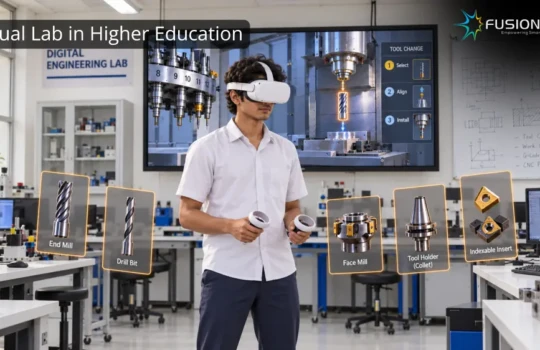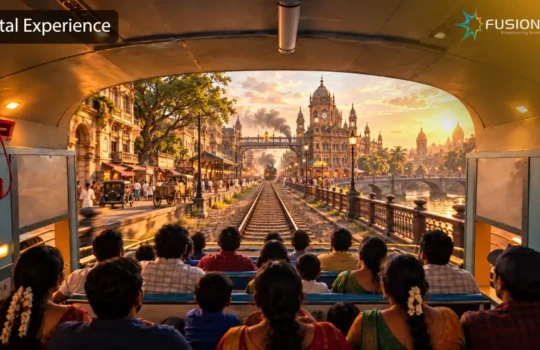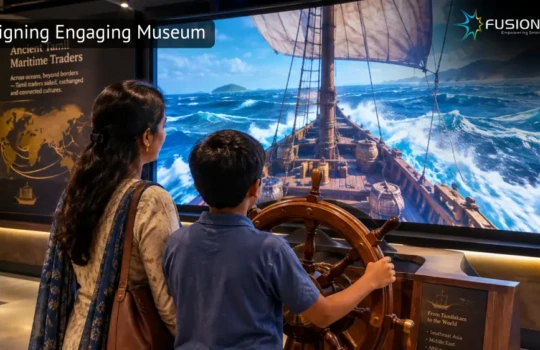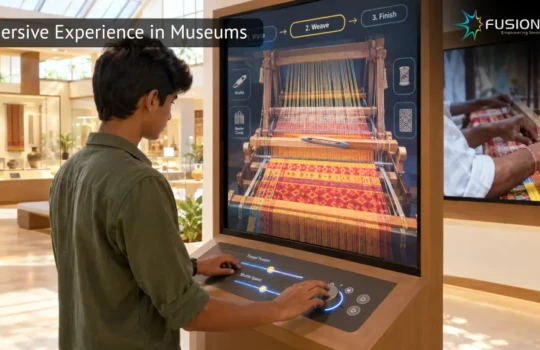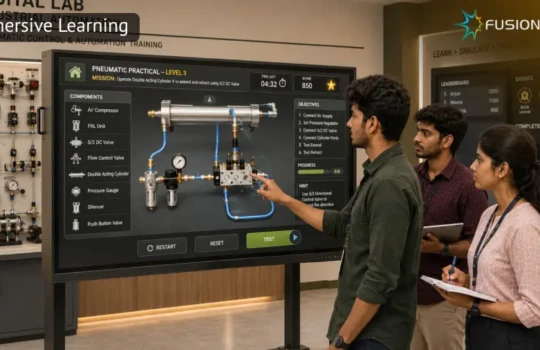
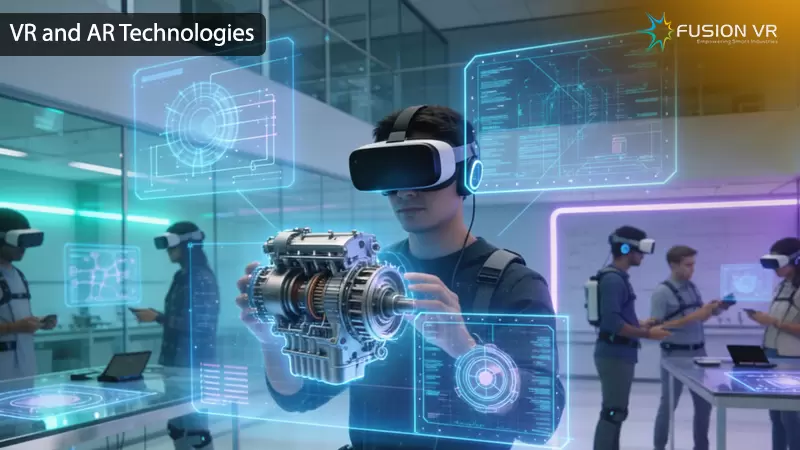
With the quick acceptance of immersive technologies in different industries, educational centres are now considering the ways they train students for the practical problems of the world. The use of VR and AR in education is not something that has to be tried and tested first,it is the core of academic VR programs and is assisting the universities in making scientific knowledge and practical skills meet.
The Growing Role of VR and AR in Education
Technical education has a need for interaction, accuracy and comprehension of the context. VR and AR allow schools to produce an imitated learning atmosphere where the pupils can perform, see and redo difficult tasks without the usual restrictions.
The adoption of VR and AR education platforms in universities and training colleges will make it possible for them to offer learning experiences that are constant, scalable and delightful.
Academic VR Programs Contributing to Immersive Learning
VR technology facilitates interactive surroundings that enable students to:
- Practice technical skills in virtual labs
- Live the life of industrial people in the simulation
- Understand detailed ideas with the help of 3D rendering
The knowledge gain from such educational VR programs is much higher due to the learners’ active engagement rather than merely content being passively consumed.
Risk-Free Skill Development and Training Content
In technical areas like engineering, healthcare, manufacturing, and electronics, mistakes can be costly or hazardous. VR-based training materials enable learners to:
- Do the procedures without any safety concerns
- Break the learning barrier in a secured environment
- Develop self-assurance before actual practicing
VR thus becomes a crucial factor in academic partnerships for the training content where the institutions work with the industry.
AR for Contextual and On-Site Learning
AR overlays digital instructions, diagrams, and insights onto tangible objects and thus makes physical learning environments more conducive to learning. Through AR, learners can:
- Observe machine internal parts
- Monitor their lab work by following instructions step by step
- Get feedback immediately while performing the skill
The improvement in precision and the shortening of learning periods are the results of the real-time assistance.
Personalized Learning Through Data-Driven Insights
State-of-the-art VR and AR systems constantly monitor student engagement, which allows to have:
- A route of learning adapted to each student
- Feedback based on performance
- Detection of lacking skills
This kind of personalization opens up the possibility of using VR AR education for different levels of learners, thus making the whole process of training more effective and less exclusive.
Holding Academia and Industry together via VR Alliance Programs
VR is used in academic alliance programs for the purpose of training content to make the curricula parallel to the actual industrial workflows. These programs make sure that the students who are graduating possess the following:
- Technical skills that are ready for the job market
- Seeing actual equipment and processes
- Working with the technologies that are going to be in the future
The connection created in this manner brings about a significant increase in employability and workforce readiness.
Academic–Industry Collaboration Through VR Training Programs
In order to keep the VR AR educational sector in tune with the demands of the world outside the campus, the partnership between the scholars and the industry is very important. The initiatives viz., the Industry–Academic Alliance by Fusion VR are proof of the fact that immersive technologies can support structured learning, which can be made industry-relevant.
The VR training program offered through this academic alliance is a joint venture wherein leading academic institutions and universities share the VR-based industrial training content, which in turn gives the students access to the practical workflows, tools, and scenarios used in professional environments. These types of initiatives not only help in closing the gap between classroom learning and industry expectations but also contribute to the wider acceptance of academic VR programs in technical education.
These models, based on alliances, do not substitute the conventional ways of teaching but rather support the existing curricula by introducing new layers of experiential learning, thus equipping students for the technology-driven job market.