The Psychology of Virtual Presence: Why Digital Museum Visitors Feel Connected to Historical Artifacts
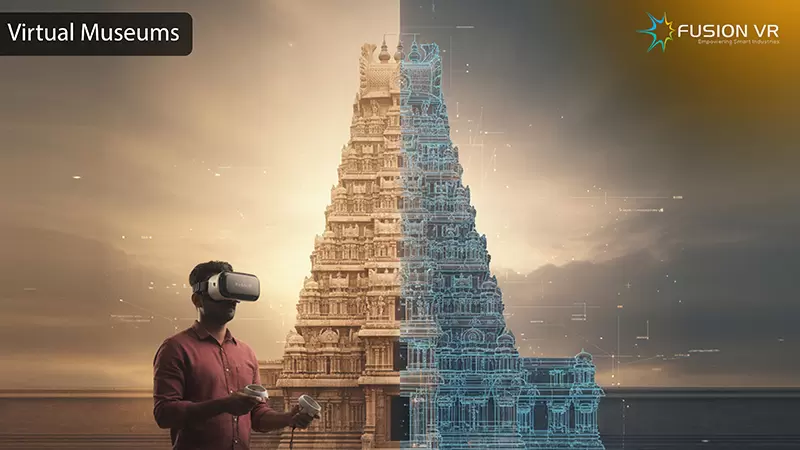
Immersive technologies have profoundly made their mark in the world today, and they have done so through their effects on virtual museums. The exhibits that were once seen as just pictures on a screen, are now the technologies that evoke such strong emotions and make people feel like they are right at the center of events thousands of years and miles away. Through virtual reality and augmented reality, the quite passive visitors of the past are now the energized, emotional actors within the digital space.
They are able to create emotional connections with the artifacts and the stories they are shared with, although they are more than a few centuries old. It is the presence in the digital world that acts like the bond between them, and it often put in poetic terms, is at the very center of the reason as to why people continually describe. Walking out of digital museums being struck with awe, nostalgia, or being even enlightened are quite common sentiments among them.
The Human Brain and the Illusion of Presence
Virtual presence is, by its essence, the mental state in which people are deeply convinced that they really are “there” in a virtual world. Whether a person is wandering around an ancient Egyptian tomb in the VR or standing under the vaulted ceilings in the Ajanta caves virtually, the human brain behaves very similarly to how it would in the real world.
This sense of presence, as if you were actually there, is created through spatial depth, lighting, sound reflections, and the sensation of touch, which are closely related to our real world experiences. The brain smoothly combines these cues, making a very convincing sense of physical involvement.
The scientific area of cognitive psychology has proved by experiments that we pay attention not to the realness of the stimulus but to the way that it feels real to us. This confirms the theory that our cognitive systems are set up to first of all react to the emotional content of the relation then to the aspect of reality the relation is depicting.
Emotional Engagement: The Bridge between Artifacts and Audiences
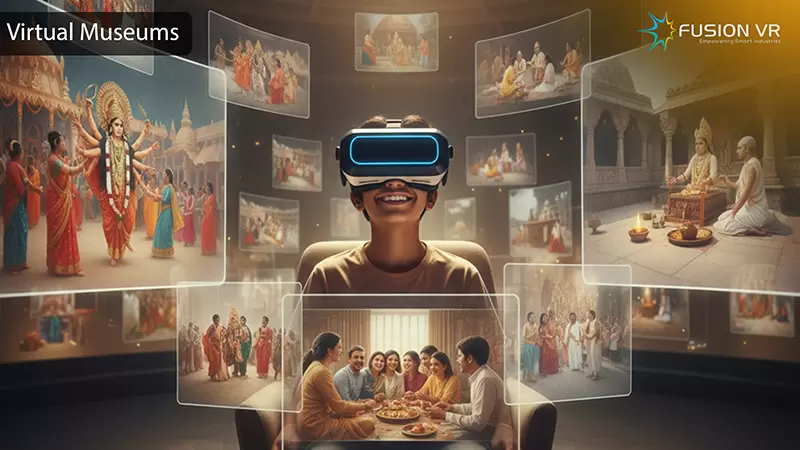
The museums of yesterday can be pretty dull because visitors could only use their eyes to see and read about artifacts; the imagination was more likely to be a gap filler. Nevertheless, the digital museums cater to the emotional and sensorial sides of the visitors at the same time; this way, the emotion becomes indispensable and the central point of the museum experience.
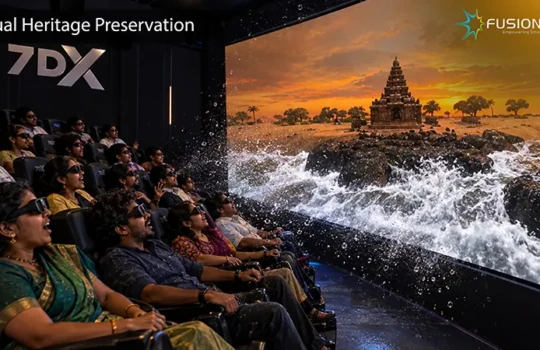
For instance, one might digitally walk through a remade temple which is gone for good. The tourist enters the temple’s inner chambers where softly defined ancient chants are heard in the background. What is also noticed are the carved wings, flicker-shadowed by the sun’s rays, exactly the way they were, a thousand years back. These multisensory levels do not only provide the historical view but also the feeling of being part of an event that, in turn, evokes empathy, awe and respect.
Emotional connection through human senses makes a digital object as good as alive. Thus, the mere seeing of history becomes more lively as history is felt.
The Science of Empathy in Virtual Environments
The feature of virtual presence that is considered most impactful is its capability to foster empathy. VR makes use of mirror neurons and these are the same brain cells that get activated in us when we see somebody doing something or expressing a feeling. Neuronal mirroring that is happening here, helps visitors to emotionally be part of the characters, cultures, and stories that are being shown in the gallery.
The people who nowadays are walking through a virtual representation of a war monument or experiencing the daily lives of ancient civilizations are not merely observing history, they touch it with their feelings. This empathy that drives people to connect is the conversion of education to the matter of fact emotional activity and therefore, participants are less likely to forget the information and to establish good memories.
To say the least, the use of digital museums is not only for teaching purposes; digital museums are bridges that take us emotionally across time.
Presence through Interactivity
Engagement as a factor happens to be the main concept in keeping the sense of present intact through interaction. In contrast to passively observing, interactive kinds of activities draw the audience to join in the process of exploring, shaping, and revealing. This quality of participation results in higher involvement and a stronger sense of being in the virtual environment.
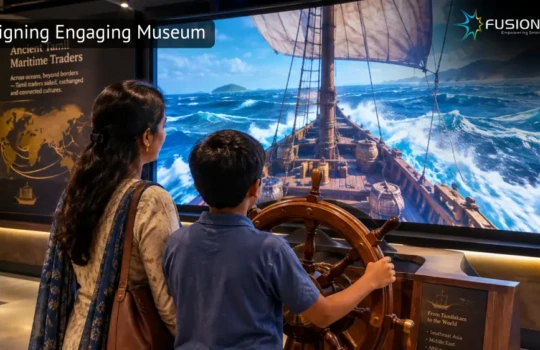
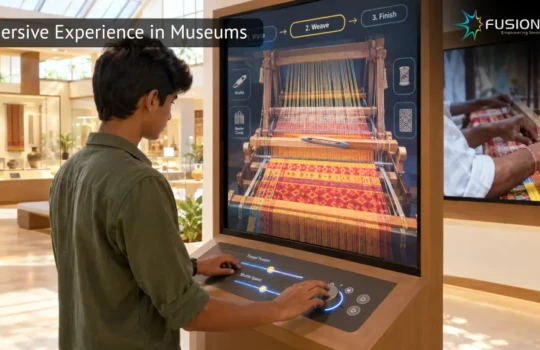
One of the examples is the museum technology of Fusion VR. The touch panels there, not just only motion sensors and AR interfaces, are something the visitor can “feel” the virtual by “handling” or interacting with ancient tools, pottery, or manuscripts without risking the integrity of real artifacts. And as a result of that, if they are allowed to tilt, rotate, or zoom into details, the users will be real not just viewing but exploring together.
The magic on the users’ side is the possibility of interaction, and opening virtual scrolls or illuminating hidden murals are two examples of how they can do it and how it becomes a factor in the emotional anchoring of users in the virtual space, hence, the making of an unforgettable experience.
Memory, Nostalgia, and the Digital Mind
Human memory is a digitized version of emotional response which saves not only the facts but also the feelings we were going through during such moments. This has been the strategy in the making of virtual museums by the use of very bright visuals, a dim story, and by providing the feedback that saves time and money. These are found to be effective in the recognition of the very emotional part of our memory act through.
A tourist’s round in a Ajanta cave or a Brihadeeswarar Temple leaves an emotional pull hence the sound, size, and the possibility to interact with the setting in the case of a digital model. By the right location of these feelings in one’s mind, the brain does the rest, that is to say makes the experience an emotional bond with us just like we are having a good revisit.
Astronomers are in agreement that a probe landing on a pile of lapsing lands and the feelings that go with it they would not have to scratch plenty of further info from the internet as the pictures that have the mountain and the surrounding water in them were displayed on the museum screen. The stories on and around the museum site make one feel connected to the place emotionally, though physically so far away. Moreover, digital museums are looked at as bringing one’s personal history and family traditions through emotions and culture since these are only history and culture pathways.
Cultural Identity in the Digital Age

The virtual museums are a significant factor in promoting cultural experience as they are very important in breaking the geographical or preservation-bound access restrictions to the heritage sites. The real power of the virtual museums is redefining or, in other words, feeding cultural identity.
There are a lot of ways in which museums can be the reason for the growth of the popularity of cultural heritage among people, but the first and foremost is the fact that virtual museums lead in the democratization of cultural experience through digital technologies. Visitors may feel pride, belonging, and a connection when they “attend” a VR reconstruction of a traditional Indian festival, listen to languages being spoken in ancient times once more, or take part in rituals that have disappeared from the public’s memory a long time ago. The kids, especially, are impacted by these sorts of historical references in new digital multimedia formats and thus finding their new identities. This emotional backing of identity is thus the thing that makes it possible for the younger generations to approach their antecedents and absorb without losing their attitudes.
The Role of Sound, Lighting, and Spatial Design in Emotional Presence
Apart from the graphical aspect, virtual museums’ sensing infrastructure has an incredibly vital part in the process of establishing a sense of presence.
- Sound: Spatial sound is the feature that imitates the acoustic environment of the past most effectively. For example, the sound of footsteps on the stone floor in a corridor or barely audible temple songs are an additional dimension to the feeling of presence.
- Lighting: Very subtle changes in light that imitate natural occurrences such as the sun rising, the light from flickering torches, or the moon-lit courtyard can stir very intense personal reactions.
- Spatial Design: When the virtual environment has been planned keeping in mind the reality of the proportions and depth perception, it results in the spatial memory formation also, which makes it possible for the users to “map” mentally the place just as they would in the real world. In this way, all of the above-mentioned components together put together a very symphonic environment in terms of senses that can change the feeling of a digital space into a place that is full of emotions and that feels as if it were alive.
Virtual Presence as an Educational Tool
Regarding education, it has been concluded that an emotionally engaged person would not only understand the content better but also better keep it in his/her memory. In immersive learning, it is scientifically shown that people recall 70% better emotionally involved events than those that are neutral. Digital museums take advantage of this through employing narrative and emotional content in their learning modules. By way of illustration, a visitor exploring the history of writing could watch the letters carved on a stone, listen to the chisel of the scribe, and even feel the emotional intensity of language preservation. The use of multiple senses in this way changes the boring memorization of learning into a delightful discovery.
As for the teachers, this is a complete revolution in which history ceases to be a subject to be taught but becomes a matter to be experienced.
Social Presence: Feeling Connected with Others
The interpersonal element of an emotional experience can also be triggered by social presence, i.e., the feeling of company in a virtual space that is common to all. Visitors often, when by themselves, still have the feeling that they are among a group audience that is going through the same historical period together.
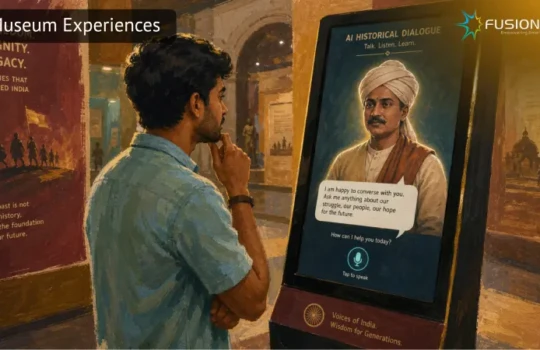
Innovative digital museums do not only have avatars or tour guides but also allow trained historians, curators, or AI-based guides to lead the explorations. Although these human-computer interactions are currently virtual ones, they do result in fostering a friendship and jointly discovering something new feeling. A person who is involved in such a process ends up having a much stronger emotional bond with the museum, just as it would be the case if they really visited the museum.
Why Virtual Presence Feels Authentic
Digital experiences are often challenged by skeptics who wonder if they can completely take the place of physical experiences. However, the reality is they do not have to. Virtual presence is not in competition with reality, but it instead complements it.
The true presence of the being is not from the artifacts themselves but through the emotions they directly connect with the viewer. A person who looks at a digitally visualized sculpture and is amazed, or curious, or reverent, they are having a real psychological experience. Therefore, one’s emotions are not separate from the medium, and the virtual authenticity could be even more impactful than personal encounters.
The Future of Emotional Presence in Museums
Deep emotional personalization emerges as the key feature of digital museum experiences in the time to come. The AI museum interfaces are going to be the vehicles by which the museums get in sync with the visitors’ emotions, kinetics, and inquisitiveness, thus offering each visitor the individual storylines that will in turn increase the emotional resonance of the visitors.
Can you think of a possibility where the technology feels the visitor’s eyes looking at some particular piece and the visitor is then provided with a more detailed and emotional story about it, all of it maybe in the visitor’s own language or with the background of the music of that time? Systems that react emotionally in the same way as human beings will take the visitors from just seeing the exhibits to being part of the events as well as the environment.
Fusion VR and other similar VR AR development companies are already leading the way in merging virtual reality and spatial computing to create stories and experiences that grab the visitor’s emotions. They are piloting the concept of the museum becoming a cross between its traditional role as a mere exhibitor and a live being that can interact with the visitors, thus the museum becomes an intelligent place of conversation.
Conclusion: Feeling History, Not Just Seeing It
The psychology of being virtually present shows a very meaningful fact: digital museums make no attempt to replace traditional exhibitions, but only try to percolate through time and space for the revival of emotional bonds.
Through a merging of science, arts, and emotions, these experiences not only tell us but also make us feel that history is not something that happened and is now gone, instead, it is still among us, the very heart of its believers in the virtual world. Be it a citizen of a 3D-rendered city or a person hearing the recreated background noise of a civilization, the handed-down feeling is really human.
Stepping through the threshold of the virtual beyond, technology has become instrumental in changing the world, but it is still the case that human traits are among us as a bridge to the past. Hardly is any person able to overcome the curious, sympathetic, and awed feelings that relate him to the past and to people. Through virtual presence, we not only breathe history but also experience its life in our very souls.