
Introduction
With the advent of VR, AR, and MR, immersive technologies are changing the ways teachers teach and children learn. From virtual field trips to simulated labs and collaborative-design workshops, VR opens the door for new experiential modes of education, ones that go far beyond the traditional textbook. Yet, in most parts of the world, these newest emerging technologies have remained male-dominated.
In such a context, highlighting and uplifting women in the field of VR education is not only a matter of fairness or representation but also an issue of innovation, inclusion, and the very architecture of future generations of learning systems. The design of immersive environments is made simpler, more contextual, and more empathetic by having diverse voices share the design process.
This blog explores the barriers women face in the world of VR/immersive education and highlights real role models to propose ways to dismantle these barriers in order to fast-track gender equity in the field of immersive technology education.
Why Focus on Women in VR Education?
1. Technology is shaped by those who build it
The “lens” through which VR/AR/MR experiences are created gives a view of the backgrounds, assumptions, and priorities of their creators. The absence of diverse voices means certain immersive environments may unconsciously propagate biases against certain perspectives and fail to mortgage on these specific needs. Research has identified this problem- Few VR systems are designed with assumptions centered around users from WEIRD contexts (Western, Educated, Industrialized, Rich, and Democratic), thereby excluding the other populations in concern.
When we support women to participate, it tremendously increases the creative potential to produce inclusive, culturally aware, and relevant VR content that reaches diverse students and communities.
2. Women learners and educators benefit from safe, inclusive spaces
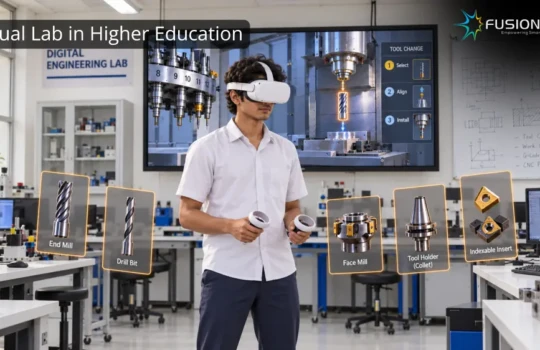
In many physical learning venues, women face microaggressions, social stereotyping, or implicit bias, more so in STEM/tech fields. VR, on the other hand, offers a situation wherein gender recedes (or is more equitably represented), and hence learners or educators are primarily judged on their inputs rather than on their identity. This, in turn, has a calming effect on any feelings of impostorism or social stress. Also, immersive tech can offer safe spaces to try out things, to practice, to fail, and to learn—all without the fear of being judged. This is very useful for engineering, surgery simulation, complex lab experiments, etc., where real-world consequences come with mistakes.
3. Addressing the gender gap in STEM & EdTech
Around the world, women have always been underrepresented in STEM fields and also in educational technology and digital innovation domains. VR/immersive tech is still emerging; there is an opportunity now to build equitable pathways before entrenched disparities grow deeper. When used in education, VR/AR tools are considered a way to maybe close gender gaps by offering new and engaging learning experiences that appeal to a wider range of learners.
Nurturing women in VR education not only helps women but also bolsters the ecosystem, results in better products, and speeds up their adoption in schools and institutions, which otherwise might have preferred a more conservative approach toward technology.
Barriers That Women Face in VR / Immersive Education
To change the situation, we should recognize the obstacles women currently face in entering or thriving in VR education roles. Some of these include:
1. Lack of early exposure & role models
Most girls or young women do not get early encouragement in tinkering, coding, game design, or spatial computing. Without role models in VR/immersive spaces, they may not think of it as a potential path for themselves. One analysis even maintains that role-playing, the use of STEM toys, and curiosity-driven building are activities already biased toward boys, creating additional requirements along gendered pathways.
2. Implicit bias, stereotype threat, and exclusion culture
In male-dominated tech disciplines, women face extremely subtle forms of exclusion: being talked over in meetings, being assumed to be “less technical,” or being judged on different criteria. Unconscious bias is often present during hiring, advancement, and funding decisions, which may usually tilt in favor of men. This finds its way into another level inside the VR/immersive tech community: fewer speaking slots, tokenism, or outright gatekeeping.
3. Resource constraints & access gaps
VR equipment can be expensive, and so are the licensing fees for software, development platforms, and training. Women, primarily in lower-income regions or institutions, might lack institutional support, funding, or infrastructure to access VR kits or labs.
The time factor from other commitments (caregiving, family obligations) might limit opportunities to experiment and network, as well as commit to long projects outside of paid work.
4. Technical and interdisciplinary challenges
Immersive tech calls for expertise in such areas as computer graphics, HCI (human-computer interaction), UX design, spatial audio, programming, pedagogy, domain expertise. Women coming in late or from nontraditional backgrounds may just feel overwhelmed. The real friction of iteratively learning those layers of skills without a support network or mentorship remains.
Usability studies (more often than not) ignore gendered differences in ergonomics, interaction paradigms, comfort thresholds, motion sickness threshold, etc. This can lead to VR systems that are more hostile to the female population and other demographic groups.
5. Retention and advancement challenges
Even when women enter VR/edu roles, a greater challenge lies in retention and opportunities for advancement. They tend to plateau at the middle-management level, get less rewarded for risk-taking, or be less visible in leadership roles. Without conscious efforts in place, many female technologists depart because of burnout, isolation, or outright lack of recognition.
How VR / Immersive Tech Is Transforming Education (and Why Women Have a Role to Play)
Before discussing strategies, it becomes relevant to look into the aspects in which VR is shaping education and why equal representation of women in this field is important.
1. Engagement and retention enhancement
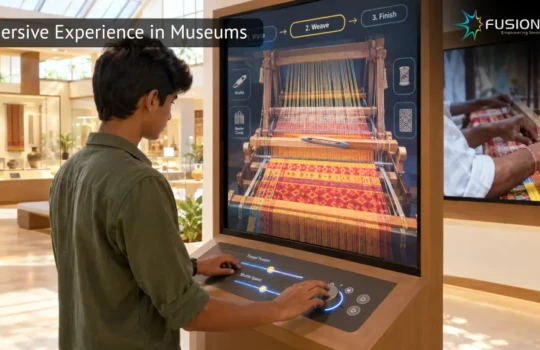
VR allows the learners to experience scenarios, thereby making abstract or difficult concepts real. Studies have shown that immersive learning environment can enhance engagement, motivation, and long-term retention. A controlled study has shown that VR-based physics experiments improve knowledge and satisfaction of users better than either slideshow or traditional methods. As learners feel “present” within the walls of a lab simulation or virtual reality, their curiosity grows and also willingness to explore, discover, make mistakes, and iterate.
2. Personalized, adaptive, and safe learning spaces
These simulation environments monitor the students’ interaction, altering difficulty levels or providing guidance or scaffolding for them. The students may proceed at their own pace or travel down paths in a non-linear manner. If something goes wrong in a VR scenario, things get costly in time; learning safely.
Women in education and design would ensure that personalization avoids echoing stereotyping (for example, gendered assumptions about styles, preferences, or risk tolerance), contributing their share to adaptive systems for inclusion.
3. Remote, collaborative, and scalable instruction from a global perspective
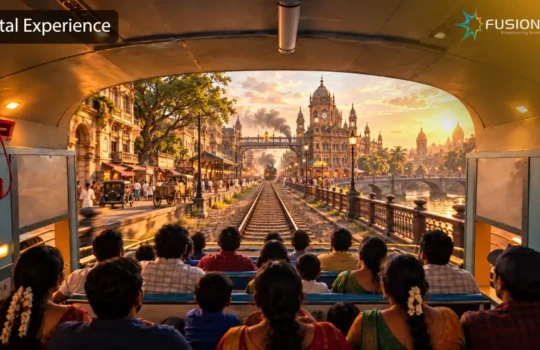
VR in education offers the capacity of placing learners and instructors scattered around the globe into the same virtual environment. For example, a teacher in Chennai would conduct a virtual biology lab in collaboration with students in Nairobi or Berlin. This, in turn, helps circumvent restrictions set by infrastructure, geographical limits, or travel costs.
Women in VR education can lead the democratization of access to immersive education so that learners from underprivileged or under-resourced communities (particularly girls in rural areas) could access immersive learning.
4. Cross-disciplinary and project-based learning
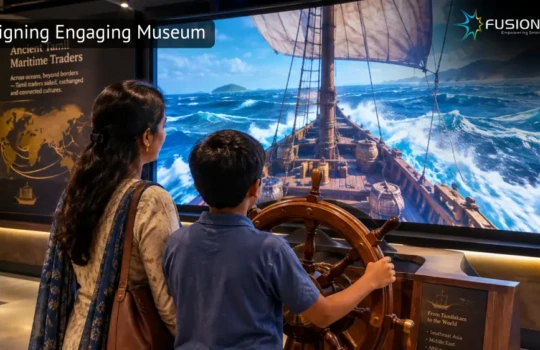
With immersive technologies comes integrated hands-on learning: designing architectural walkthroughs, simulating chemical or medical procedures, historical reconstructions, coding interactive narratives, or working on a civic VR project. This set of activities requires not only technical skills but design, pedagogy, empathy, and domain knowledge some of which women could bring uniquely to the table by representing interdisciplinary views.
Conclusion
Along with the metamorphosis of education brought about by the immersive technologies, VR education for women stands at the crossroads of moral and pragmatic considerations. From limited access-related challenges and implicit biases to lack of mentorship and visibility, the challenges that confront women are challenging but can be resolved through conscious, systemic change. When we empower women in the immersive-tech domain, we promote diversity of thought, empathy in design, and inclusivity in systems of knowledge that would educate coming generations.
Women in active roles designing VR learning environments lead to richer, more representative, and designer-centric experiences. Through training, funding, mentorship, and leadership opportunities for all else, we can ensure that immersive education evolves into a truly inclusive front line of invention and creativity-Cannot speak, constrained by gender. In breaking down barriers for women in VR education, therefore, the realm of fairness must turn and guarantee that the virtual worlds we build are reflective of the diversity and promise of the real one.