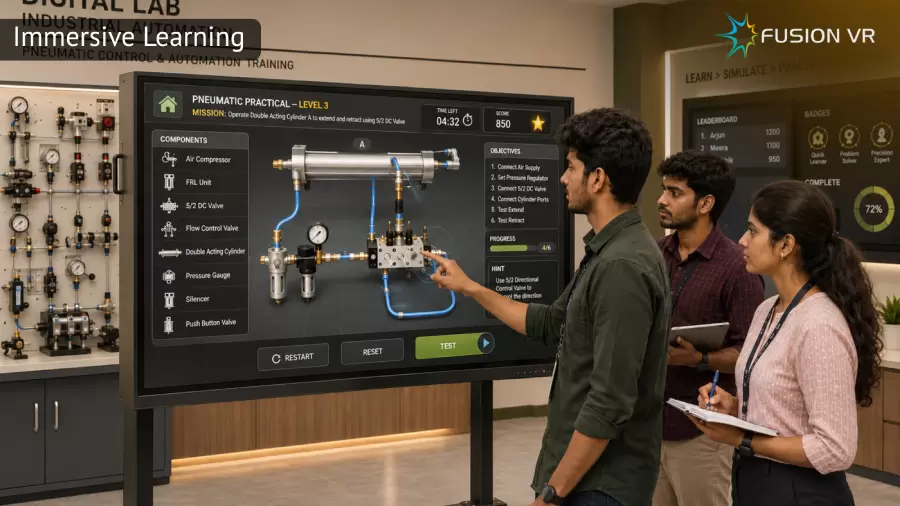
Training for a trade has long been tied to hands on work. Classrooms in this area are not only about theory. Learners have to see how common tools, machines, and workplace routines work when things are real. They also need to learn the kind of work settings they will face after school. A student who wants to be an electrician, a car technician, a nurse or other healthcare worker, a machinist, a builder, an aircraft technician, or an industrial operator cannot rely on facts alone. Knowing the concepts is helpful, but it usually does not carry the whole way. People have to practise the tasks. They must make choices during work, fix issues as they come up, and run the steps again and again. Over time, this helps them feel ready for the job and handle the day to day demands.
Immersive learning in vocational education is changing things in a big way. Tools like virtual reality, augmented reality, mixed reality, and 3D simulations are part of that shift. There are also interactive digital spaces, movement based practice, and immersive classrooms. With these options, training is not limited to reading a manual or only watching someone show a step. Learners can work inside a safe simulated setting. Then they can try the task again and again, just like they would on the job.
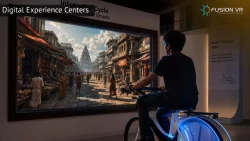
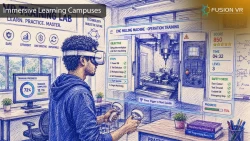
Immersive learning uses tools like VR along with hands-on teaching. Instead of watching from the side, students take part in the activity. With a VR headset, a trainee can step into a virtual factory, a workshop, or a lab. They can also enter places like a building site, a hospital room, an aircraft cockpit, or an auto service center. Inside, the learner looks closely at the tools and parts. They can follow step by step tasks, spot issues, and run the on screen controls. When something goes wrong, they get quick feedback. This style of training helps people stay interested, and it ties what they read to what they do in practice.
Immersive learning has a key benefit. Students can practise skills without the same risks they would face in the field. In many job training settings, learners may meet heavy machines, wiring and power tools, harsh chemicals, very hot surfaces, parts that move, work at height, vehicles, or full industrial systems. If a new learner tries those tasks on real gear, it can cost a lot. It can also put people in danger. With a realistic simulation, students work in a safer space. They can try, fail, and try again. Their errors do not wreck equipment. They also do not put them or others in harm’s way.
A good example is an electrical training simulation. It helps learners spot wiring faults and get used to linking circuits in a virtual space. When someone joins wires the wrong way, the program can show what goes wrong and then guide them to the right steps.
Learning from mistakes matters a lot in trade and vocational programs. In a regular classroom, people might get the lesson and understand the theory. But when they finally face the real tools, they can feel stuck or unsure. Hands-on practice helps close that gap. Students do the task over and over, try small changes, and see what works. They get responses from instructors and keep adjusting until their work is smoother.
Immersive learning can help vocational education reach more people. In many AR VR training programs, you need real tools and real rooms. You also need specialists to guide the work, plus upkeep for machines. A lot of schools cannot afford costly equipment for every student. Digital simulations can fill part of that gap. They let learners practice steps in a virtual setting first. Then they can move to the real equipment with more confidence.
This can help schools run training more smoothly. If a class has many students, you do not always need one real computer set up for everyone. A practice sim can let different learners work at the same time, each on their own. Then the real gear can be saved for later lessons that need real touch and real setup, once students have already built the basic skills in the simulation.
A key plus is that the same activity can be done again and again. In a regular workshop, the trainer might show a step only once, or maybe a couple of times, then learners try it. With immersive learning, the session can run repeatedly, as often as you need. If someone gets stuck on a task, they do not have to sit and wait for the next day. They also do not have to rely on when the instructor is free. They can start the simulation again right away and practise until it feels right.
Personalised learning can happen through this approach. Students pick up hands-on skills at their own pace. One learner may grasp a process right away. Another learner might need extra practice before it clicks. Learning platforms with immersive features can help in both cases. Learners can move forward based on what they show. Those who are more advanced can work through tougher scenarios. Those who are new can begin with clear, step-by-step tasks.
Hands-on checking is one more place where immersive tools can help. Rather than relying only on written tests, vocational schools can watch how well students do real work. In a simulation, the system can track what someone does, how long it takes to finish, where mistakes happen, and the order of steps. It can also note choices made during the task, plus other signs of performance. With those details, teachers can see what is going well and what still needs extra practice.
Simulations plus analytics can also show instructors where learners keep getting stuck. If many students make the same error over and over during a virtual exercise, the instructor can go back to the course materials. Then they can add more teaching, like extra walkthroughs or clearer examples. In this way, the check does not just happen at the end. It becomes part of the learning along the way.
AR can help VR by placing digital details right in the real space where training happens. In job training, an AR setup can show extra help on top of the actual tools. It may display steps, diagrams, names of parts, short motion clips, or safety notes. Say a person is working on an engine. With AR, they might see prompts that point to key parts. They can also get the suggested order for service tasks as they go. This way, the lessons feel closer to what the trainee does with their hands. It can narrow the distance between screen based study and real work.
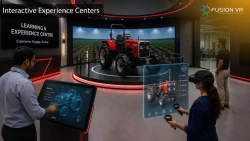
Mixed Reality can push this kind of learning ahead. It lets students handle virtual items that seem to sit in the same space as the real world. That helps a lot in technical classes. Learners need to grasp how parts line up in space, how mechanical components fit together, and how to follow assembly steps. They also need practice with how tools and equipment work. With Mixed Reality, students can look at tough systems in 3D. They do not have to depend only on flat diagrams.
Learning in a visual, immersive way can help people grasp tough technical ideas. In many trade and vocational classes, there are parts and steps that books struggle to describe clearly. With 3D views, students can look inside and make sense of how things work. They can track how pieces move, how energy travels, how parts get put together, and what happens during normal operation. For example, a 3D cutaway of an engine lets learners watch how the inner parts work with each other while the engine runs.
Immersive tools can help with more than technical training. They also support day to day skills that matter at work. In vocational programs, students cover more than steps and equipment. They need to learn how to speak clearly and work in a team. They should practise making choices, dealing with customers, and handling urgent events. They also need to show good work habits and act in a professional way. With virtual scenarios, students can rehearse talks they might face on the job. They can also practise in tough moments without real risk. This helps them try answers, adjust, and improve while everything stays under control.
A healthcare training simulation can put people into a virtual patient-care situation. They have to talk with the patient, spot symptoms, sort out what to do first, and respond in the right way. A hospitality simulation might place learners in a customer-service setting. They practice how to handle common issues with guests. An industrial simulation can ask a group to solve a problem on the production line. They work together under time pressure. Through these activities, learners build practical skills and also feel more sure of themselves in real work.
Hands-on learning tends to work best when a teacher is involved, not when it is the only method. Many strong job training courses use a mix of formats. Learners start in a normal class to grasp the key ideas. Next, they try out the steps in a simulated setting. After that, they use real tools and equipment. Finally, they show what they can do at an actual site or in a closely watched workplace.
This sequence can help hands-on training feel more organized. When learners get to the workshop, they already know the basic tools and steps. They do not have to meet every rule for the first time on the spot. Then the instructor can focus on fixing tougher skills. Less time goes to repeating the same simple setup and controls.
Immersive learning can also help people who study from home or in other places away from a main campus. If a student lives somewhere that lacks special labs or tools, they may still use digital simulations on a device they already have. This matters a lot in vocational courses. In many cases, the real equipment and the support for it are mainly found at bigger training centres. Immersive tools do not solve everything or fully swap for hands on practice, but they can give wider access to the early practical basics.
Workforce upskilling is another big use. Immersive learning is not only for kids and students in schools or training centers. Firms can set up VR and simulation sessions to teach staff about new machines, safety rules, maintenance steps, emergency actions, and day to day work procedures. New hires can learn how things work before they step onto the shop floor. At the same time, staff with experience can rehearse less common or risky situations that do not show up often during regular work.
This helps companies keep learning over time. Tools, software, and work routines do not stay the same. Staff then need to refresh their skills. Hands-on training can also help people learn in a way that feels more real than a usual review class.
Immersive learning works only when the learning experience is strong. If you just move a textbook into a virtual space, vocational training will not automatically get better. The lessons still have to be planned with clear learning targets. The steps students follow should match real work. Students also need chances to interact in a real way. They should receive feedback that helps them improve. You also need ways to check results, so you can see what was learned. The tools matter, but they should back the training goal, not pull attention away.
Realistic simulation matters a lot in vocational training. People should practice in the right order, not random steps. They need to feel how real tools act, and they should work under conditions that match the workplace. They also must see what happens when they make a wrong move.
User experience matters a lot. Learners need to see what they are expected to do right away. The steps should not feel tangled or hard to follow. The screens should be easy to use. Directions should be short and clear. When students click or move through the course, it should feel close to tasks they might do in real life. You also have to think about access. Some learners may use tools like screen readers or may be new to tech. The training should still work for them.
If a school is thinking about immersive job training, it should start with the problems it needs to solve. Do not pick the tech first. Ask a plain question instead: what skills are hard, costly, risky, or slow to teach with normal classes. In many cases, those same topics fit VR, AR, MR, or practice simulations best.
Rolling it out in stages can work well. A school or other group can start with just a few training modules that matter most. After that, they can check how students do and how interested they seem. They can also ask the instructors what worked and what did not. Then the team can add more parts over time. In this way, educators can see where the immersive activities fit into the current courses. They can also collect clear results that show whether it is actually useful.
As immersive tools keep improving, hands-on vocational training may feel more interactive and more focused on real-time feedback. New progress in AI and fast 3D visuals can change how practice works. Better computer vision and motion tracking can let systems notice what a learner is doing. Digital twins can also help copy real work settings. Haptics and spatial computing may add touch and better control while training.
AI can make simulations better by letting virtual people, teachers, or other systems react to what a learner chooses. Rather than using the same steps every time, a practice session can change based on how well the learner does. If a learner shows they understand the material, the scenario can become harder. If a learner is having trouble, the system can offer extra help and simpler tasks.
Digital twins can also matter a lot in industrial vocational training. With a digital copy of a real machine, a plant, or an operating process, trainees can see how the system changes when the conditions change. Students can test tools in a virtual space, look at why failures happen, and rehearse maintenance steps. They can also learn what happens after certain choices in day to day operations, without touching the real production line.
The future of vocational education is not really about picking one option over the other. It is more about using both kinds of training in the right way. Hands-on tools give learners real touch, real movement, and a feel for the job. At the same time, digital tools let people try tasks without risk. They also make it easier to repeat practice and learn from what happens. Visual support helps people understand steps. Digital delivery can also reach more sites and keep track of results. When these methods are used together, the training can cover more ground and support learning better.
Vocational training can change when it focuses less on telling and more on letting learners try. Instead of only explaining procedures, it offers chances to practise in a way that feels real. This kind of learning can also make hard topics less confusing for many students. It may improve safety during practice, since risks can be managed in the training space. Lessons often feel more interesting when people are doing the work, not just listening. It can also make evaluation clearer and easier to track. Most of all, learners can gain confidence ahead of work settings, where their actions truly matter.
More and more, workplaces want people who can handle complex tools and adjust fast when things change. That means schools that teach trades have to train students in ways that feel like real settings. Virtual reality, augmented reality, mixed reality, and 3D practice can help with that. Hands-on digital lessons also give students a chance to learn by doing.
The point is not to use new tech just because we can. The aim is real learning. When immersive lessons are built with the course goals in mind and linked to skills people use at work, vocational training can feel more grounded. It can be more engaging, and it can also be safer for students. It can be ready for what comes next. If learners get practice that looks like the real setting, they can be better prepared. That helps the next group of skilled workers handle a job market that is moving fast and leaning more on technology.