ROI of Academic VR Labs: Measuring Learning Outcomes and Student Performance in Immersive Environments
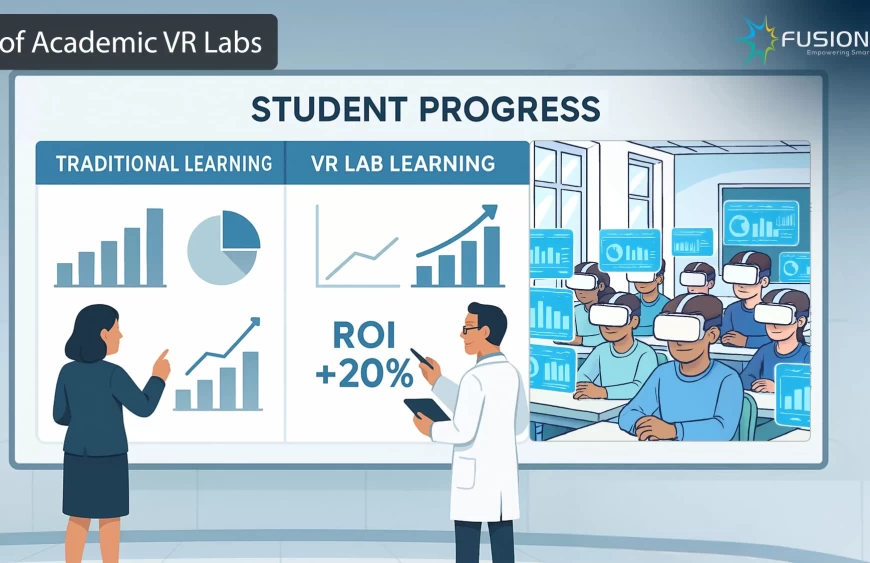
Globally, schools and universities are allocating funds to acquire VR (Virtual Reality) labs in order to change how students engage with course material, as well as how they learn to synthesize and put knowledge to use. VR changes the learning paradigm fundamentally. In classes ranging from engineering and medicine to cultural studies, it helps students examine concepts and put them to practice in an all-encompassing manner. However, a very important consideration needs to be made: how do we define and determine the actual benefit of academic VR labs for students, and how can we gauge the performance of students in these virtual setups, especially in light of tightening budgets and increased focus on deliverables?
In this blog, I would like to flesh out the investment in VR technology by studying the tangible benefits, the quantifiable outcomes, and the VR technology’s prolonged benefits for institutions that make the investment worthwhile.
Why ROI Matters in Academic VR Labs
The use of virtual reality in education is not intended to impress but to serve as an investment. Depending on its scale, a virtual reality laboratory can be as inexpensive as a few lakhs or as costly as several crores, driven by the selection of hardware, software, and content development. Such costs must be justified through institutional value and learning outcomes by decision-makers at universities, technical institutes, and schools.
The return on investment for academic VR labs does not focus on the return on investment alone. It merges quantifiable returns (such as cost reduction, shortened training duration, and improved employability metrics) with unquantifiable returns (such as student interest, culture of innovation, and enhanced reputation). Institutions must measure these results to guarantee the continuation and further expansion of virtual reality learning environments.
Core Dimensions of ROI in VR Education
Institutions should consider a return on investment analysis through an assessment of the following three categories:
1. Student Learning Outcomes and Performance
- What is the rate of learning assimilation?
- Can the students demonstrate and utilize what they learned in real-world settings?
- Does VR use in training reduce the error rates of the skill-based training?
2. Institutional Efficiency and Cost Savings
- Savings on physical equipment
- Reduced wear and tear as opposed to traditional laboratories
- Reduced safety risks and insurance costs
3. Long-Term Institutional Value
- Improved brand image for using advanced education methods
- Higher rates of student enrolment and retention
- Industry and research partnerships
Measuring Learning Outcomes in VR Environments
Academic VR labs are deemed successful if students can learn more and perform better in such labs. Below are some parameters that can be used for measurement
1. Retaining and Recalling Information
There is evidence that immersive VR increases the ability to retain information as long as 30-40% more than traditional lectures. Through assessments, follow-up quizzes, and other methods, institutions can compare the retention rates of students trained using VR and traditional methods.
2. Learning New Skills and Reducing Mistakes
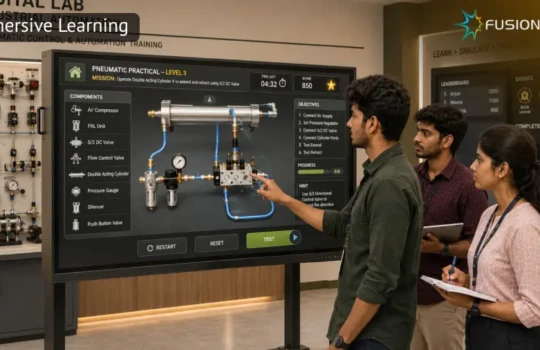
VR has the strongest impact in teaching step-by-step and skill-based tasks, such as medical surgery, engineering assembly, or chemistry lab work. Institutions can assess the quality of student performance in VR for error rates, speed of completion, and ability to replicate tasks in the real world.
3. Cognitive and Emotional Engagement
Immersive experiences engage numerous senses simultaneously, thereby enhancing the depth of learning. Biometric feedback, gaze tracking, and student feedback surveys serve as invaluable tools in measuring the extent of focus, immersion, and emotional engagement to learning.
4. Assessment through Data Analytics
VR labs and simulations offer richer data sets in contrast to traditional teaching completion rates, decision-making paths, reaction times, and interaction trails. Analytics dashboards enable instructors to identify problem areas, keep track of improvement, and tailor the learning experience.
5. ROI in Student Performance and Employability
The most important return on investment for any educational initiative is the enhancement of students’ employability. Students trained with VR usually show greater preparedness for work environments as they are able to:
-
-
- Complete and refine designs with clients: For instance, architecture students improve design accuracy by virtually walking through their models, thus enhancing client communication.
- Demonstrate and Practice Relevant Industry Skills: As VR project portfolios and certifications become available, student credibility is enhanced, addressing the growing employer preference for practical skills over theoretical knowledge.
- Practice Real-Life Hazardous Situations: VR equips students with the skills needed to deal with dangers from chemical reactions to the use of industrial machinery, giving them hands-on experience without any risks.
-
Such employability outcomes improve both the students’ future and the institution’s position as well as generate better alumni relations and success, thereby further compounding the return on investment.
Efficiency Gains and Cost Savings
The efficiency of VR labs is cost-effective in the long run, despite the initial investment.
-
-
- Reduced Infrastructure Expenditure: Typical labs have real world consumables to scoop up virtually and to prototype tools. VR makes these goods accessible through recreation.
- Decreased Risk Costs: Training for high-risk jobs (like the hospital, welding, or the building site) comes with high insurance and rise costs, which VR slashes.
- Scalability: VR materials, once created, can be used for multiple student groups at no extra charge.
-
Consider a medical school that purchases a VR anatomy lab. Over the years it can instruct a multitude of students without the ongoing expense of cadavers or models. The return on investment grows as more students engage with the platform.
Measuring Institutional ROI
ROI extends beyond a single student and includes returns to an institution:
1. Admittance & Fund Acquisition
-
-
- VR laboratories serve as a centre-piece for innovative technologies, attracting parents and students to a progressive education model.
- Cool infrastructure opens the doors to new partnerships and grants for an institution.2. Research and Faculty Development
- VR tools do not only aid in the creation of tailor-made simulations, but also in the research of pedagogical techniques and in the publication of research, adding to the institution’s prestige.3. Market Leadership
- In an already competitive educational space, advanced VR infrastructure elevates the institution as a market leader, impacting their academic brand, industry partnerships, and national rankings.
-
Framework for Measuring ROI in VR Labs
Institutions would benefit from the following sequence of actions:
-
-
- Set Learning Objectives: Identify which competencies VR should target.
- Initial Assessment: Gather data on student performance using conventional methods.
- Launch VR Sessions: Introduce VR-based learning into the syllabus.
- Evaluate Results: Examine changes in test scores, hands-on skills, mistakes, and student interest.
- Compute ROI:
- (Gains from VR – Investment Costs) ÷ Investment Costs × 100 = ROI %
- Consider improved academic results, savings, higher student numbers, and lower liabilities as gains.
-
Case Illustrations of ROI in VR Education
1. Engineering Labs
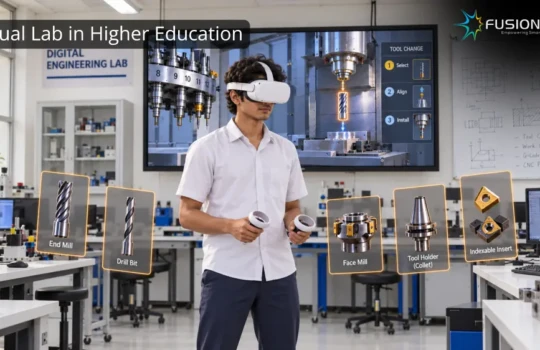
A university that adopted VR simulations rather than the traditional training on machinery saw a decline in student equipment damage by 60%. Additionally, the students became more confident in handling the equipment.
2. Medical Training
Use of VR anatomy and surgery simulators leads to faster learning curves, as well as fewer mistakes in live surgeries and improved patient safety. Medical schools that employ these systems report such benefits.
3. Cultural and Heritage Studies
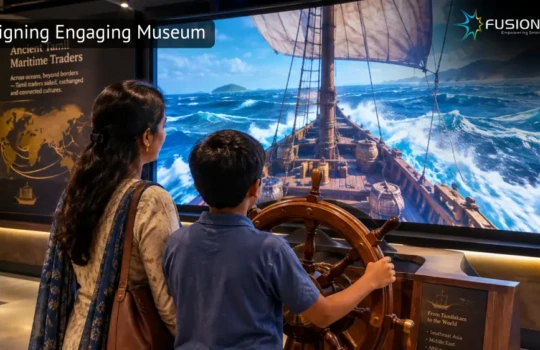
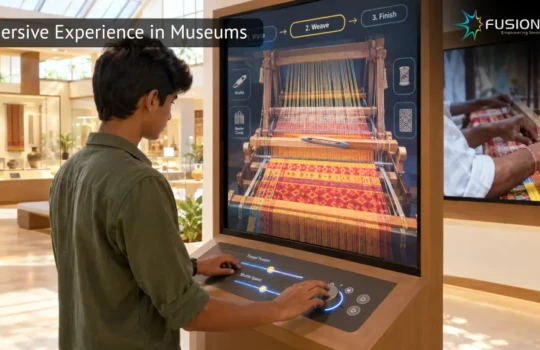
Collaborative efforts from museums, cultural departments, and academic institutions resulted in the creation of VR experiences for history students. This not only increased the students’ engagement but also lessened the need to visit physical sites.
The above cases emphasize ROI in its broader sense, which, in addition to the financial aspect, also includes institutional, cultural, and branding ROI.
Challenges in Measuring ROI
Benefits notwithstanding, issues persist:
-
-
- Significant Upfront Capital: Obtaining initial funding may be a challenge for educational institutions.
- Classroom Training Requirements: Educators are required to adjust to VR teaching methods.
- Content Creation Expenses: Custom simulations for specific curricula need specialised skills and are time-consuming.
- Lack of Standardised Metrics: The absence of an established set of ROI measures VR in education makes benchmarking with other institutions difficult.
-
These issues can be resolved through industry subsidies, public funding, and a phased approach to execution.
Future Outlook: VR Labs as a Long-Term Academic Asset
The ROI of academic VR labs will grow as technology matures:
-
-
- Cloud-Based VR Platforms will lower hardware expenses and enable remote access to the labs.
- AI-Enhanced Analytics will offer greater understanding of student behavior and learning methods.
- Cross-Institutional Content Sharing will lessen the need to replicate content and allow shared funding across institutions.
- Integration with AR and Mixed Reality will add richer layers to the experience for disciplines ranging from the performing arts to law.
-
In the end, VR labs will evolve from being cost-saving tools into strategic academic investments that revolutionize education.
Conclusion
Considering the return on investment (ROI) of virtual reality (VR) academic labs, the scope spreads far and wide beyond the mere financial implications. It includes quantifiable advancements in learning outcomes, student achievement, operational student metrics, the output of the institution, and brand recognition over time. By maintaining oversight over dynamic metrics for example, dropout rates, margin of errors, levels of participation, and the rates of employability institutions of learning have the grounds to protect and increase their funding for immersive technology.
As content libraries grow, and advanced VR technology becomes easier to obtain, academic virtual reality labs will no longer be viewed as add-ons but as essential components of education. Institutions that implement effective ROI metrics, optimization, and communication of results will not only maintain economic viability but will also enable their students to meet the challenges of innovation, as well as readiness in the real world.