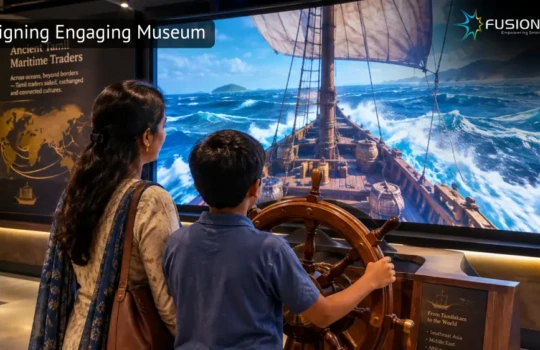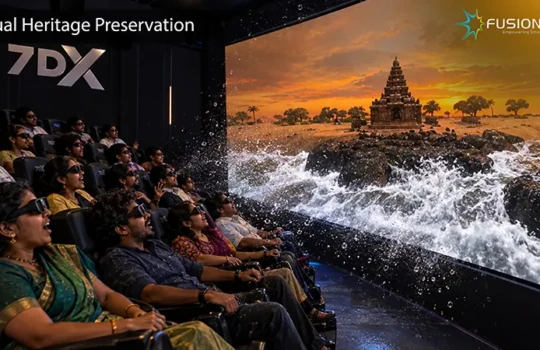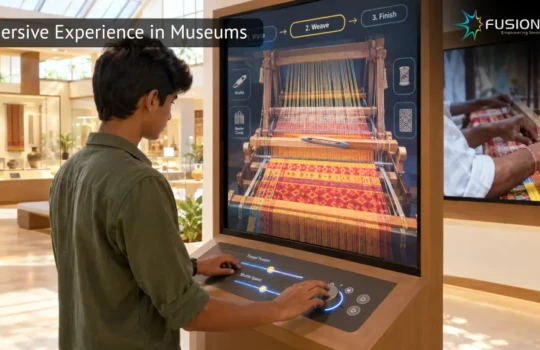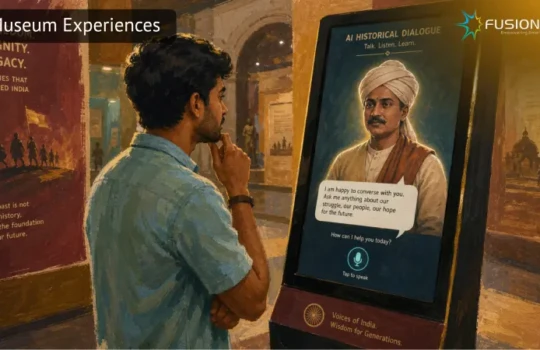
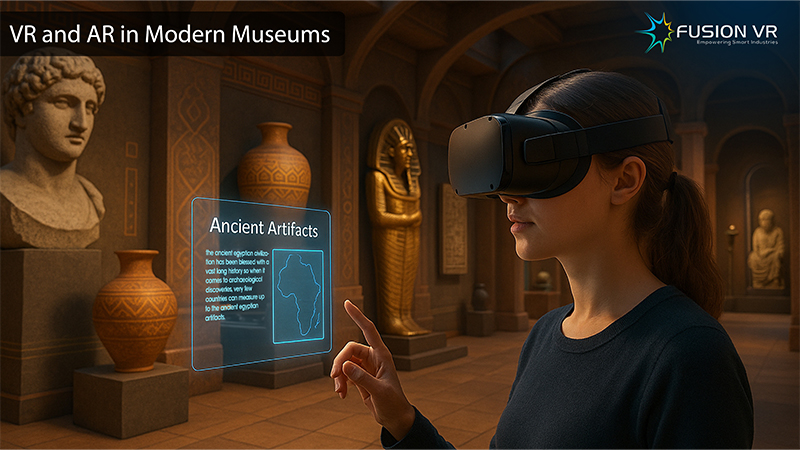
Museums are transforming in ways far beyond being simple, time-abiding seekers of the arts, cultures, and history in the current new moving world of digital innovation. Modern museums do not only have static displays behind glass cases; they have now incorporated Virtual Reality (VR) and Augmented Reality (AR), enabling creative storytelling blended with cultural narratives and experiences taken a notch deeper into immersive experience. The technological interfaces do more than changing the way exhibits are presented; it redefines the manner, engage, learn, and emotionally connect users with the culturally inspired heritage that meets them.
The Need for Evolution in Museums
The museum is, indeed, a place that has always been used for education, preservation, and marvelous wonder. Today, however, their grand audiences especially the millennials and Generation Z, need forms of participation, not just simply that of reality observation. Today, the visitor expects more than just seeing: they wish to experience, interact, and immerse themselves within the stories displayed. Good as they may be, static displays and textual descriptions fall short of representing the dynamic richness of the cultures and histories associated with them.
This is where VR and AR come in: technologies that can breathe new life into ancient artifacts and lost civilizations as well as sprawling narratives. With these tools, museums will no longer be house contain-museums but become living even breathing-worlds, affording visitors the spectacles, sounds, and, even, emotions, of yesterday.
Understanding VR and AR in the Museum Context
Now, let’s go further into these two terms: –
- Virtual Reality (VR) completely immerses the individual into experiencing reality. For example, the person wearing a VR headset can see and walk through a digitally reconstructed ancient city, historical battles or witness those digitalizations of art installations instead.
- Augmented Reality (AR) basically adds digital content pieces like 3D models, animations, and informative content over the reality using the mobile phone, tablet, or AR glasses. It presents a different perception of reality to the viewer while at the same time grounding the viewer in the real-world environment.
Both devices have opened the door for museums to create a more vivid, complex narrative than the flat, traditional display could provide.
How VR and AR Foster Creative and Cultural Integration
1.Reimagining Cultural Narratives
Museums can harness Virtual reality and augmented reality to introduce entirely new modes of storytelling that can inject life into culture exhibits. Rather than merely exhibiting an old manuscript, for example, a visitor could put on a headset and find herself standing in the middle of a busy medieval marketplace where the document was first produced, surrounded by sounds, dialects, and characters typical of the time. Similarly, AR in museums might animate paintings to make characters come alive with regard to the story of how they were both made and displayed.
Such potent revitalization, however, is paired with truly keeping cultures, especially those in danger of becoming dimmed, to experience and enjoy an all-encompassing immersive experience.
2.Democratizing Access to Culture
One of the main effects of VR and AR is to democratize cultural access. Not everyone can afford to physically go to the Louvre, the Smithsonian, or stand by the Egyptian pyramids. VR exhibitions and AR-enhanced online tours of the museum cross the barriers of geography and economy, offering anyone with even the basic device an opportunity to virtually visit and explore world heritage sites and priceless collections from home.
This accessibility cultivates greater appreciation of the different cultures all over the global world, thus helping build a bridge of understanding across different societies for their inclusion.
3.Reviving Lost Worlds
One of the most incredible advances being made in modern museums is the historical reconstruction through VR. Sites of archaeological interest in the ruins can be digitally reconstructed, allowing visitors to walk through ancient temples, palaces, or cities as they existed thousands of years ago.
For instance, at the British Museum, visitors can take a virtual tour of 3D reconstruction of ancient Bronze Age roundhouses. UNESCO has collaborated with several tech firms to recreate other altered heritage sites such as Palmyra. These experiences not only impart knowledge but also tap into powerful emotions that invoke cultural empathy and historical consciousness.
4.Interactive Education
In this way, AR and VR are the new frontiers of museum education. Instead of the old-fashioned audio guide, AR applications may allow visitors to take interactive quizzes or watch animated explainers with virtual characters as their guides.
For a younger audience, gamified virtual reality experiences can transform a trip to the museum into an adventure unlocking artifacts, solving historical mysteries, and earning virtual rewards. This creatively combines what would have been a passive experience with an opportunity for active participation that greatly enhances knowledge retention and emotional involvement.
5.Artistically Enhancing Exhibits
Moreover, VR and AR create entirely unique avenues for artistic expression beyond the historical reconstructions in museums. Increasingly, contemporary artists are experimenting with VR to produce experiential art installations that strike at the roots of traditional form, space and audience engagement.
By revealing hypertexts like layers of meaning, artist interviews, historical footage, and alternative perspectives, AR overlays can offer more dynamic interpretations of static works. These inspirations multiply the modes of artistic expression into which visitors can engage with several dimensions of creativity at once.
Challenges and Considerations
While VR and AR have the potential to immensely impact a museum experience, challenges in their deployment must be acknowledged, such as:
- Cost and Accessibility: High-quality VR and AR experiences require considerable investments in hardware, software, and content development. Museums must weigh the benefits of technological innovations against their budgetary constraints.
- Authenticity Risk: A historical or cultural accuracy standpoint should be maintained while creating immersive experiences. The temptation to over-embellish or fictionalize any historical facts may misinform audiences.
- Technology Fatigue: As visitors are being subjected to one digital experience after another, museums must ensure that the integration of AR and VR into the experience really adds something meaningful; otherwise, it is nothing but a gimmick to distract the audience.
If museums carefully address all these considerations, they stand a chance to responsibly incorporate VR and AR in their mission of education, preservation, and celebration of cultures.
The Future: Toward a Hybrid Museum Experience
In the future, museums will provide hybrid experiences that smoothly integrate the physical and digital worlds. Visitors may expect increasingly more dynamic and tailored cultural journeys as technologies like Mixed Reality (MR), AI-driven customisation, and 5G connection advance.
Imagine walking through a historical gallery where AI-curated AR experiences alter in real time based on your preferences, or taking part in live VR reenactments of historical events that include multi-sensory aspects such as scent, sound, and haptic feedback.
Such innovations will ensure that museums continue to be not only repositories of the past, but also pioneers of future narrative and cultural integration.
Conclusion
Virtually and augmented reality threads are leading museums into a golden age, within which cultural heritage and creativity converge to spurfire unforgettable, transformational experiences. By such instruments, they are no longer museums; they are transforming their very role in society from passive display centers to dynamic interactive hubs of learning, empathy, and global cultural exchange.
As time progresses on, technology will keep giving chances to create deeper, more meaningful integration between creativity and culture. They will not be mere repositories of the past- Museums will allow us to live it, feel it, and most importantly, understand it in ways never before envisioned.