The evolution of the concept of museums is a continuous process that has never remained static. The change from having a place where you could see exhibits to having interactive galleries that tell the story through audio-visual means is just one example of the adaptation of museums with new technologies. A major shift is now happening with the invention of digital twin museums, a new kind of museum that has a very high-quality virtual replica of the real cultural space, exhibits, and narrative that goes with it. The digital twin museums along with the immersive platforms and the metaverse are not just digital archives; they are living, changing ecosystems that help along the whole process of preserving, experiencing, and even reinterpreting the heritage to the extent that none of the mentioned factors are limiting geography, time, or even physical conservation.
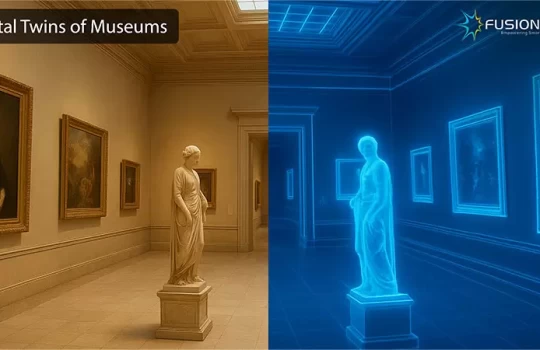
A digital twin museum, at its essence, is an ever-changing, virtual depiction of a physical museum, monument, or cultural landscape that is driven by data. Digital twins are not like usual virtual tours or static 3D models in that they are created to imitate the real-world conditions with exceptional precision. They use a combination of 3D laser scanning, photogrammetry, real-time data, immersive audio, and interactive layers to not only depict the visual appearance of heritage assets but also their context, scale, materiality, and stories. In the metaverse, these digital twins turn into permanent places available at any time and from any location making it possible for the whole world to participate in heritage events in ways that have never been possible before.
One of the most compelling arguments in favour of digital twin museums is the increasing need for heritage preservation. The physical heritage is always under the risk of destruction coming from environmental degradation, climate change, pollution, natural disasters, urbanization, conflicts, and even overtourism. The majority of monuments and heritage objects are delicate, one-of-a-kind, and already in the process of becoming unrecognisable. The use of digital twins is a giant leap in preserving heritage as it allows the capturing of the most detailed images and huge amounts of data of the heritage site, thus making it possible to save in real time the priceless cultural assets. In the future, even if the physical structure changes or degrades, its digital twin will still have a record that is extremely accurate regarding its form, textures, engravings, and positional relationships.
Digital twin museums do not only preserve artwork and heritage objects but their accessibility gets to a whole new level. With traditional museums, there is a physical location, operating hours, ticketing, and capacity limitations. On top of that, millions of individuals would never be able to see some heritage sites because of factors such as distance, cost, lack of mobility, or even political issues. However, with digital twin museums in immersive virtual environments, there are no barriers at all, as a student living in a remote village, a researcher on a different continent, or a person with physical disabilities can all visit the virtual museum at the same time. The removal of barriers in access is a major factor in allowing cultural heritage to be regarded as a global shared resource rather than a privilege that is only available to those who can travel.
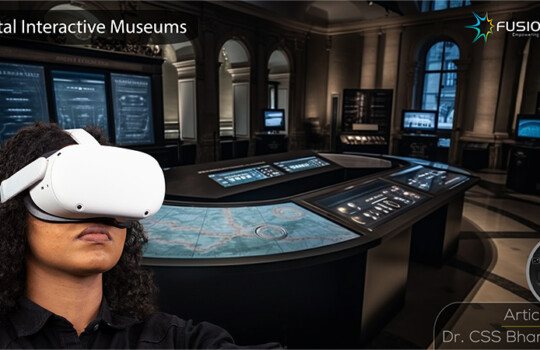
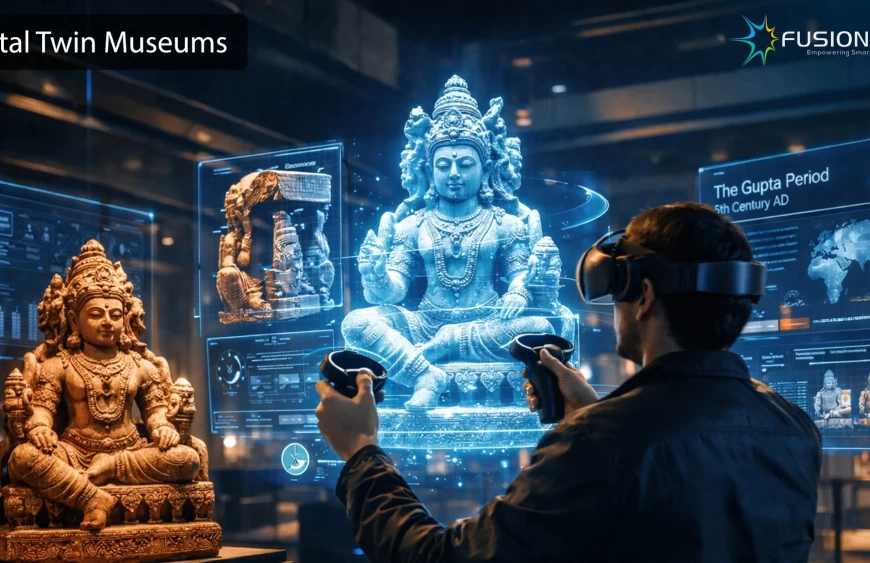
The digital twin museums come with an experiential quality that makes them different from the previous digital archives or websites. In the virtual reality, augmented reality, and mixed-reality scenarios, the visitors do not only look at the exhibits – they live in the space. They can enter the original-size rebuilt ancient buildings, point out certain exhibits from impossible positions in the physical exhibit cases, and learn through storytelling that uses sound in the surroundings, animations, and interactivity. These experiences in the metaverse are social, too. Individuals can explore together, take part in guided tours, listen to live lectures, or see the reenactment of historical events, all inside the same virtual space that is shared by them.
Digital twin museums are doing wonders in the field of education as well. The traditional education provided in museums is mainly dependent on text panels, audio guides, or simple stories. On the other hand, digital twins bring about the possibility of developing different learning experiences suited for all age groups, learning styles, and inquiry depths. For instance, a non-professional visitor may get to see the place through his eyes and at the same time hear simplified stories, but a scholar or an investigator can go as deep as the material analysis, historical timelines, architectural drawings, or even comparative reconstructions. In the metaverse, all these educational layers will be able to get new updates, expansions, and even translations into various languages without the need to change anything in the physical exhibition.
Digital twin museums offer new avenues for documentation, research, and decision-making to curators and conservators. Digital twins of high resolution enable the specialists to observe minute-level alterations in the structures or artefacts over the years, thus backing the preventive conservation schemes. The virtual environment allows the running of simulations to analyse the effects of environmental factors, lighting conditions, visitor flow, or structural stress without the risk of harming the original place. This approach, which is based on data, changes the management of heritage from the reactivity of conservation to the proactivity of stewardship.
The digital twin museums change storytelling as well. Space, budget, and conservation needs are limitations for physical exhibitions. In the metaverse, curators can present the inaccessible parts of history destroyed buildings, dead murals, incomplete exhibits, or whole historical environments that do not exist anymore. Such restorations are not offered as reality alternatives but rather as informative layers that aid the audiences in grasping context and continuity. The visitors can see a monument as it appeared hundreds of years ago, notice the different stages of the architectural change, or watch exhibits being returned to their original cultural contexts.

The metaverse feature brings in the elements of durability and immense capacity that even the best digital experiences cannot offer. The case of a digital twin museum in the metaverse should not be viewed as a project that happens once; it is a platform that breathes. There will be the possibility of adding new exhibitions, telling new stories, sharing new research findings, and providing new interactive experiences over time. Seasonal events, festivals, educational programs, and joint exhibitions will all be possible without having to deal with the logistical challenges of setting up physical spaces. The ability to scale up the Museum that comes with digital twin technology makes it particularly suitable for long-lasting cultural strategies, national heritage projects, and international partnerships.
Economic sustainability is yet another critique of the museum sector. Despite the fact that physical museums consume a lot of money for their establishment and regular operation, digital twin museums come up with very different and innovative revenue and engagement strategies. Virtual ticketing, memberships, educational programs, branded experiences, and partnerships can all be long-term sources of maintenance support. On one hand, digital twins can ease the burden on delicate heritage sites by attracting visitors to virtual experiences, thus reaching an balance between tourism and conservation.
The creation of digital twin museums from a technological viewpoint is a sum of several advanced disciplines. The combination of high-precision 3D scanning and photogrammetry captures the geometry and surface detail. Game engines and real-time rendering technologies allow for the creation of attractive, interactive environments. AI is responsible for a lot: organizing content, guiding visitors, translating into many languages, and creating personalized experiences for each visitor. Cloud infrastructure allows for large-scale operations and continuous access, while XR gadgets from smartphones to premium headsets make it possible for the public to participate in different immersion levels. The digital world can thus be occupied by the visitors just as the museum itself has already been.
In digital twin museums, cultural representation and authenticity are extremely important and should be prioritised above all else. The intention is not to make heritage lose its original flavour or to downplay it, but to display it with accuracy, respect, and cultural sensitivity. By the use of digital twins, the communities, historians, and cultural custodians get direct access to the understanding process. Oral histories, intangible practices, rituals, and local narratives often less than fully represented in conventional museums can be placed in the digital environment by means of audio, video, and interactive storytelling. This inclusive method assures that digital twin museums will not turn out to be dull technological displays but instead vibrant cultural venues filled with the spirit of the local heritage.
One more significant factor contributing to the metamorphosis of museum digital twins into the metaverse is the preservation of the future of heritage. Digital twins are turning out to be the backbone of Heritage that can easily change with the times and doesn’t require frequent overwriting. A perfectly executed digital twin can shift between platforms, incorporate coming devices, and allow new ways of interacting for many years. This lifelong flexibility is a must-have in today’s world where the cultural and digital environments are both changing very fast.
Digital twin museums are the most natural virtual environments for the younger generations, who were born and raised in a digital era, to explore and learn. Such experiences are more vibrant than merely watching. Plus, by bringing the public to their already common places online, virtual worlds, and through immersive platforms cultural institutions can be more than just relevant; they can also be very attractive and powerful. The metaverse is not a substitute for real museums; it, on the contrary, extends their access, enhances their stories, and supports their educational purpose.
Digital twin museums open up avenues for global cultural dialogue. The presence of the virtual replicas of the heritage places from diverse regions in the metaverse will enable visitors to easily connect different cultures, eras, and places. Group exhibits can even bring together objects, architectural styles, or historical themes from different institutions, which will make it easier for the public to compare and understand the cultural differences and thereby develop empathy. In a world that is frequently split due to boundaries and ideologies, the virtual heritage spaces that are shared can serve as places for conversation, reflection, and respect between the different cultures.
The digital twin museums, to be exact, marked a new era in the preservation, accessibility and experience of those digital exhibits. They practically erase the lines between physical and digital worlds, between yesterday and today, between nearby and faraway. The metaverse has yet to develop completely, but already, such virtual heritage places are expected to be crucial in the preservation of cultural memory and future accessibility. Besides the fact that these facilitate us to keep the existing things, they also help us to rethink the ways through which the heritage could be lived, discover and comprehended.
Digital twin museums, in short, are not a means of escaping reality; on the contrary, they are an extension of it. Heritage kept in the metaverse means history is not just a dead exhibit behind a glass or under a wall but a living, accessible, and meaningful part of a quickly changing digital world. With the advancement of technology digital twin museums are a strong link between the past of mankind and its digital future—ensuring that culture, knowledge, and identity will survive well beyond the boundaries of physical space.