Augmented Reality is changing the way it is done step by step in teaching, practicing, and even assessing skills. For a long time, skill assessment has been heavily dependent on written tests and interviews as well as observation-based evaluations and simulated environments, which very often do not mirror the actual complex situations. Though these methods have been used as a base, they are unable to assess practical competence, decision-making in context, and real-time problem-solving. The introduction of Augmented Reality in skill assessment has made a great change in the assessment process since it connects the digital intelligence to physical environments and thus providing assessments that are immersive, measurable, and most importantly, similar to real-life performance.
Skill assessment, in essence, is the evaluation of the person’s abilities, thus not just the knowledge of the person. The conventional methods are usually able to find out theoretical understanding but are unable to evaluate the performing ability during actual conditions. Augmented Reality is the technology that solves this problem by immersing either the trainees or the experts into interactive situations, in which their movements, reactions, and choices are constantly monitored and evaluated. People do not have to visualize a situation anymore; they live it. People do not have to describe a process anymore; they do it.
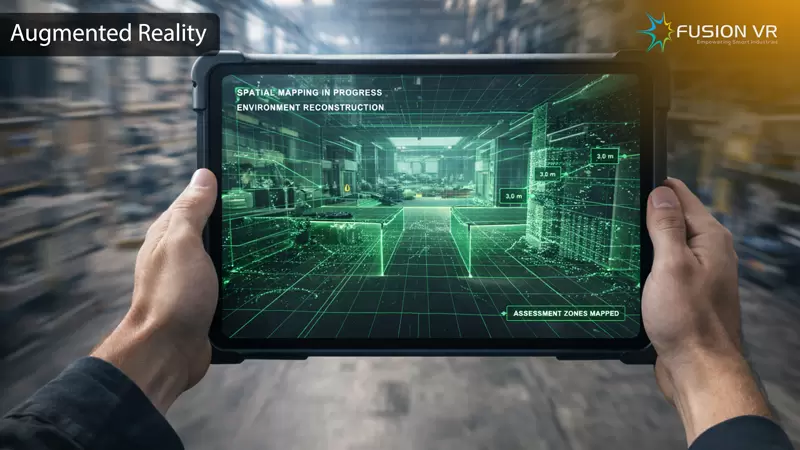
One major improvement that Augmented Reality-based assessment brought about is contextual realism. In AR evaluations, virtual objects are tied to real-world places, devices, or materials. A digital overlay with instructions, warnings, and challenges can be used to evaluate a technician working on a real machine. A healthcare student can be assessed while dealing with a live patient data-enabled physical simulator. A construction worker can be evaluated at an incident site, with virtual safety hazards projected into the actual setting. The combination of the real-world and the virtual one guarantees that the evaluations are not theoretical but rather situated in the context of the job.
Data capturing is another major strength of Augmented Reality in skill assessment from an objective point of view. Human evaluators are frequently the determining factor in traditional assessments thus opening the door to subjectivity, inconsistency, and bias. However, AR systems can keep a record of exact metrics for instance, task completion time, accuracy of actions, sequence adherence, error frequency, eye movement, hand coordination, positional awareness, and response to unexpected events. All these data points combine to produce a rich, quantifiable profile of the individual’s competence. Hence, rather than relying on opinion, organisations are provided with evidence-based insights into performance.
The use of Augmented Reality for skill assessment also allows for adaptive evaluation. Every person has their own way of learning and performing, but traditional tests are usually done the same way for everyone. Based on the performance of the user, AR systems can fluctuate difficulty levels, add new factors, or increase the complexity at a rate that might correspond to the person in question. For instance, if a participant performs exceptionally well, then the system may offer challenging tasks for him/her to try out. On the other hand, if someone is having a tough time, the assessment can go slower, offer hints, or zero in on basic skills. This adaptable method makes it possible for the assessments to be equitable, individualized, and profoundly diagnostic as opposed to being merely pass-or-fail.
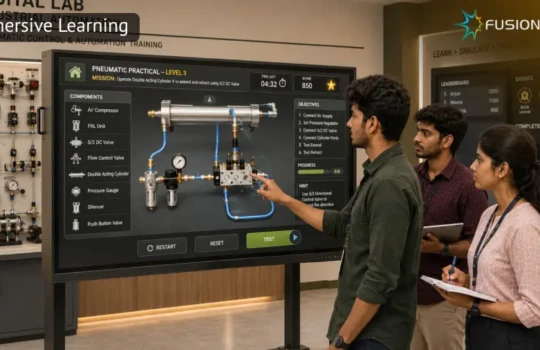
In the realm of technical and vocational education, the influence of Augmented Reality is notably significant. Practical skills are necessary in industries like manufacturing, automotive repair, electrical maintenance, aerospace, and industrial operations. Augmented Reality is the basis for the assessment of the trainees, who are allowed to show their competence with real tools and machines while digital layers bring in faults, variations, or safety risks. The examiner is then able to assess not only if the task is done, but also how it is done, if safety rules are followed, and how quickly problems are solved. The amount of understanding being referred to is very hard to be reached through classical practical exams only.
Augmented Reality is revolutionising skill assessment in another domain, and that is healthcare and medical education. Clinical competence is made up of accuracy, quick decision-making, and sticking to the rules. AR can project difficult patient situations into real-life practice places. The trainees could be evaluated on their ability to diagnose, perform accurately, communicate, and respond to emergencies without risking patients’ safety. Replay of scenarios, decision analysis, and performance metrics are great for deeper learning and more trustworthy certification processes.
AR-driven assessments are proving to be a valuable tool for corporate training and workforce development. With the rapid evolution of industries, organizations are left with no option than to make sure that their workforce is equipped with the latest and most relevant skills. Augmented Reality allows for the ongoing validation of skills instead of the traditional one-time assessments. The employees’ skills can be assessed while they are involved in their daily regular work, thus making the assessment process a smooth and undistracted part of the work rather than a different, disruptive activity. This method encourages regular learning, continuous development, and better mapping of talents within the organizations.
One of the areas where augmented reality training presents extraordinary benefits is the safety assessment. Numerous sectors are characterised by high-risk places where the actual emergency response or hazard handling testing is either unacceptable or too risky. AR gives the opportunity to assessors to bring in virtual risks like equipment breakdowns, fires, chemical spills, or building failures into the actual locations. The behaviour of the workers can be monitored in terms of risk detection, safety procedure compliance, and pressure handling. Such assessments not only prepare the workers but also take away the real-life risk involved.
Feedback, another important aspect of Augmented Reality in skill evaluation, plays a crucial role. Conventional evaluations usually give feedback after a while, and this reduces the feedback’s influence on the learning process. Augmented Reality systems are capable of providing instant feedback that is contextualised, at the time of or right after the performance. Visual cues, performance dashboards, and guided corrections are ways in which individuals can get a clearer picture of what is wrong and be better at it in real-time. This feedback loop that is immediate, changes the role of assessment from one of judging to that of a strong learning device.
From an organisational perspective, assessments based on Augmented Reality technology not only made the evaluation process more scalable but also more consistent. The ability to have AR platforms create the same evaluation scenarios across different locations while still allowing for some contextual changes would be a great advantage to big organisations that usually have problems with different locations not applying the same assessment standards. Fairness and comparability are guaranteed when a technician who was assessed in one place is evaluated by the same standards and metrics as another technician in a different place. However, the simulation of local conditions is still possible,so that the process would still be relevant.
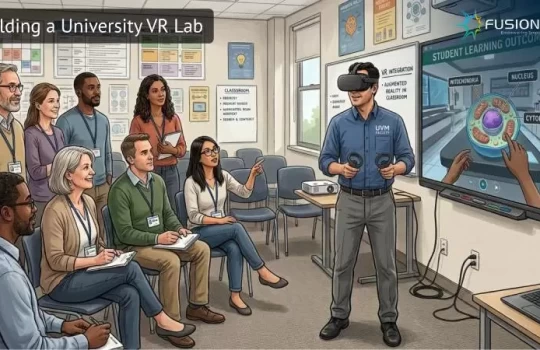
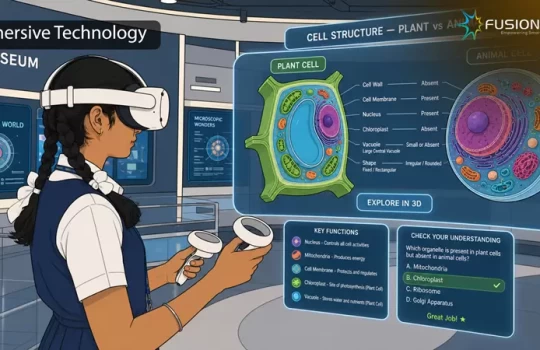
In the search for innovative ways to assess Reality–based evaluation, education, and academia have turned to Augmented Reality. It is a necessity for institutions to use more efficient methods in evaluating practical skills and applied knowledge as learning paradigms gradually move towards outcome-based education. AR is a technology that allows the representation of student skills in laboratories of science, workshops of engineering, studios of design, and vocational courses, all these without being limited to the availability of physical resources. The application of virtual overlays has the ability to mimic the use of costly apparatus, perform non-reproducible experiments, and create intricate settings which altogether result in the opening up of the high-quality evaluation to a larger pool of students.
The involvement of Augmented Reality in the evaluation of soft skills is a new and thrilling aspect. Communication, leadership, teamwork, and decision-making, among others, are the most subjective attributes to assess. By using AR, individuals can be placed into real-life-like situations socially and professionally where their interactions, reactions, and behaviors will be monitored and analyzed. For instance, a management trainee can be evaluated during a simulated situation of conflict resolution or, similarly, a customer service representative can be assessed while acting with virtual clients in real environments. The insights gained from these immersive assessments are the ones that provide a clearer picture of the behavioural competencies.
The role of Augmented Reality in evaluation is significantly enhanced by data analytics. The performance data gathered during AR experiences can be combined, represented, and analyzed through different periods. It opens the door for trend analysis, skill gap detection, and predictive insights. The organizations will be able to change their model of training from reactiveness to proactiveness in skill development. Rather than asking who succeeded or who was defeated, they may inquire which abilities are getting stronger, which ones are getting weaker, and where to apply targeted interventions.
With its outstanding capabilities that could change the entire process, the use of Augmented Reality in skill assessment still raises some issues. Creating significant AR assessment situations necessitates the joint efforts of experts from different fields, i.e., the field of the assessment, the field of Instructional Design, and the field of technology. Hardware issues such as user comfort and system technical adjustment need to be addressed very carefully. The issue of data privacy and moral considerations come up too, especially if there is a need for monitoring of behavior metrics with high granularity. Despite that, AR technology is developing and gradually overcoming these problems through the adoption of best practices.
The skill assessment future will depend on the combination of Augmented Reality with artificial intelligence, spatial computing, and digital twins. AI-powered AR assessments will not only assess performance but also foresee the results of learning and suggest individual training paths. The digital replicas of the working places will enable the assessments to represent the precise working situation. Spatial computing will make the situation more realistic and thus the assessments will not be different from the actual world tasks.
Augmented Reality in skill assessment is a revolutionary move from the old practice of testing knowledge in isolation to the new one of testing competence with respect to the context. It changes the assessment process from being a fixed point of reference to being a lively, absorbing experience that shows the actual performance. More precise evaluations, more effective skill development, and closer matching of training with the actual work requirements are all the benefits that will accrue to the learners, professionals, educators, and organizations.
The continuous changing of industries and the rising need for ready-skilled workers have made Augmented Reality a powerful assessment tool of the future. It does not substitute the capacity of humans to judge but rather supports this process with the use of data, realism, and insights. As such, Augmented Reality creates a new world where skills are not only tested but really understood by integrating assessment into real work and learning.