
A Conversational Exploration
Ananya: Hey, Ravi! I went down to see the new hybrid museum experience center. The changes museums have undergone are simply unbelievable. They are like completely different from the ones we grew up with.
Ravi: Hybrid museum? So some physical artifacts and digital content?
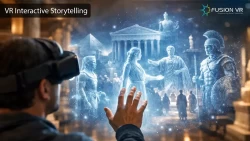
Ananya: Exactly! It is an exciting mix of physical exhibits and digital interactions. You still get to see real artifacts, but now there is the possibility of AR overlays, interactive screens, and immersive VR zones accompanying them. They really lived out history.”
Ravi: That sounds insane! I remember when museums were mostly “look but don’t touch.” So, what makes it ‘hybrid’?
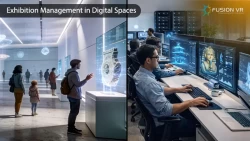
Ananya: A hybrid museum is one that has the usual galleries to exhibit sculptures and historical artifacts, along with digital technologies such as AR, VR, 3D interactive displays, and AI-driven narrators. The digital layer greatly enhances the physical content and makes it more engaging and informative.
Ravi: So, you mean use of cell phones or headsets to gain additional information or to observe some animation?
Ananya: Yes, for instance, I was observing an old mural via an AR tablet, and the mural became animated on the wall narrating its own story. In another segment, I put on a VR headset and essentially stepped into a 360-degree recreation of an ancient civilization. It is called the VR Museum Experience, and the realization of its being so very real almost made me forget that I was actually standing inside a room.
Ravi: Crazy. Well, I suppose it had to happen. Everything is digitized now, so museums have to go into the next phase. Are many museums operating this way now?
Ananya: Oh, yes. Earlier hybrid museum experiences would have been a novelty in 2025. Today, they are largely being converted into the standard museum experience. From corporate experience centers to heritage sites, museums are going into immersive tech to interact with young audience members who grew up with smartphones and gaming consoles.
Ravi: That is a pretty smart move. Honestly, I tell you, I would have zoned out during a long museum tour. But something like this would have held me to the very end.”
Ananya: Exactly! This is why you want to convert passive web visitors into action takers. Just imagine a virtual museum where AI adapts to your interests or a 3-D interactive museum where you’ve got a chance to manipulate ancient tools or artifacts on your screens.
Ravi: So the content changes depending on what your requirements are?
Ananya: Yes, that is true! Personalization is really important for these hybrid experiences. So, some museums may use either facial recognition or some kind of visitor data to tweak the display. For example, a student may obtain detailed educational content, whereas an average visitor just gets a more general overview. Pretty much everything is meant to enhance the visitors’ experience.
Ravi: Now, that is very futuristic to say the least! But I am sure it’d be very expensive, right?
Ananya: Sure, first-time setup costs for digital exhibits and any possible AR/VR integration might be high; however, these are well worth it. Such experiences garner higher visitors, higher retention of learning, and even enable remote access to world audiences. Some museums are even livestreaming interactive VR tours across countries!
Ravi: Remote VR tours-meaning, I could sit in Chennai and visit the Louvre in Paris?
Ananya: Indeed! In this way, art, culture, history, and education are made accessible to those who are physically restricted from attending, with museums able to reach an international audience, which has become ever so important after our experiences in the pandemic.
Ravi: Awesome! The future is here! So this is practically not a trend but the future of the museums?
Ananya: Absolutely. Hybrid museums are changing the way we experience history and culture. In some cases, the institutions themselves are now partnering with AR/VR developers and design studios for a custom solution. I went to this museum a few days ago wherein motion sensors and haptic feedback together simulate ancient machines!
Ravi: Mind blowing! It must be a really good opportunity in immersive tech for companies!
Ananya: Yes, it is. AR VR Museum Tech companies are in demand. They design and set up full VR experience centers, build interactive museum exhibits, and create digital twins of heritage monuments. However, this is not about flashy tech; this is about making history and science come alive.
Ravi: I can totally see kids loving this. Way better than reading from a dusty textbook!
Ananya: Exactly. One learns through exploration. Moreover, these technologies afford accessibility features like subtitles, audio guides in several languages, and avatars performing in sign language. Hence, this experience is universally accessible, regardless of any physical ability.
Ravi: Good! It’s time museums were experienced for real, interactive, immersive, and unforgettable.
Closing Thought: As we dive deeper into the digital age, hybrid museum experiences are transforming how we interact with culture and knowledge. In 2025, these immersive environments don’t just inform they involve, inspire, and ignite curiosity like never before.