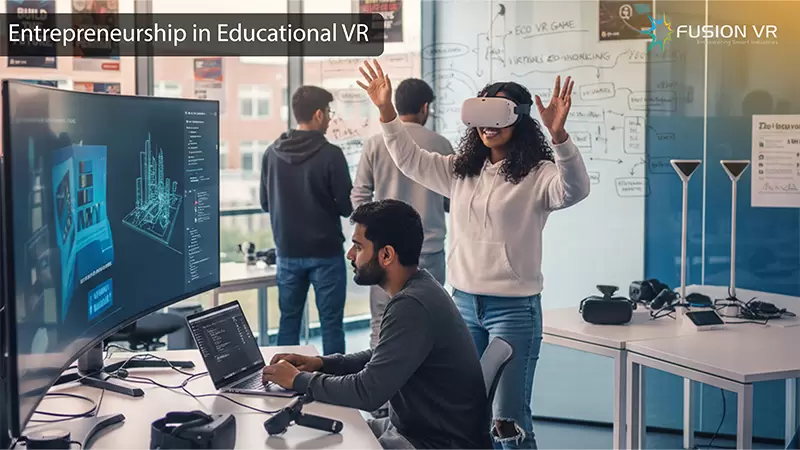
In the fast-changing educational sector of today, virtual reality (VR) is not a mere learning tool any more but rather it is a starting point for innovation, creativity, and entrepreneurship. Even colleges are transforming from mere academic activities-offering institutions, to start-up accelerators where ideas originating in VR labs are actually going to shape the new businesses, industries, and correspondingly the future.
Entrepreneurship in educational VR, where education and technology intersect, establishes a significant change in how students approach learning, innovation, and career development. Immersive technologies that are allowed from realistic simulations to virtual collaboration spaces are empowering students to transform academic experiments into distinct, scalable business models.
The Rise of VR Innovation in Academic Ecosystems
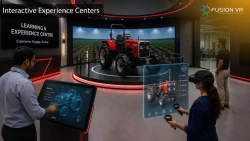
Universities have become technological innovation centers over the last ten years. Areas that no longer were only centers of academic research but now have virtual reality (VR) experience centers, augmented reality (AR) and VR research laboratories, and startup incubators among others. The utilization of cheap VR hardware, open-source development tools, and wide-ranging programs has quickened up this shift.
The VR education centers are not only venues for the trial and error method but also the spots where new ideas are eventually turned into consumable products. The faculties of engineering, design, psychology, or even medicine have to collaborate to conceptualize and validate that these potential solutions are worth turning into marketable startups.
This change has created a new startup subset of entrepreneurs technologists who handle monopolistic virtual reality industries not as non-enthusiastic users but as a part of creators. This cohort has the right technical support, and expertise, fair play, as well as a joint understanding that their issues and problems belong to the same VR category.
Turning Class Projects into Startups
Most of the exciting educational virtual reality companies today were originally thought of as research projects in a student setting. When blessed with a good academic environment, what is initially a thesis or a class task will very likely get the right shape to become a company.
A computer science students’ group is a good example to show how it might happen that they produce a VR human body simulator for the benefit of medical students. After the first version of the software is a hit among the students, most of the time, it is the university incubator programs that will provide the start-up with funding, a board of mentors, and business consultancy to make the project in a position to be started up in a large scale.
These educational institutions helping to transition from learning to business would generally offer the following:
- Opportunity to get familiar with the latest and best VR technology like Unreal Engine, Unity and required technological gears.
- A place where the students from totally different faculties can not only communicate but also design, program, and manage the business together.
- Incubation centers or industry liaison offices which offer support for start-up mentorship programs.
- Competitions for which students present their projects, which in the case of virtual reality technology innovation are the sources of attracting investors along with industrial partners.
Such an environment of assistance changes the way students interact with education, from the classical way where they are only receiving information to the one where they are creators and inventors of its products.
The Entrepreneurial Mindset in VR Labs
Entrepreneurship is at its best in areas where the culture favors experimentation and risk-taking qualities that are essential to the VR (Virtual Reality) R&D (Research and Development). The laboratory of VR students is almost a place of “Come, let us explore, fail and then start anew!” Very similar to a lot of typical startup scenarios which involve the phases of idea conceptualization, prototype making, user testing, and lastly, going-for-scaling.
Using the new and intense technologies in the early years of the students’ school life sorts them out as entrepreneurial in their mindset, they, temporarily, learn to serve the tech to their problems in the real world, and at points, understand the market, clients through the product.
For example:
- Students of architecture use VR to give virtual walks of sustainable design, later on, beginning startups around the concept to provide immersive visualization services.
- Psychology undergraduates design therapeutic VR ecosystems for the treatment of anxiety and eventually commercialize them as mental wellness solutions.
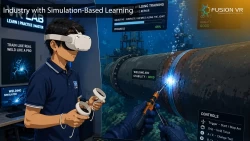
- The civil engineering students make virtual simulation trainers for the training of the industries that also help the companies to both cut costs and improve safety measures.
The beauty of it all is that VR in school is not just for innovators but also for industry-defining visionary entrepreneurs who are not just part of but are actually the ones shaping the new sector.
Building Business Models from Immersive Experiences
What really sets the VR startups apart is their perfect combination of creativity, technology, and experience design. The transition from a college VR project to a business that is ready for the market is no different as long as the immersive experiences are matched with sustainable business models.
Mission critical questions that the students undergo:
- Who are the respective professionals targeted by the virtual reality solution?
- What specific problem does the solution aim to solve?
- How could the sales be made – through licensing, subscription, or custom jobs?
- What scale-up and technical hurdles are on the board?
Colleges and universities provide startups with a decisive edge by offering them the chance to work in the incubators, have access to funding, and also be in contact with the networks of the venture companies. Many universities now have Cells for Innovation and Entrepreneurship (I&E Cells) or they choose startups from the national level to work with. As a result, these solutions make the students go from the land of creativity of and on-and-off commercialization.
Collaboration between Academia and Industry
One of the vital factors that usually decide the fate of student-led VR startups is a good collaboration between the academic institution and the industry. The universities that are increasingly working in cooperation with the corporates are the ones that avail the finance, opportunity and talent already designated for them and, at the same time, drive behind the scenes of the industry to locate innovation. VR businesses can, for instance, give students who work on projects that are in line with the company’s vision access to everyday life used data, as well as software development kits or mentoring. The consequence of this partnership is not only the student getting to know industry specifics but also the company receiving the most innovative ideas and possibly benefiting from the earliest applications of breakthroughs.
Furthermore, the location of the company at the university premises seems to be a salvation for those who find themselves lost between the academia and industry. This is because they can get the hang of the project flow, professional relationships, and job and startup opportunities and all this through technology incubation and the experience centres, the two needed facilities now.
The university VR labs in partnership with industry under such conditions would no longer be mere learning and isolated environments but would be the channel to real-world innovation ecosystems.
Empowering Students with Entrepreneurial Infrastructure
For supporting the use of entrepreneurship in educational VR, universities need not only provide technology access but must also offer a full-fledged ecosystem that can foster innovation. Such ecosystem should include:
1. High Quality AR/VR Experience Areas: Special areas set up with high-end VR headsets, motion tracking, and software for design development under the conditions that prevail in the real world.
2. Startup Incubation Centers: Their programs would provide legal, financial, and marketing guidance in the process of registering and operating a startup for the students.
3. Mentorship Networks: Business advancement guidance from alumni entrepreneurs, investors, and industry experts through these connections.
4. Funding/Government Grants: The possibilities of being connected with seed funding sources like, government startup schemes, and innovation challenges that support early-stage ventures.
5. Display Platforms: The students get exposed to annual demo days, expos, and conferences that is where they can exhibit their VR projects and pitch to investors. It is by combining these elements that universities can make education a breeding ground for successful entrepreneurs.
Case Studies: Student-Led VR Startups
The academic virtual reality ecosystems that have been established worldwide have generated some incredibly successful stories. These are some of them:
- Labster was established by college students with the aim of making virtual science labs for schools that were unable to afford the real equipment. Today it is one of the most used VR education platforms worldwide.
- Immerse, although it started as a language learning platform, has transformed into a social learning platform that uses VR to connect students and teachers in virtual classrooms.
- Virti, though it was first conceived as a medical education tool, is now offering VR simulation scenarios for healthcare professionals all over the world.
These examples bring the spotlight on to the fact that academic VR projects supported by favorable ecosystems could become the global businesses of tomorrow, a transformation that will not only impact education but industry as well.
The Indian Perspective: Academic VR as a Startup Engine
India’s startup industry is experiencing a boom and the government is focusing on boosting innovation by supporting the startup ecosystem with initiatives like Startup India and Atal Innovation Mission. At the same time, the venture capital industry in India, the third-largest in the world makes it possible for the young generations to become entrepreneurs with ease.
Higher education institutions are installing AR/VR innovation facilities and experience centers to enable students to skill themselves according to the requirements of Industry 4.0. Colleges of Engineering and Design are collaborating with VR AR technology companies like Fusion VR to offer AR VR classes where students learn not only hardcore technical skills but also build market-oriented solutions.
These VR labs are often, on campuses, starting points for mini-incubators that bring students’ ideas to startups, the themes of which are as follows:
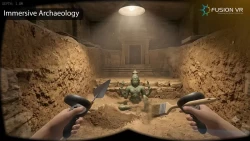
- Virtual heritage and museum experiences.
- Skill-based VR training modules for manufacturing.
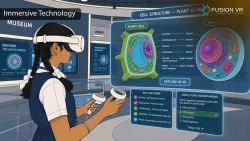
- Immersive education content for K–12 and higher learning.
- Virtual tourism and cultural preservation.
Because the above mentioned business model follows the National Education Policy (NEP 2020) which is aimed at spreading the experiential and multidisciplinary learning, so in this way innovation is not just restricted to labs and lived within entrepreneurship and social impact.
Challenges and the Road Ahead
Even though the entrepreneurial field in educational VR is very encouraging, it does have some difficulties:
- At the outset, the cost of virtual reality apparatus and laboratory establishment will be exorbitant.
- Private-sector guides in the academic institutions that are mainly research-oriented universities will be few.
- The engineers and developers, when being onto the VR innovations, incur challenges to align the prototypes to the demands of the mass market.
- There will be a lack of information among the investors about the power of VR in the education sphere and in the business sector.
University and corporate links need to be collaborative, and venture capital must find its way among academic disciplines in the establishment of these technology enterprises.
The Future: University Labs as Startup Launchpads
The combination of education, entrepreneurship, and VR technology is modifying the way universities are seen in the 21st century. The Academic VR-based mini-worlds are now not only places where educational activities happen they are also founding the upcoming innovators and startups’ people.
The students are engaged in VR lessons nowadays; they are not only getting the power to be creative, to discover and to be entrepreneurial but also they are building the future. They are on the verge of designing their intimate virtual world where they are not only the god-like creators but also the gods of innovation and business.
As the VR gradually becomes more and more accessible and combined with artificial intelligence, the Internet of Things, and the metaverse, the possibilities for universities to promote entrepreneurship through VR will increase at an incredible rate. The students will not have to wait until they have graduated to begin their professional lives rather, they will be starting these lives while yet at school, setting the standards for the coming new industries.
Conclusion
Turning education into entrepreneurship through VR will be one of the biggest phenomena in the future. The cooperation between the traditional labs of the universities and the virtual reality labs where startups emerge will give the next generation the choice to transform their visions into businesses.
The process of building and growing ideas through university labs will still be similar to that of learning and leading. Especially in the following years, such VR startups created by students will not only be dealing with education only but will also partake in the different industries such as healthcare, entertainment, tourism, and even cultural preservation. Thus, the future of the startup culture lies in the realm of immersive learning.