The museum experience has always been a gateway to human history, culture, and creativity. For centuries, people have walked through museum halls admiring relics, psychic drawings, and artifacts bearing the essence of civilizations. Yet, in this fast-paced world of digital-first, the level of interaction audience members entertain with cultural knowledge is changing. Visitors are no longer passive; they wish for content that is accessible, engaging, and easy to digest. Here emerges a powerful concept of micro-learning in virtual museums that render bite-sized cultural education to the modern learners who are in quest of accessibility and interactivity.
Micro-learning, by definition, provides knowledge in small, concise, and focused modules. In contrast to long-form lectures or exhibitions requiring hours of engagement, micro-learning simply deconstructs information into segments that could be consumed within minutes. It takes cultural education through virtual museums and creates interactive experiences that are memorable and easily repeated. AR VR museums or digital museums and VR experience centers have now afforded yet newer opportunities in seamless integration of micro-learning into visitor journeys. Considered along with appropriate technologies, this option fits like a glove for the younger generation that grew up on snippets of content in TikTok style, while it provides for depth and context for serious learners.
Accessibility is one of the most important reasons for micro-learning in virtual museums. In short interactive sessions, a visitor from any part of the world can log into a VR museum experience and study ancient civilizations, famous artworks, or lost traditions. Whereas one might spend a whole day at a physical museum, micro-learning sessions enable the audience to have quick dip-ins while at a coffee break, on a commute, or between meetings. This accessibility becomes even more important for corporates’ experience centers and institutions with a timeframe constraint but a huge necessity for effective learnings.
Technologies in museums have evolved to support this change. Immersive platforms can now generate 3D interactive environments for museums where visitors wander at their own pace and receive education in brief prompts, animations, or augment overlays. For example, the VR museum experience about Ajanta caves would not want hours of narration; rather, it would have concise lessons of three minutes each, concentrating on one mural, its artistic technique, and the cultural backdrop. Bite-sized modules allow audiences to produce more recollection while not feeling overwhelmed, and they are free to dig deeper into certain subjects that attract their attention.
Not only does this make the visitor’s journey engaging, but it also makes it highly personalized. Micro-learning empowers clients to design their own route of learning instead of being fed one linear narrative. One may be enamored by mythology and involves modules on epic stories represented in temple art, while another may explore architecture or restoration techniques. This flexibility is a hallmark of one viewing habits today and, therefore, well aligned with the expectation from a digital museum in which the user sets the pace of their own experience. In corporate experience centers, micro-learning can be used to narrate company milestones, achievements, or product innovations in small, catchy bursts that are easy to comprehend and memorize.
Microlearning ensures engagement by maintaining interactivity. Rather than having to patiently read plaques or listen to long-winded guides, one can engage in quizzes or AR simulations or canetered gamified activities pertinent to each lesson. In a virtual museum setup, an example of imparting knowledge about ancient pottery could be allowing the visitors to create their own clay pot in a 3D interactive museum environment. Subsequently, a short challenge will require them to answer: Which civilization used this design? What was its purpose? Getting instant feedback after a good round of fun and games would be excellent reinforcement of the student’s learning experience, while the cultural experience will remain well etched in his memory forever.
Another critical factor in successful micro-learning in VR museum experiences is catering to different audiences. Children, adults, tourists, and scholars all have learning preferences and attention levels. Young children, probably, want animation- and story-driven modules designed with time constraints of less than two minutes; adults want good content communicated in five minutes with visuals and narration, whereas scholars can directly link to much deeper materials such as research papers or films. This layered design ensures that micro-learning in interactive museums will not be a simplification of knowledge but will create scalable engagements.
Modern audiences expect shareable and social learning. In digital museums, micro-learning modules can be synchronized with visitors’ mobile devices so that they can capture their favorite cultural insights and share them on social media. Whether it’s about the tradition of dance in Indian temples or a short story about an ancient king, these can be published as reels or stories and earn the museums organic outreach. This interaction between micro-learning and social media life nurtures visitor experience and helps to make museums relevant in the digital world.
Benefits of micro-learning are double: for the visitor and the museum. A museal model such as the micro-learning model would then provide efficiency and sustainability. Virtual museums and corporate experience centers can continue to update or expand micro-learning modules without modifying entire exhibitions. If any new research entry emerges on the artifact treatment, a brief micro-learning segment can then be instantly appended or changed in some way. Micro-learning, therefore, allows museums to keep their experiences relevant and accurate, saving half the time and resources required to make traditional update changes to physical-level galleries.
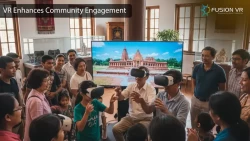
Micro-learning in AR VR museums promotes inclusive education. Not everyone has the chance to visit any of those world-class culture institutions, but bite-sized culture lessons through VR experience centers may reach schools, libraries, and perhaps even isolated settlements. Students from rural areas receive a similar quality of cultural education as the ones who study in metropolitan schools. Through the introduction of AR VR courses in curricula, educators are able to support textbooks by providing micro-immersive lessons that breathe history and culture into life. This creates a small step toward bridging the gap between theoretical knowledge and experiential knowledge.
Another great reason why micro-learning is attractive for digital museums is very much grounded in cognitive science. Research has consistently indicated that learners remember more when given information in small chunks spaced out over time. Long exhibitions or tours at museums usually leave visitors in an over-stimulated state, with very few fragments of information remembered after the conclusion of the event. Conversely, micro-learning accommodates short attention spans with repetition that aids memory. For example, A three-minute exploration in AR VR into the ancient construction of the Brihadeeswarar Temple will much more likely be etched into the viewers’ memories than a boring hour-long lecture on a thousand other monuments. When the museum applies this approach with reminder emails or an option to view the content repeatedly, retention dramatically improves.
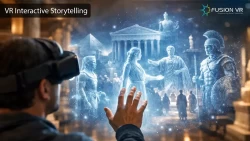
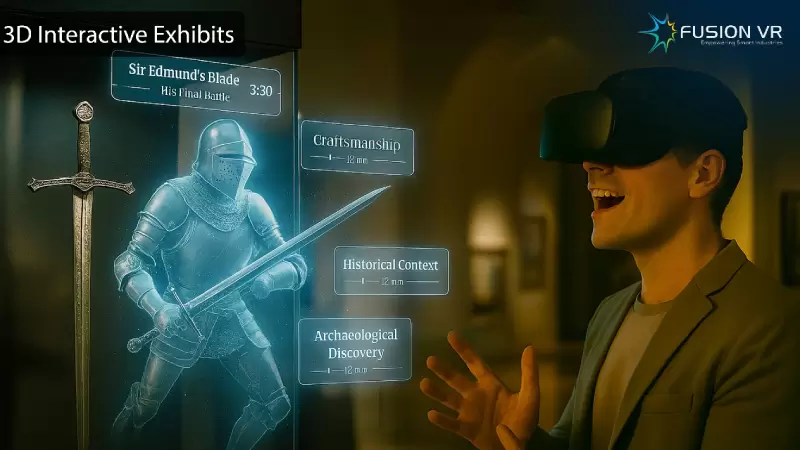
Another thing, storytelling is another forceful stuff when it comes to the transformation process. Every micro-course itself is a story that concentrates on a certain instance, character, or cultural artifact. Instead of running races through whole time-line histories, museums can put their emphasis on the human history behind each object. Exhibited as a singular sword, a digital museum might offer a brief tale of the warrior who wielded it, the craftsmanship of making it, and what it stood for in society. Through visual interaction, narration, and interactivity, these micro-stories can evoke feelings that build an appreciation for culture.
In the future, within museum domains, technologies will continue to expand micro-learning possibilities. An AI might analyze the behavior of users of VR museums and deliver customized micro-lessons on requested interests. AR might layer bite-sized lessons on real-world artifacts while the visitor strolls through a physical interactive museum. Haptics and multisensory technologies will allow performing arts culture to be presented in short bursts not just through multisensory culture but also by seeing culture through short bursts. A future visitor may hold the VR copy of a musical instrument for 90 seconds to learn about it as she or he simultaneously recognizes it through immersive audio.
Micro-learning design offers great potential for corporate experience centers. When companies use bite-sized interactive modules to convey their innovations, milestones, or values, the heightened experiences truly imprint in the minds of employees, clients, and partners. Instead of burying visitors under an exhausting line of presentations, organizations could benefit from using immersive micro-learning to highlight key cultural achievements, the future vision of the company, and success stories. Doing this strengthens brand identity and ensures the audience leaves with a clear and memorable takeaway.
The micro-learning modules in the virtual museum enable new revenue streams. Subscription-based models, pay-per-module access, or partnering with educational institutions ensure sustainability while enhancing cultural outreach. Schools can subscribe to micro-learning packages on Indian art history, while tourists can buy modules on demand pre- or post-their physical museum visit. Thus, diversifying their portfolios allows museums to remain relevant and financially resilient in the face of changing visitor expectations.
In conclusion, microlearning within virtual museums is not merely a fast-moving idea but a much-needed evolution in cultural education. As audiences become busy and digital-centric, museums with their traditional long museum experiences might find attention difficult to gain. Scratch-sized cultural lessons through AR VR museums, digital museum platforms, and VR experience centers provide a comfortable, entertaining way to learn culture. Therefore, being at the intersection of museums and interactivity, storytelling, and digitization, microlearning perfectly caters to the modern-day prospect. This enabling option allows learners to proceed at their own pace while continuing to share and engage in social experiences, which aids in knowledge retention. While at the same time, it guarantees that museums remain agile, inclusive, and sustainable.
The future in museum experience lies in finding the perfect balance between depth and brief exposure. On the one hand, micro-learning ensures that in the briefest instances, history, art, and culture can appear attractive to the heart and mind through one bite-sized lesson at a time.