
Changes are occurring at a rapid pace in the future of education, placing Extended Reality, XR, at its center a term that covers VR, AR, and MR. From this perspective, as universities around the globe embrace experiential learning and the digital transformation revolution, their labs must morph alongside XR revolution in STEM and interdisciplinary domains. Preparing University Labs for 2030 means much more than merely acquiring all the latest cool gadgets; it means building sustainable, scalable XR ecosystems that are already future-ready to serve emerging academic and industry needs.
Why XR is Crucial for University Labs
Once considered a peripheral component, XR is now central to pedagogy in higher education. The truly immersive nature of VR allows students to undergo simulations of real-world environments virtually, whereas AR overlays lab sessions with extra contextual info, and MR blends both physical and digital interaction during experimentation. XR allows in engineering, medicine, humanities, or even business, for deep-level learning, spatial understanding, and experimentation without any risks.
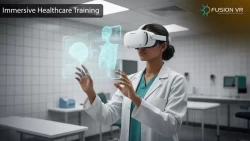
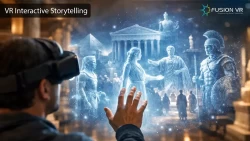
For example, engineering students first interact with 3D simulations of mechanical systems before handling actual physical prototypes. Medical students are able to conduct surgical procedures virtually or study human anatomy from layers. The humanities students can stroll through well-constructed, historically accurate recreations of an ancient city. XR has the power to bring theory to life and immerse learners in ways textbooks never could.
The 2030 Vision for XR in Education
The year 2030 sees XR technologies being paramount in curriculum delivery, assessment, and research; any university that does not prepare for this shall be left behind in innovation and, thereby, in student attraction. Preparing for 2030 in XR means anticipating not just the trends of hardware but also the pedagogical models, infrastructural needs, ethical issues, and opportunities for collaboration that will be found in working academic environments.
Key Components of Future-Proof XR Labs:
1. Scalable Infrastructure
The phrase “Scalable Infrastructure” means building infrastructure to support the future of XR tech that demands huge bandwidth and very-high-performance GPUs, also having a low-latency environment. The university labs have to upscale from PC labs to XR labs, which includes 5G connectivity and edge computing for support, and with the cloud rendering power at its disposal.
By 2030, XR labs should allow multiple devices, VR headsets, AR glasses, haptic-feedback devices, and volumetric displays with complete seamless integration, without the pains of rewiring constantly or reconfiguring with every setup change needed. The spaces themselves should be modular so they can be rearranged for the needs of a course or for research.
2. Interdisciplinary Design
XR is not to be with several graduates. Future-proof laboratories should be considered to be covering an array of academic disciplines-from engineering and fine arts to psychology. Shared XR labs and innovation centers facilitate interdisciplinary collaboration, which will result in richer learning outcomes and cross-pollination of ideas.
One example would be where a digital archaeology student and a computer science student collaborate on a project to develop an AR app that helps visualize buried structures at excavation sites. Perhaps, design students along with biomedical researchers could join forces to craft immersive rehabilitation systems.
3. Hybrid and Remote Access Capabilities
Remote and hybrid instruction is the new normal in post-pandemic academic life. XR labs of the future will thus have to provide off-campus access to immersive applications over the cloud. Students should log in to a virtual cleanroom, architectural studio, or biology lab from anywhere, anytime.
Technologies like WebXR and cloud-rendered VR experiences will be paramount. Institutions investing in XR labs today must think about how students without headset access will still be able to participate in relevant 2D desktop simulations, mobile AR, or shared virtual screen.
4. Digital Twins of Physical Labs
Another major change would be the creation of digital twins virtual replicas of physical spaces. XR-enabled digital twins of laboratories allow students to practice procedures, perform experiments, and grasp lab layouts even before entering the physical laboratory.
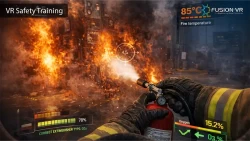
Suppose a student is performing an organic chemistry experiment in the virtual lab, which is a replica of the real one. Virtual mistakes will translate into safety in doing things in the real lab and better understanding. Besides, this also enhances the efficiency with which labs are used, safety training, and accessibility for those with disabilities.
5. XR Curriculum Integration
A future-ready laboratory should not stand isolated as a technology centre but rather be deeply integrated into the curriculum. Faculty training, instructional design, and learning outcomes need to be mapped, each level of which is as relevant as the technology. The curriculum must shift toward methods of assessment based on experience, immersive storytelling, and simulation.
As an example, students could be assessed based on how effectively they solve an engineering problem within a simulated environment, or how they interact through an AR historical scenario to make cultural biases apparent.
6. Industry Collaboration and Certification Pathways
As industries employ XR training, design, and operation, universities need to bridge the gap by partnering with XR leaders. Content creation in cooperation with industry partners will ensure relevance, employability, and funding.
Certifications for XR, micro-credentials, and internships in academic labs will prepare students to work in the industry. Universities could work with XR platforms to provide on-the-job training for enterprise XR workflows, Unity/Unreal development, spatial UX, or virtual prototyping.
7. Sustainability and Resource Efficiency
XR permits digital experimentation, but the labs must be environmentally and financially sustainable. Energy usage efficiency, pooling of devices among users, and e-waste management would be the main considerations. VR can substitute for materials and travel, thereby lessening a university’s carbon footprint.
For example, architecture students VR can spend time in dozens of digital models before cutting into a single foam board; chemistry students virtually test molecular interactions, thereby saving chemical wastes.
8. Inclusive and Ethical Design
The future lab spaces for XR must be accessible by design. Accessibility for students with disabilities is paramount, such as haptic interfaces for visually impaired users or voice-controlled navigation for those with mobility challenges.
Ethical awareness should accompany the deployment of XR: issues such as data protection, the psychological impact of immersion, and bias in 3D content need to be confronted. This will be part of the lab ethos: building codes of conduct and norms of digital citizenship for virtual environments.
9. Faculty Development and Change Management
To effect transformation, professors and lab instructors must be imbuing themselves with the XR knowledge. Activities can include workshops for upskilling, the provision of sandbox environments in which instructors can experiment, and the collaborative development of curricula utilizing XR.
Future-proofing is not about confetti being thrown from the rooftops into classrooms-it is about coaching the educators on the transformation of traditional courses into immersive experiences. All XR initiatives require the complete endorsement of the faculty for them to run at scale.
10. Research and Innovation Platforms
At XR labs, there’s usually a much broader scope for research underpinning innovation in immersive computing, spatial cognition, human-computer interaction, and so forth. XR shall be used by universities to model complex phenomena, ranging from climate change to supply-chain logistics, and to study human behavior within controlled virtual environments.
An amalgamation of premier academic institutions stemming from an XR-Research perspective will pave the way in the next-gen PhD programs where AI, neuroscience, design, and extended reality are taught simultaneously.
Challenges and Considerations
While the vision is captivating, several challenges need to be tackled by the universities in truly future-proofing the XR labs:
- Public universities have budget constraints that may preclude investments for high-end setups. Having a modular plan with phased rollouts can help.
- XR technological obsolescence is rapid; hence, labs must gear up with modular and upgradeable mechanisms.
- Digital equity must be considered so that all students can have immerse tool access.
- Resistance to change can hold the progress from faculties or even administration; raising awareness and giving them success stories remain key.
Conclusion: Building for 2030, Starting Today
XR is far from a passing fad; it is an expression of education, innovation, and interaction among humans. Preparing university labs for XR by 2030 requires strategic foresight, infrastructural agility, and innovation in pedagogy. Institutions that start now by building flexible XR spaces, encouraging interdisciplinary interventions, and putting immersive learning into its very core will shine like beacons in education in the next decade.
With the adoption of XR, the universities will be able to prepare their students for an economy that is driven by the future and at the same time re-invent learning itself-from memorizing to experiencing, from seeing to immersing. The lab of 2030 will be more than just a room in the university; it will be the doorway to alternate realities, knowledge ecosystems, and boundless spaces to imagine.